

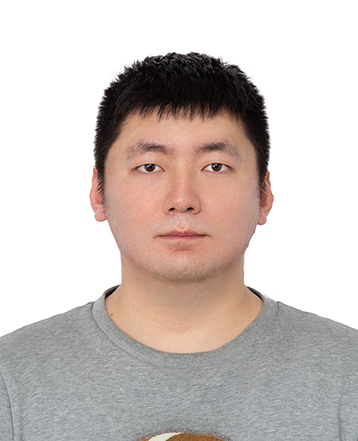
 Siwei Wang
· 1 previous affiliation
- Assistant Professor · Since 2023
- Current
- PhD student · 2020–2023
4 other authors named Siwei Wang: Siwei Wang (Microsoft (United States) · 48 papers), Siwei Wang (Stony Brook University · 1 paper), Siwei Wang (1 paper), Siwei Wang (1 paper)
Research Overview
Siwei Wang focuses on scalable unsupervised learning, multi-modal data analysis, and large language model-based agent planning. His early work addressed the computational bottlenecks of multi-view clustering by developing efficient anchor-based graph algorithms for massive datasets. Recently, his research has expanded to tackle incomplete multi-view learning, causal inference for bias mitigation, and the integration of deep generative models with complex system design.
Research Trajectory
Wang's early research addressed the computational bottlenecks inherent in multi-view clustering (MVC), a paradigm that integrates complementary information from different data sources. Traditional methods often relied on learning an optimal similarity matrix followed by k-means, resulting in intensive computational complexity and over-complicated optimization. To resolve this, he introduced Multi-view Clustering via Late Fusion Alignment Maximization, which theoretically connected k-means clustering to the alignment between base and consensus partitions. This work contributed to the research direction of Late Fusion Multi-view Clustering via Partition Alignment. Building on this foundation, he collaborated on One Pass Late Fusion Multi-view Clustering, an algorithm that unified consensus partition learning and discrete label generation into a single optimization problem. This one-pass approach achieved linear computational complexity, advancing the broader area of Linear Time Multi View Clustering via Anchor Graphs.
A major theme in Wang's trajectory has been scaling subspace clustering to massive datasets by breaking the traditional cubic complexity barrier. He developed Efficient One-Pass Multi-View Subspace Clustering with Consensus Anchors, which unified anchor point learning and graph construction to process datasets with over 100,000 samples. This work significantly expanded the area of Linear Time Multi-View Clustering with Anchor Graphs. Recognizing that real-world multi-view data is rarely perfect, he also designed Highly-efficient Incomplete Largescale Multiview Clustering with Consensus Bipartite Graph to handle scenarios where instances are missing from certain views. He further refined these scalable architectures with Anchor-based Multi-view Subspace Clustering with Hierarchical Feature Descent, projecting data into a shared low-dimensional subspace to maintain linear complexity, contributing to the direction of Linear Scalability via Anchor-based Bipartite Graphs. Alongside his clustering research, Wang explored structural irregularities in network data, proposing a subgraph-subgraph contrastive learning framework in Graph Anomaly Detection via Multi-Scale Contrastive Learning Networks with Augmented View. This framework improved the identification of both feature and structural anomalies, aligning with work in Multi-Scale Graph Anomaly Detection.
As anchor-based methods became widely adopted, Wang identified limitations in their standard implementations, particularly the rigid two-step process of graph construction and fusion, as well as the reliance on fixed anchor quantities across diverse views. To address this, he introduced Scalable and Structural Multi-View Graph Clustering With Adaptive Anchor Fusion, which allowed for more flexible, distribution-aware anchor selection. He extended this flexibility to incomplete data scenarios with DVSAI: Diverse View-Shared Anchors Based Incomplete Multi-View Clustering, utilizing multi-scale anchors of varying dimensions and quantities to capture complex distributions while maintaining linear scalability. To further reduce the manual burden of hyper-parameter tuning in these complex pipelines, he developed A Non-parametric Graph Clustering Framework for Multi-View Data, employing a dual-anchor strategy to capture unique and shared characteristics across sources automatically.
In his most recent work, Wang has integrated deep generative models and causal inference to tackle increasingly complex multi-modal challenges. He proposed Deep Incomplete Multi-view Clustering with Distribution Dual-Consistency Recovery Guidance, a framework utilizing Normalizing Flows to translate probability distributions between data sources, effectively recovering missing data by aligning local neighbors and global prototypes. Addressing the difficult problem of unsynchronized multi-modal data, he introduced Generalized Deep Multi-view Clustering via Causal Learning with Partially Aligned Cross-view Correspondence. His focus on robustness and bias mitigation continued with his collaboration on Alleviating Observation Bias via Causal-Invariant Meta-Learning for Unbalanced Incomplete Multi-view Clustering, which combines meta-learning for view recovery with causal inference to handle vastly different amounts of missing information across sources. Concurrently, he participated in the development of Hierarchical Anchor Graph Learning for Multi-View Clustering, which introduced a multi-level pyramid structure to co-evolve anchors and graph structures, preserving interpretability in scalable clustering.
Current Directions
The most recent papers in the evidence indicate a strong focus on deep multi-view clustering under highly imperfect conditions, such as severe data incompleteness, unbalanced missing information, and unaligned cross-view correspondences. Recent work investigates the use of causal inference and meta-learning to mitigate observation bias and disentangle complex, unsynchronized multi-modal data. Additionally, there is an ongoing effort to bridge the gap between deep generative models—such as Normalizing Flows for distribution recovery—and interpretable, hierarchical graph structures that maintain linear scalability for massive datasets.
Profile updated
Loading new papers…
Other researchers whose papers cluster into the same research directions — a proxy for overlapping technical interests and shared intellectual neighborhoods.
See something wrong? Report a mistake