

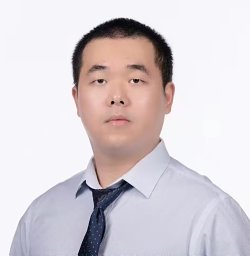
 Zaiwei Chen
· 4 previous affiliations
- Purdue University West LafayetteSince 2024
- Assistant Professor · 2024–2030
- California Institute of Technology2022–2024
- CMI Postdoctoral Research Scholar Associate · 2022–2024
- Georgia Institute of Technology2016–2022
- Graduate Research Assistant · 2016–2022
- Zhejiang University2011–2015
- Undergrad student · 2011–2015
Research Overview
Zaiwei Chen focuses on the theoretical foundations of reinforcement learning, stochastic approximation, and multi-agent systems. His trajectory spans the finite-sample analysis of off-policy algorithms and the stabilization of nonlinear stochastic processes under Markovian noise. His current work investigates non-asymptotic guarantees for average-reward reinforcement learning and scalable optimization techniques for networked games and bilevel problems.
Research Trajectory
His early work established rigorous finite-sample convergence bounds for nonlinear stochastic approximation (SA) algorithms operating under Markovian noise. In Finite-Time Analysis of Q-Learning with Linear Function Approximation (2019), he utilized Lyapunov drift arguments to demonstrate exponential convergence to a neighborhood with constant stepsizes, and $O(\log(k)/k)$ rates for diminishing stepsizes. He expanded on this by constructing smooth Lyapunov functions via generalized Moreau envelopes in Finite-Sample Analysis of Contractive Stochastic Approximation Using Smooth Convex Envelopes (2020), applying these bounds to contractive SA and specifically the V-trace algorithm.
Transitioning to off-policy reinforcement learning, he provided finite-sample guarantees for actor-critic and temporal difference (TD) methods. With Finite-Sample Analysis of Off-Policy Natural Actor-Critic Algorithm (2021), he introduced a "Q-trace" algorithm for the critic in off-policy Natural Actor-Critic frameworks, contributing to the research area of Single-Timescale Actor-Critic Methods. Concurrently, Finite-Sample Analysis of Off-Policy TD-Learning via Generalized Bellman Operators (2021) framed off-policy policy evaluation as solving a generalized Bellman equation, proving that the generalized Bellman operator acts as a simultaneous contraction mapping across weighted $\ell_p$-norms.
In 2022, this theoretical foundation was consolidated and extended. He formalized a comprehensive approach to these convergence problems in A Unified Lyapunov Framework for Finite-Sample Analysis of Reinforcement Learning Algorithms and further detailed the finite-sample analysis of nonlinear SA in Finite-sample analysis of nonlinear stochastic approximation with applications in reinforcement learning. Investigating the asymptotic properties of constant stepsize methods, he characterized their stationary behavior in Stationary Behavior of Constant Stepsize SGD Type Algorithms: An Asymptotic Characterization, aligning with the broader area of Geometric Ergodicity in Constant Step Size Stochastic Optimization. To address the notorious "deadly triad" in reinforcement learning, he collaborated on Sample Complexity of Policy-Based Methods under Off-Policy Sampling and Linear Function Approximation, proposing a family of off-policy TD algorithms that utilize generalized importance sampling to bound weights. This work significantly advanced the research direction of Navigating the Bias-Variance Tradeoff in Off-Policy RL. He continued to explore solutions to the deadly triad through target networks and truncation in Target Network and Truncation Overcome the Deadly Triad in (\boldsymbol{Q})-Learning (2023).
Around 2023, his focus broadened to encompass multi-agent systems and game-theoretic learning. He developed a last-iterate finite-sample analysis for payoff-based independent learning in zero-sum stochastic games in A Finite-Sample Analysis of Payoff-Based Independent Learning in Zero-Sum Stochastic Games, introducing the Value Iteration with Smoothed Best-Response (VI-SBR) algorithm. In parallel, he collaborated on Convergence rates for localized actor-critic in networked Markov potential games, proposing a scalable, localized actor-critic algorithm for networked Markov potential games. This approach relies only on local neighborhood information, overcoming dimensionality curses and contributing to the domain of Spatial Decay of Influence in Networked Multi-Agent Systems.
In 2024, he explored optimization dynamics in game-theoretic settings, proving fast $O(T^{-1/2})$ last-iterate convergence rates for smoothed Frank-Wolfe algorithms in monotone variational inequalities in Last-Iterate Convergence for Generalized Frank-Wolfe in Monotone Variational Inequalities. This provided finite-sample rates for smoothed fictitious play and advanced the area of Theoretical Foundations of Last-Iterate Stochastic Convergence. Moving into high-dimensional reinforcement learning, he co-developed a framework for approximate factorization in Overcoming the Curse of Dimensionality in Reinforcement Learning Through Approximate Factorization (2025). By employing a graph-coloring-based sampling strategy alongside variance-reduced algorithms, this work established near-optimal sample complexity guarantees for factored environments.
His most recent trajectory focuses heavily on the theoretical efficiency of average-reward reinforcement learning and complex optimization bottlenecks. In Non-Asymptotic Guarantees for Average-Reward Q-Learning with Adaptive Stepsizes (2025), he provided non-asymptotic guarantees for asynchronous average-reward Q-learning, demonstrating that adaptive stepsizes are mathematically necessary to ensure convergence to the optimal policy. He continued to refine average-reward settings in Bridging the Gap Between Average and Discounted TD Learning (2026), employing gradient splitting and dual-trajectory sampling to align theoretical efficiency with discounted-reward models, thereby advancing the broader area of Minimax Optimal Sample Complexity in Reinforcement Learning. Additionally, he participated in designing methods to overcome the Hessian bottleneck in bilevel optimization in Natural Hypergradient Descent: Algorithm Design, Convergence Analysis, and Parallel Implementation (2026), facilitating more efficient updates for nested problems like hyperparameter tuning.
Current Directions
The most recent papers in the evidence address the theoretical efficiency of average-reward reinforcement learning and the computational bottlenecks of bilevel optimization. Recent work investigates non-asymptotic guarantees for average-reward Q-learning, utilizing adaptive stepsizes and gradient splitting techniques to match the sample complexity of discounted-reward settings. Additionally, ongoing research explores scalable optimization methods, such as natural hypergradient descent, to efficiently navigate nested optimization problems in machine learning without relying on computationally prohibitive Hessian inverses.
Profile updated
Loading new papers…
Other researchers whose papers cluster into the same research directions — a proxy for overlapping technical interests and shared intellectual neighborhoods.
See something wrong? Report a mistake