

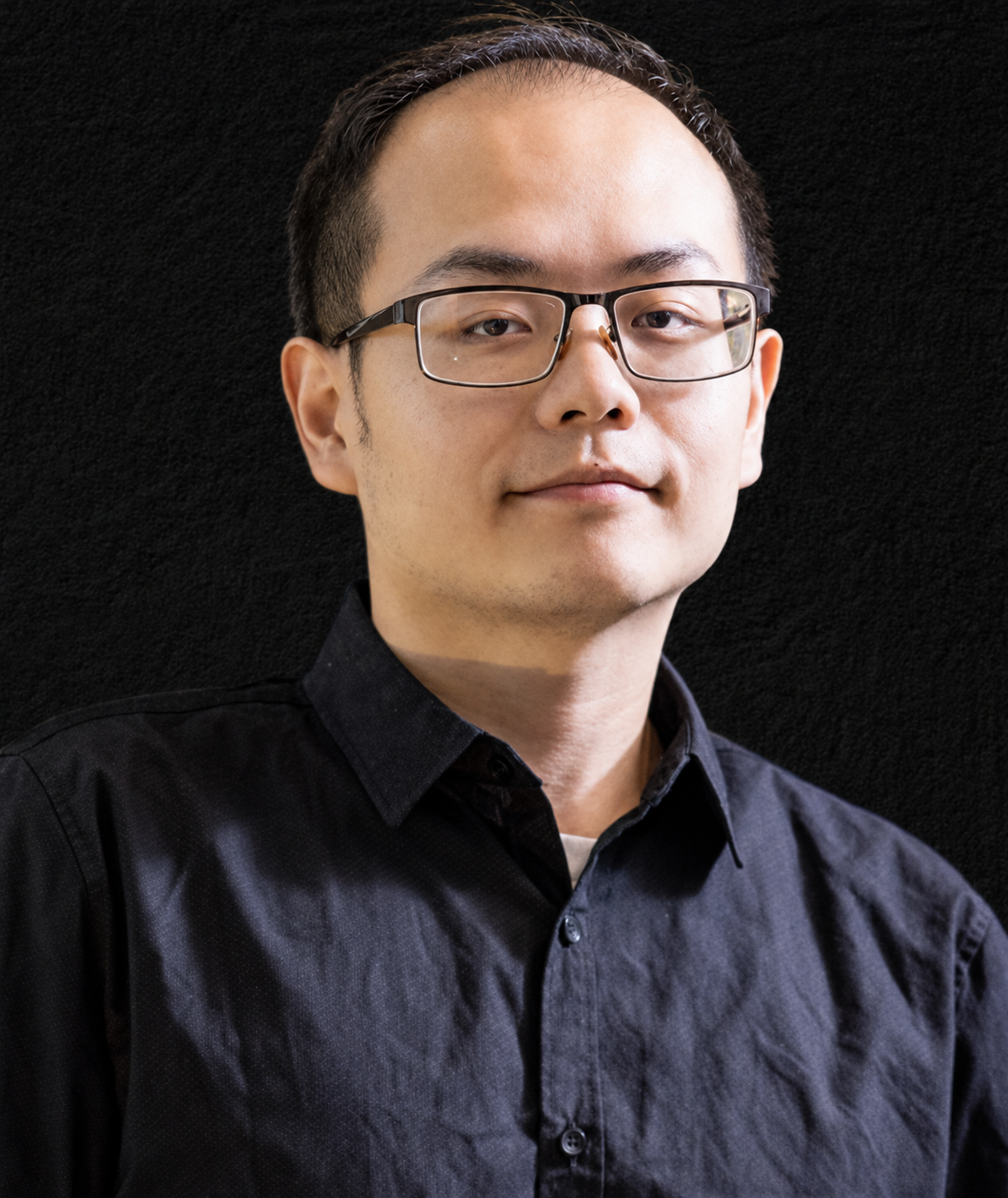
 Yue Wang
· 2 previous affiliations
- University of Central FloridaSince 2023
- Assistant Professor · Since 2023
- PhD student · 2019–2023
22 other authors named Yue Wang: Yue Wang (Nvidia (United States) · University of Southern California · 70 papers), Yue Wang (Soochow University · 56 papers), Yue Wang (53 papers), Yue Wang (Shenzhen Institute of Computing Sciences · 51 papers), Yue Wang (34 papers), and 17 more
Research Overview
Yue Wang focuses on robust reinforcement learning, optimization, and multi-agent decision-making systems. His trajectory spans from foundational finite-sample analyses of off-policy algorithms to comprehensive frameworks for handling model uncertainty and distribution shifts in complex environments. His current work emphasizes sample-efficient, distributionally robust reinforcement learning for both single-agent and multi-agent settings under average-reward criteria.
Research Trajectory
Wang's early research established foundational theoretical guarantees for reinforcement learning algorithms. In 2020, he provided a finite-sample analysis for optimal control, detailing the convergence of the two-timescale algorithm in Finite-sample Analysis of Greedy-GQ with Linear Function Approximation under Markovian Noise. Building on this optimization background, his focus shifted toward ensuring RL agents perform reliably despite environmental uncertainties. He introduced sample-based approaches for the area of Distributionally Robust Optimization with Probability Metric Uncertainty Sets in Online Robust Reinforcement Learning with Model Uncertainty, designing algorithms that incrementally estimate unknown uncertainty sets. He subsequently advanced this domain by developing Policy Gradient Method For Robust Reinforcement Learning, which offered global optimality and complexity guarantees for worst-case scenario optimization, ensuring agents remain effective across sim-to-real gaps.
By 2023, Wang expanded his robust RL framework to accommodate long-term average rewards and constrained environments. He contributed to the theoretical foundations of Anchoring and Centering for Average Reward Reinforcement Learning and the related area of Convergence in Average Reward Reinforcement Learning with Robust Average-Reward Markov Decision Processes, which demonstrated how robust policies could be derived via Relative Value Iteration. He then led the development of the first model-free algorithms for this setting in Model-Free Robust Average-Reward Reinforcement Learning. This work combined Relative Value Iteration with multi-level Monte-Carlo sampling to advance the direction of Unbiased Estimation for Non-linear Robust Bellman Operators. Concurrently, he addressed safety and reliability in Robust Constrained Reinforcement Learning, formulating a framework to guarantee that utility and cost constraints are satisfied across an uncertainty set of Markov Decision Processes, mitigating performance degradation from non-stationarity or modeling errors.
Transitioning into offline reinforcement learning, Wang investigated how to simultaneously handle limited datasets and environment shifts. In A Unified Principle of Pessimism for Offline Reinforcement Learning under Model Mismatch, he introduced a unified robust optimization problem that augments the radius of a distributionally robust uncertainty set, streamlining previous double-pessimism approaches. He further established theoretical limits in Achieving the Asymptotically Minimax Optimal Sample Complexity of Offline Reinforcement Learning: A DRO-Based Approach. As his research group expanded, he guided work on scaling these robust methods. In Model-Free Offline Reinforcement Learning with Enhanced Robustness, his team tackled the tension between robustness and scalability in the broader area of Model-Free Robust Reinforcement Learning. He also oversaw research applying pessimism to zero-shot transfer in Pessimism Principle Can Be Effective: Towards a Framework for Zero-Shot Transfer Reinforcement Learning, demonstrating how conservative strategies can prevent catastrophic failures when deploying simulator-trained agents into unpredictable target domains. Additionally, he formalized a reduction framework in A Reduction Framework for Distributionally Robust Reinforcement Learning under Average Reward, transforming complex robust average-reward problems into manageable discounted-reward tasks to achieve near-optimal data efficiency in the area of Infinite Horizon Average Reward Reinforcement Learning.
In his most recent trajectory, Wang has extended distributionally robust optimization to multi-agent and highly complex environments. He directed the development of $f$-MORNAVI in Sample-Efficient Distributionally Robust Multi-Agent Reinforcement Learning via Online Interaction, providing theoretical guarantees for sample efficiency in online robust multi-agent settings without relying on perfect simulators. He also continued to advance single-agent online learning in Online Robust Reinforcement Learning with General Function Approximation, addressing distribution shifts in real-world deployments. Returning to the average-reward criterion, his lab introduced Robust Halpern Iteration in Model-Free Robust Average-Reward Reinforcement Learning with Sample Complexity Analysis, utilizing a contraction-free optimization technique and a bias-reducing sampling oracle. Furthermore, he collaborated on Distributionally Robust Markov Games with Average Reward, establishing a comprehensive theoretical framework that proves the existence of stationary Nash Equilibria in these games and introduces a practical Robust TD Descent algorithm.
Current Directions
The most recent papers in the evidence indicate a strong focus on scaling distributionally robust reinforcement learning to multi-agent systems and environments requiring general function approximation. Recent work investigates how to achieve sample efficiency in online multi-agent interactions without relying on perfect simulators or pre-collected datasets. Additionally, Wang is actively exploring the theoretical foundations of Distributionally Robust Markov Games under the average-reward criterion, seeking practical algorithms like Robust TD Descent that bypass traditional computational bottlenecks. Another ongoing theme is the application of the pessimism principle to facilitate zero-shot transfer, ensuring that policies trained in simulation maintain their performance and safety guarantees when deployed in unpredictable real-world target domains.
Profile updated
Loading new papers…
Other researchers whose papers cluster into the same research directions — a proxy for overlapping technical interests and shared intellectual neighborhoods.
See something wrong? Report a mistake