

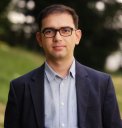
 Semih Cayci
· 3 previous affiliations
- RWTH Aachen UniversitySince 2022
- Assistant Professor · Since 2022
- Postdoc · 2020–2022
- The Ohio State University2014–2020
- PhD student · 2014–2020
Research Overview
Semih Cayci focuses on the theoretical foundations of reinforcement learning, sequential decision-making under constraints, and the optimization dynamics of deep neural networks. His trajectory spans from budgeted multi-armed bandits and mean field games to rigorous finite-time analyses of policy gradient methods. Recently, his work investigates second-order optimization techniques and the convergence properties of modern architectures like Transformers and recurrent networks.
Research Trajectory
Semih Cayci’s research trajectory begins with foundational contributions to sequential decision-making and multi-armed bandits. In 2019, he explored these themes in Learning to Control Renewal Processes with Bandit Feedback. He expanded on this in 2020 with Budget-Constrained Bandits over General Cost and Reward Distributions, addressing scenarios where actions incur random costs and require careful balancing against expected rewards. This line of inquiry culminated in the 2022 development of the LyOn algorithm in A Lyapunov-Based Methodology for Constrained Optimization with Bandit Feedback. By adapting Lyapunov drift techniques from stochastic control theory, this work achieved near-optimal regret while managing hard budgets and long-term penalties, significantly advancing the area of Budgeted Decision Making with Stochastic Resource Consumption. He later returned to these resource-constrained settings in Budgeted-Bandits with Controlled Restarts with Applications in Learning and Computing (2025), investigating how restarting strategies can optimize cumulative rewards when tasks have random completion times.
Transitioning to multi-agent environments, his 2023 collaborative research addressed the complexities of Mean Field Approximations for Large Scale Multi Agent Systems. In Policy Mirror Ascent for Efficient and Independent Learning in Mean Field Games, he helped introduce Policy Mirror Ascent (PMA). This method provided finite-sample guarantees for independent learning in symmetric games without requiring a population oracle, contributing directly to the research direction of Decentralized Policy Optimization in Multi-Agent Markov Games.
Around 2024, his focus broadened to the finite-time analysis of policy gradient methods, particularly in partially observable Markov decision processes (POMDPs). Finite-Time Analysis of Natural Actor-Critic for POMDPs established foundational guarantees for Natural Actor-Critic (NAC) algorithms in environments with large state spaces, explicitly characterizing errors arising from partial observability and function approximation. He further analyzed these architectures in Finite-Time Analysis of Entropy-Regularized Neural Natural Actor-Critic Algorithm, which touched upon techniques relevant to the area of Symmetric Initialization for Zero Output Neural Networks. This theoretical thread continued with Convergence of Entropy-Regularized Natural Policy Gradient with Linear Function Approximation, demonstrating that entropy regularization accelerates convergence, thereby contributing to the area of Fast Convergence Rates for Regularized Policy Optimization. In 2025, he integrated recurrent neural networks into this framework in Recurrent Natural Policy Gradient for POMDPs, establishing non-asymptotic guarantees that address the curse of dimensionality and long-term dependencies. Alongside this, he explored the continuous-time dynamics of these methods in Fisher-Rao Gradient Flows of Linear Programs and State-Action Natural Policy Gradients, advancing the broader area of Geometry Aware Policy Optimization.
Parallel to his reinforcement learning research, he has extensively investigated the optimization dynamics of deep learning architectures. In 2024, Convergence of Gradient Descent for Recurrent Neural Networks: A Nonasymptotic Analysis proved that gradient descent can achieve optimality in RNNs without massive overparameterization, highlighting the critical impact of long-term dependencies. He also began exploring second-order methods through a geometric lens. Gauss-Newton Dynamics for Neural Networks: A Riemannian Optimization Perspective demonstrated how the Gauss-Newton method achieves fast convergence even in ill-conditioned landscapes. This Riemannian approach was formalized further in 2026 with Geometric Convergence of Gauss–Newton for Neural Networks: Riemannian Geometry and Adaptive Damping, proving exponential convergence rates that are robust to poor data geometry. He extended this to stochastic settings in Non-Asymptotic Generalization and Optimization Bounds for Stochastic Gauss-Newton in Deep Neural Networks, deriving finite-time bounds dependent on network depth and width. Finally, his collaborative 2026 work, Finite-Time Analysis of Gradient Descent for Shallow Transformers, provided theoretical justification for the efficacy of Transformers, showing that optimization error remains independent of input sequence length.
Current Directions
Recent work investigates the rigorous theoretical foundations of neural network optimization, with a particular emphasis on second-order methods and modern architectures. The most recent papers in the evidence address the geometric convergence of Gauss-Newton methods, utilizing Riemannian optimization and adaptive damping to achieve robust performance in ill-conditioned landscapes. Additionally, this research explores non-asymptotic generalization bounds for stochastic optimization in deep networks and provides finite-time analyses explaining the optimization efficiency of shallow Transformers independent of input sequence length.
Profile updated
Loading new papers…
Other researchers whose papers cluster into the same research directions — a proxy for overlapping technical interests and shared intellectual neighborhoods.
See something wrong? Report a mistake