

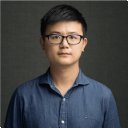
 Yunhui Guo
· 3 previous affiliations
- The University of Texas at DallasSince 2022
- Assistant Professor · Since 2022
- Postdoc · 2020–2022
- University of California San Diego2017–2020
- PhD student · 2017–2020
Research Overview
Yunhui Guo focuses on computer vision and machine learning, with an emphasis on building intelligent systems that can reliably deploy in dynamic real-world environments. His trajectory spans early work in multi-objective recommender systems and transfer learning to foundational contributions in continual learning and test-time adaptation. Currently, his research investigates multimodal robustness and out-of-distribution detection to ensure models adapt to evolving scenarios without forgetting previously acquired knowledge.
Research Trajectory
Guo’s early research explored optimization in user-facing systems before transitioning to core computer vision architectures. In 2015, he contributed to Recommendation Algorithms for Optimizing Hit Rate, User Satisfaction and Website Revenue, which framed recommendation as a multi-objective problem balancing purchase probability with long-term user satisfaction and platform revenue. Shifting toward visual domains, his focus moved to designing efficient neural architectures capable of handling diverse data distributions. He proposed a multi-domain learning architecture in Depthwise Convolution Is All You Need for Learning Multiple Visual Domains., leveraging depthwise separable convolutions to capture reusable structures across different visual domains.
This interest in cross-domain generalization naturally led to extensive work in transfer learning. To address the inefficiencies of standard fine-tuning, Guo introduced adaptive strategies that dynamically select which parts of a network to update. In SpotTune: Transfer Learning Through Adaptive Fine-Tuning., he developed a policy network that makes instance-specific routing decisions, contributing to the broader area of Differentiable Discrete Routing for Adaptive Neural Architectures. He further refined this approach in AdaFilter: Adaptive Filter Fine-Tuning for Deep Transfer Learning, which selectively fine-tunes specific convolutional filters to better adapt pre-trained models to new tasks, advancing work in the area of Selective Layer Fine-tuning for Efficient Adaptation. Expanding on the challenges of limited data, he also investigated the research direction of Bridging the Domain Shift in Few Shot Learning. In A Broader Study of Cross-Domain Few-Shot Learning, he evaluated few-shot methodologies across highly disparate imaging modalities, such as aerial and medical imagery, highlighting the limitations of models trained solely on visually similar natural images.
As his focus on model adaptability deepened, Guo began addressing catastrophic forgetting—the tendency of neural networks to lose previously acquired knowledge when learning new tasks. He provided a unified optimization perspective on episodic memory-based lifelong learning in Improved Schemes for Episodic Memory-based Lifelong Learning, introducing schemes to better balance stability and plasticity. Concurrently, he explored alternative geometric representations to improve model performance on hierarchical data. In Clipped Hyperbolic Classifiers Are Super-Hyperbolic Classifiers, he identified vanishing gradients as a key bottleneck in hyperbolic neural networks and proposed a clipping solution. This work advanced the research directions of Mitigating Numerical Instability in Hyperbolic Neural Networks and Hyperbolic Geometry for Hierarchical Graph Representation.
By 2024, Guo’s research consolidated around building robust, continuously learning agents for open-world deployment. He summarized his overarching framework for autonomous agents in Continual Learning in an Open and Dynamic World. To make continual learning more efficient for lightweight models, he introduced Continual Distillation Learning, utilizing globally shared knowledge distillation prompts to prevent information forgetting.
His work also expanded to ensure safety and reliability when models encounter unfamiliar data. In the area of Object-Centric Out-of-Distribution Segmentation, his lab developed Segment Every Out-of-Distribution Object, a framework that directly converts anomaly scores into coherent segmentation masks for out-of-distribution objects, avoiding the fragmentation common in threshold-based methods. To address the high cost of labeling complex data like 3D point clouds, he guided the development of STONE: A Submodular Optimization Framework for Active 3D Object Detection, which uses submodular optimization to select informative and class-balanced scenes for annotation. Additionally, Guo continued to refine transfer learning pipelines by developing training-free methods to predict model performance. He introduced KITE: A Kernel-based Improved Transferability Estimation Method, leveraging kernel alignment to estimate how well pre-trained features separate target classes.
Most recently, Guo has focused heavily on test-time adaptation (TTA) and multimodal systems. He addressed the vulnerability of vision-language models to environmental corruptions in Enhancing Robustness of CLIP to Common Corruptions through Bimodal Test-Time Adaptation, proposing an online framework that jointly fine-tunes LayerNorm parameters in both vision and text encoders. Extending this to audio-visual domains, his group introduced \texttt{AVROBUSTBENCH}: Benchmarking the Robustness of Audio-Visual Recognition Models at Test-Time, revealing significant vulnerabilities in state-of-the-art models when both modalities are corrupted. To solve these adaptation challenges without forgetting, he collaborated on AV-CTTA: Audio-Visual Continual Test-Time Adaptation without Forgetting, a memory-efficient framework that selectively retrieves and updates modality fusion parameters.
Alongside TTA, his recent work explores targeted model interventions and novel generative architectures. He oversaw the development of SafeFix: Targeted Model Repair via Controlled Image Generation, which uses conditional diffusion models and vision-language critics to synthesize data for repairing specific, rare-case model failures. He also participated in designing new meta-learning frameworks for transferability, as seen in MetaRank: Task-Aware Metric Selection for Model Transferability Estimation, and explored energy-conserving generative models in Generative Associative Memory via Equilibrium Matching.
Current Directions
The most recent papers in the evidence point to a sustained focus on multimodal robustness and dynamic test-time adaptation. Current work investigates how to maintain the reliability of complex, multi-sensory models—such as audio-visual and vision-language systems—when they are deployed in unpredictable, shifting environments. This involves developing memory-efficient adaptation mechanisms that prevent catastrophic forgetting, as well as creating automated, generative pipelines for targeted model repair. By addressing both continuous adaptation and rare-case vulnerabilities, this research aims to make foundational AI systems safer and more resilient for real-world autonomous applications.
Profile updated
Loading new papers…
Other researchers whose papers cluster into the same research directions — a proxy for overlapping technical interests and shared intellectual neighborhoods.
See something wrong? Report a mistake