

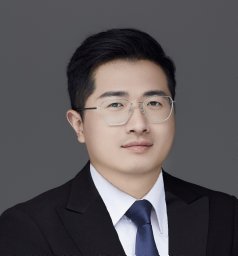
 Jiahuan Zhou
· 4 previous affiliations
- Peking UniversitySince 2022
- Assistant Professor · Since 2022
- Northwestern University2018–2022
- Postdoc · 2018–2022
- PhD student · 2019–2018
- Summer Research Intern · 2018
- Tsinghua University2009–2013
- Bachelor's degree, Electrical and Electronics Engineering · 2009–2013
Research Overview
Jiahuan Zhou focuses on computer vision, multi-modal learning, and continual learning architectures. His trajectory spans early work in metric learning for person re-identification to recent advancements in parameter-efficient fine-tuning and state space models. Currently, he investigates how to adapt large vision-language models to new tasks and modalities without catastrophic forgetting.
Research Trajectory
Jiahuan Zhou’s early research focused on aligning heterogeneous feature spaces and optimizing metric learning for computer vision tasks. In Learning Reconstruction-Based Remote Gaze Estimation, he addressed a fundamental flaw in reconstruction-based gaze estimation by learning a global distance metric with local regularization to align the disparate geometric structures of eye images and gaze coordinates. This interest in metric optimization naturally extended to person re-identification (PRID). He developed Efficient Online Local Metric Adaptation via Negative Samples for Person Re-identification, which shifted the paradigm from demanding offline training with positive pairs to cost-effective online adaptation using easily available negative samples. Continuing this thread, Easy Identification From Better Constraints: Multi-Shot Person Re-Identification From Reference Constraints tackled visual appearance variations by learning discriminative visual metrics without the intensive optimization typically required by pair-wise or triple-wise similarity constraints.
As his research evolved, Zhou began addressing the challenges of catastrophic forgetting and dynamic knowledge adaptation in multimodal systems. He introduced Dynamic Knowledge Rectification (DKR) in Continual Vision-Language Retrieval via Dynamic Knowledge Rectification, a framework that filters and corrects affinities transferred from old models to new ones, striking a balance between retaining past knowledge and acquiring new concepts. This work contributes significantly to the research direction of Test-Time Adaptation for Vision-Language Models. Concurrently, he collaborated on Perceptual-Distortion Balanced Image Super-Resolution is a Multi-Objective Optimization Problem, which applied Bayesian optimization to dynamically adjust loss weights during training, advancing the broader area of The Sensitivity of Multi-Objective Loss Balancing.
By 2025, Zhou’s focus expanded into parameter-efficient fine-tuning (PEFT) across diverse architectural paradigms, particularly for 3D vision and State Space Models (SSMs). He developed GAPrompt: Geometry-Aware Point Cloud Prompt for 3D Vision Model, introducing learnable point prompts and instance-specific shifts to achieve full fine-tuning performance while training a fraction of the parameters. He applied similar parameter-efficient principles to Vision Mamba architectures in Selective Visual Prompting in Vision Mamba, utilizing a dual-path structure to activate internal gates and preserve discriminative information. Extending these concepts to temporal data, State Space Prompting via Gathering and Spreading Spatio-Temporal Information for Video Understanding introduced modules to gather spatial details and spread temporal context, overcoming information decay in sequential video models.
Alongside architectural efficiency, Zhou continued to advance lifelong learning, particularly under strict privacy and modality constraints. He addressed the area of Continual Learning Without Data Rehearsal with DASK: Distribution Rehearsing via Adaptive Style Kernel Learning for Exemplar-Free Lifelong Person Re-Identification. This framework prevents catastrophic forgetting without storing sensitive historical images by transforming new data into the visual styles of previous domains. He further tackled cross-modality challenges in CKDA: Cross-modality Knowledge Disentanglement and Alignment for Visible-Infrared Lifelong Person Re-identification, explicitly separating modality-common features from modality-specific features to enable lifelong matching across day and night cameras. His work on incremental learning also extended to fine-grained structural understanding in Incremental Object Keypoint Learning, allowing models to learn previously undefined keypoints from new data while leveraging anatomical relationships to preserve old ones. In the domain of test-time adaptation, he proposed SCAP: Transductive Test-Time Adaptation via Supportive Clique-based Attribute Prompting, which groups similar images into supportive cliques to learn shared attribute-specific prompts, contributing to the research direction of Synchronized Cross-Modal Alignment for Vision-Language Model Adaptation.
Most recently, Zhou’s research has scaled to address the plasticity-stability dilemma in frontier large language and multimodal models. He participated in the development of Probabilistic Conflict Resolution in On the Plasticity and Stability for Post-Training Large Language Models, a Bayesian framework that softly resolves geometric conflicts between learning reasoning skills and retaining general knowledge. For vision-language models, he introduced Naming to Learn: Class Incremental Learning for Vision-Language Model with Unlabeled Data, combining recursive ridge regression with feature-denoising pseudo-labels to enable class incremental learning in label-scarce environments. Finally, Hyper-LLaVA: Hyperbolic Uncertainty-aware Modality-Balanced Routing for Multimodal Continual Instruction Tuning leveraged hyperbolic geometry to map task uncertainty and adaptively balance visual and textual inputs, significantly improving how multimodal models route information to specialized experts during sequential task learning.
Current Directions
The most recent papers in the evidence indicate a strong focus on continual learning and parameter-efficient adaptation for large-scale multimodal and state space models. Recent work investigates how to resolve the plasticity-stability dilemma in post-training environments, ensuring that models can acquire new reasoning capabilities without degrading foundational knowledge. This includes exploring non-Euclidean approaches, such as hyperbolic geometry, to manage task uncertainty and route information effectively in multimodal instruction tuning. Additionally, ongoing research addresses class incremental learning under extreme label scarcity, utilizing pseudo-label refinement and unlabeled data to adapt vision-language models to evolving semantic streams without relying on historical exemplars.
Profile updated
Loading new papers…
Other researchers whose papers cluster into the same research directions — a proxy for overlapping technical interests and shared intellectual neighborhoods.
See something wrong? Report a mistake