

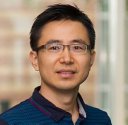
 Yun Fu
1 previous affiliation
- Northeastern University2010–2026
- Full Professor · 2015–2026
- Associate Professor · 2010–2015
Research Overview
Yun Fu focuses on computer vision, machine learning, and data mining, with an emphasis on visual recognition, image restoration, and multimodal reasoning. His trajectory spans foundational work in facial analysis and deep convolutional architectures to recent advancements in vision-language models and parameter-efficient networks. Currently, he investigates the reasoning capabilities and vulnerabilities of large multimodal models.
Research Trajectory
His early research established foundational techniques in feature extraction and facial analysis. In Correlation Metric for Generalized Feature Extraction, he and his collaborators proposed a graph embedding framework to boost discriminating power beyond traditional principal component analysis by mapping data across hyperspheres. This interest in facial characteristics naturally extended to age-related visual patterns, as detailed in the comprehensive overview Age Synthesis and Estimation via Faces: A Survey.
Building on these biometric foundations, he pioneered work in the research direction of Cross Generational Facial Kinship Verification. He introduced the UB KinFace database in Kinship Verification through Transfer Learning, demonstrating that transfer learning could bridge the visual gap between young parents and their children. He later scaled this effort significantly with Visual Kinship Recognition of Families in the Wild., creating a massive dataset of over 13,000 family photos and developing semi-automatic labeling schemes to facilitate broader research in the domain. Alongside these biometric tasks, he advanced the broader area of Hierarchical Feature Alignment for Domain Adaptation, developing unified frameworks to optimize target labels and domain-free features simultaneously, as seen in Graph Adaptive Knowledge Transfer for Unsupervised Domain Adaptation.
Around 2018, his focus expanded deeply into convolutional neural network architectures for image restoration, contributing significantly to the area of Arbitrary Scale Super Resolution. He developed the Residual Channel Attention Network (RCAN) in Image Super-Resolution Using Very Deep Residual Channel Attention Networks, which utilized a residual-in-residual structure to allow for much deeper networks without training degradation. Concurrently, he participated in the design of the Residual Dense Network (RDN), introduced in Residual Dense Network for Image Super-Resolution. This architecture combined dense connections with residual learning, advancing the research directions of Hierarchical Feature Fusion across Network Depths and Dense Feature Reuse in Deep Neural Networks. The RDN framework was subsequently generalized for broader denoising and deblurring tasks in Residual Dense Network for Image Restoration. During this highly productive period, he also engaged in entrepreneurial applications of computer vision, serving as the founder and CEO of Giaran and the co-founder and CTO of TVision Insights.
Moving into the 2020s, his architectural investigations broadened to include object detection and model efficiency. In Rethinking Classification and Localization for Object Detection, his lab analyzed the divergent preferences of fully connected and convolutional heads, revealing how each structure uniquely benefits classification versus localization tasks. Addressing the growing computational demands of deep learning, he explored the area of Untrained Subnetwork Discovery in Random Neural Networks through Parameter-Efficient Masking Networks, which demonstrated how fixed random weights could be leveraged via learned masks to drastically reduce model size without sacrificing representational capacity.
By 2025, his research began addressing complex structured data and foundation models. He investigated the adaptation of large-scale models in Accessing Vision Foundation Models via ImageNet-1K. In the domain of spatial-temporal modeling, he developed the Graph-based Conditional Variational Recurrent Neural Network in Uncovering the Missing Pattern: Unified Framework Towards Trajectory Imputation and Prediction to handle incomplete observational sequences caused by occlusion or sensor failure. He also bridged graph structures with natural language processing in Scale-Free Graph-Language Models, utilizing k-nearest neighbor graphs to generate pseudo-labels for text-attributed graph classification under severe data scarcity.
Current Directions
The most recent papers in the evidence indicate a strong focus on the reasoning capabilities, efficiency, and robustness of Large Vision-Language Models (LVLMs). Recent work investigates the adaptation of image-pretrained models to the temporal complexities of video, as demonstrated in D-CoDe: Scaling Image-Pretrained VLMs to Video via Dynamic Compression and Question Decomposition. Furthermore, his lab is actively addressing the reliability of multimodal systems. This includes mitigating visual encoder vulnerabilities to prevent object hallucination, detailed in SHIELD: Suppressing Hallucinations In LVLM Encoders via Bias and Vulnerability Defense, and exposing the linguistic shortcuts these models exploit during complex tasks, as explored through the Ref-Adv benchmark in Ref-Adv: Exploring MLLM Visual Reasoning in Referring Expression Tasks.
Profile updated
Loading new papers…
Other researchers whose papers cluster into the same research directions — a proxy for overlapping technical interests and shared intellectual neighborhoods.
See something wrong? Report a mistake