

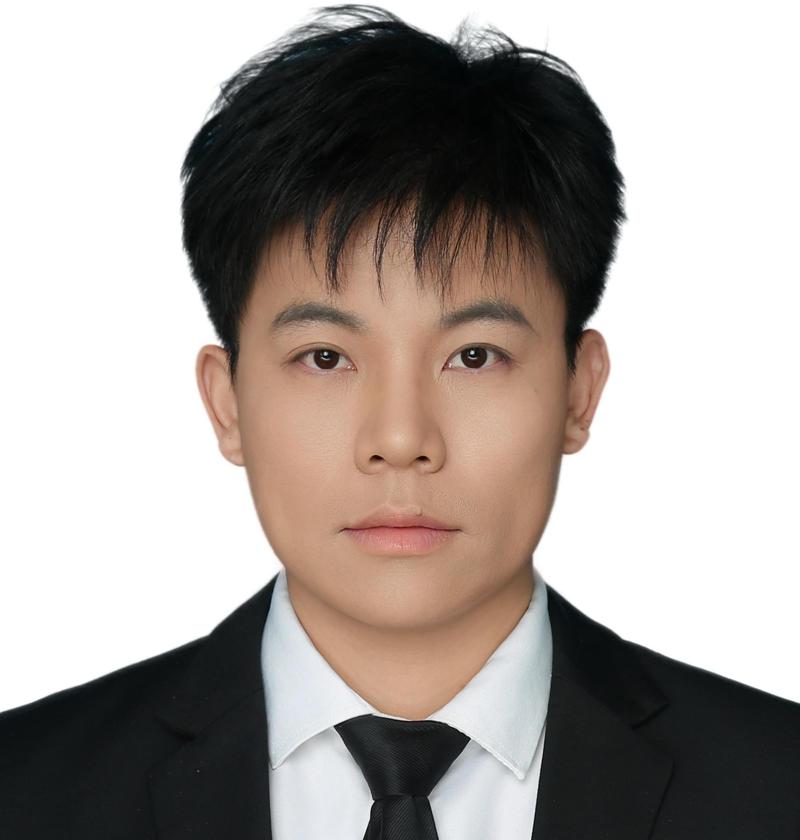
 Yulun Zhang
· 7 previous affiliations
- Shanghai Jiao Tong UniversitySince 2024
- Associate Professor · Since 2024
- ETH Zurich2021–2024
- Postdoctoral Researcher · 2021–2024
- Northeastern University2017–2021
- Research Assistant · 2017–2021
- Research Fellow · 2020
- Research Intern · 2019
- Tsinghua University2014–2017
- Master’s Degree, Department of Automation · 2014–2017
- Xidian University2009–2013
- Undergrad student · 2009–2013
1 other author named Yulun Zhang: Yulun Zhang (Geek+ · Carnegie Mellon University · 31 papers)
Research Overview
Yulun Zhang focuses on computer vision, image and video restoration, and deep model compression. His early work established foundational convolutional architectures for single-image super-resolution and feature fusion. More recently, his research group investigates highly efficient diffusion models for real-world degradation, multimodal learning for image quality assessment, and post-training quantization techniques for large language models.
Research Trajectory
Yulun Zhang's research trajectory began with foundational contributions to single-image super-resolution (SR). In 2015, he introduced a fast SR algorithm based on dictionary learning and adaptive local nonparametric regression in Adaptive local nonparametric regression for fast single image super-resolution. Recognizing the limitations of shallow networks, his subsequent work focused on deep convolutional architectures. He developed the Residual Channel Attention Network (RCAN) in Image Super-Resolution Using Very Deep Residual Channel Attention Networks, which addressed the training difficulties of very deep networks by integrating residual-in-residual structures with channel attention mechanisms. That same year, he proposed dense feature fusion in Residual Dense Network for Image Super-Resolution to jointly learn hierarchical features across varying scales and angles of view.
As his focus expanded, he collaborated on broader computational imaging problems, including the research direction of Spectral-wise Attention for Efficient Hyperspectral Transformers. This was exemplified by his participation in MST++: Multi-stage Spectral-wise Transformer for Efficient Spectral Reconstruction, which reconstructed hyperspectral images from standard RGB photos with state-of-the-art efficiency. He also contributed to the area of Robust Multi-Modality Image Fusion for Autonomous Perception through CDDFuse: Correlation-Driven Dual-Branch Feature Decomposition for Multi-Modality Image Fusion, a framework combining Transformers and Invertible Neural Networks to decompose features into global base components and local details for infrared-visible and medical image fusion.
Returning to complex degradation scenarios, his work increasingly leveraged generative priors. In the broader area of Blind Image Restoration for Real World Degradation, he integrated text prompts into diffusion models to provide explicit degradation priors in Image Super-Resolution with Text Prompt Diffusion. This generative approach evolved into a major focus on highly efficient, single-step diffusion models. His research group developed OSCAR: One-Step Diffusion Codec Across Multiple Bit-rates, advancing the direction of One-Step Diffusion for Generative Image Compression by mapping compression bit-rates to pseudo diffusion timesteps. They further accelerated real-world SR with One Diffusion Step to Real-World Super-Resolution via Flow Trajectory Distillation, which distilled a massive 12-billion-parameter model into a single-step sampling process.
To make these generative models practical for real-world deployment, his recent work heavily emphasizes model compression and quantization. He directed the development of Q-DiT4SR: Exploration of Detail-Preserving Diffusion Transformer Quantization for Real-World Image Super-Resolution, introducing a post-training quantization framework that reduces Diffusion Transformers to 4-bit precision. This sensitivity-aware quantization strategy was extended to video in LSGQuant: Layer-Sensitivity Guided Quantization for One-Step Diffusion Real-World Video Super-Resolution. For continuous video processing, his lab also proposed an autoregressive one-step diffusion framework in InfVSR: Toward Consistency-Driven Streaming Generative Video Super-Resolution, enabling high-quality synthesis on videos of unbounded length. Addressing motion blur, he contributed to the area of Degradation-Adaptive Diffusion for Image Restoration with FideDiff: Efficient Diffusion Model for High-Fidelity Image Motion Deblurring, reformulating the blurring process as a diffusion trajectory.
Beyond image restoration, his recent trajectory includes significant contributions to large language models (LLMs) and multimodal evaluation. In the research direction of Explainable Image Quality Assessment through Natural Language, his group introduced Grounding-IQA: Grounding Multimodal Language Model for Image Quality Assessment, which enables Multimodal LLMs to provide fine-grained, location-aware quality evaluations through spatial grounding. Addressing the computational bottleneck of LLMs, they led the development of PT$^2$-LLM: Post-Training Ternarization for Large Language Models, a framework for 1.58-bit ternary quantization without retraining, explored reinforcement learning techniques to enhance reasoning capabilities in CARFT: Boosting LLM Reasoning via Contrastive Learning with Annotated Chain-of-Thought-based Reinforced Fine-Tuning, and tackled sub-4-bit weight-only PTQ in D$^2$Quant: Accurate Low-bit Post-Training Weight Quantization for LLMs through dual-scale down-projection quantizers and activation mean-shift correction. Extending efficient model compression across domains, their group introduced AdaTSQ: Pushing the Pareto Frontier of Diffusion Transformers via Temporal-Sensitivity Quantization for Diffusion Transformers and investigated extreme network binarization for artifact removal in BinaryDemoire: Moiré-Aware Binarization for Image Demoiréing. In multimodal reasoning, they introduced DRScaffold: Boosting Dense-Scene Reasoning in Lightweight Vision Language Models, which uses staged visual grounding supervision to boost complex multi-entity inference in small vision-language models. Finally, expanding their restoration and generation portfolio, Zhang's lab addressed screen flicker-banding removal using high-frequency priors in RIFLE: Removal of Image Flicker-Banding via Latent Diffusion Enhancement, spatio-temporal diffusion priors for video enhancement in DVFace: Spatio-Temporal Dual-Prior Diffusion for Video Face Restoration, and stable long-sequence synthesis in FreqForcing: Autoregressive Long Video Generation via Spectral Self-Anchoring.
Current Directions
The most recent papers in the evidence indicate a strong focus on ultra-efficient generative models and extreme model compression. A primary current direction is the acceleration of diffusion models for real-world image and video restoration. By leveraging flow trajectory distillation and consistency training, recent work achieves high-fidelity super-resolution, motion deblurring, and streaming video synthesis in a single denoising step, drastically reducing the computational overhead of generative restoration.
Parallel to this is a concerted effort to deploy massive architectures—both Diffusion Transformers and Large Language Models—under strict computational constraints. Recent research investigates post-training quantization frameworks that reduce models to 4-bit or even 1.58-bit (ternary) precision without requiring expensive retraining, utilizing layer-sensitivity guidance and variance-aware mixed-precision strategies.
Finally, current work explores the intersection of multimodal learning and reasoning. This includes developing Multimodal Large Language Models capable of spatial grounding for explainable image quality assessment, as well as refining reinforcement learning techniques with annotated Chain-of-Thought to boost the fundamental reasoning capabilities of LLMs.
Profile updated
Loading new papers…
Other researchers whose papers cluster into the same research directions — a proxy for overlapping technical interests and shared intellectual neighborhoods.
See something wrong? Report a mistake