

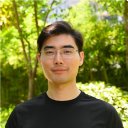
 Huan Wang
· 4 previous affiliations
- Mayun UniversitySince 2024
- Assistant Professor · Since 2024
- Westlake UniversityCurrent
- Current
- Northeastern University2019–2024
- PhD student · 2019–2024
- Zhejiang University2012–2019
- MS student · 2016–2019
- Undergrad student · 2012–2016
7 other authors named Huan Wang: Huan Wang (SalesForce.com · Salesforce (United States) · 72 papers), Huan Wang (Huazhong Agricultural University · 12 papers), Huan Wang (Tsinghua University · 10 papers), Huan Wang (澳大利亚卧龙岗大学 · University of Wollongong · Singapore Management University · 8 papers), Huan Wang (5 papers), and 2 more
Research Overview
Huan Wang focuses on efficient artificial intelligence, model compression, and multimodal generative systems. His research trajectory spans foundational methods for neural network pruning and efficient neural rendering to recent advancements in accelerating large language models and visual autoregressive generation. He currently investigates scalable techniques for compressing and decoding large-scale foundation models.
Research Trajectory
Wang’s early research concentrated heavily on optimizing deep neural networks for practical deployment, particularly through structural sparsity. He introduced Structured Probabilistic Pruning for Convolutional Neural Network Acceleration, advancing broader areas like Structured Pruning for Hardware Aligned Model Compression and Reversible Pruning for Dynamic Neural Architecture Search. Recognizing the shift toward pruning networks before training, he formalized this subfield in Emerging Paradigms of Neural Network Pruning, providing a comprehensive survey of pruning at initialization. To address the challenges of pruning schedules and weight importance scoring, he developed Neural Pruning via Growing Regularization, which utilized rising penalty factors to improve accuracy and contributed to the research direction of Non-Uniform Sparsity Allocation for Neural Network Pruning.
Continuing his investigation into the theoretical underpinnings of sparsity, Wang published Rethinking Again the Value of Network Pruning -- A Dynamical Isometry Perspective. This work challenged prevailing assumptions by demonstrating that fine-tuning pruned models outperforms training from scratch when appropriate learning rates are applied. He further explored sparse network capacity in Dual Lottery Ticket Hypothesis, proposing a framework to identify and train sparse subnetworks that maintain promising trainability.
Around 2022, Wang expanded his focus to include 3D vision and efficient rendering. To overcome the prohibitive inference times of Neural Radiance Fields (NeRF), he developed R2L: Distilling Neural Radiance Field to Neural Light Field for Efficient Novel View Synthesis, which replaced iterative ray-marching with a single forward pass. He subsequently adapted this architecture for edge devices in Real-Time Neural Light Field on Mobile Devices, achieving high-quality rendering with a minimal storage footprint. This work significantly advanced the area of Mitigating the Volumetric Sampling Bottleneck in Neural Rendering. Returning to image restoration, he applied his expertise in sparsity to super-resolution models, introducing Iterative Soft Shrinkage Learning for Efficient Image Super-Resolution. By softly shrinking unimportant weights, this method allowed networks to dynamically discover optimal sparse structures, aligning with research areas such as Dynamic Topology Evolution for Efficient Neural Network Training and Hardware Friendly Sparsity for Practical Neural Network Compression.
In his recent work, Wang has directed research teams focusing on the efficiency and reasoning capabilities of large language models (LLMs), multimodal systems, and generative architectures. To accelerate LLM inference, his group proposed ARC-Decode: Accelerated Decoding with Risk-Bounded Acceptance, a plug-and-play speculative decoding method that relaxes strict verification rules to achieve significant speedups. Addressing memory bottlenecks, they developed Which Heads Matter for Reasoning? RL-Guided KV Cache Compression, utilizing reinforcement learning to preserve only reasoning-critical attention heads. For post-training compression, he oversaw the development of ERC-SVD: Error-Controlled SVD for Large Language Model Compression, which mitigates error propagation by selectively compressing the latter layers of a model.
His contributions to multimodal and generative AI emphasize both performance and computational efficiency. In visual reasoning, his team introduced RewardMap: Tackling Sparse Rewards in Fine-grained Visual Reasoning via Multi-Stage Reinforcement Learning, a framework that helps multimodal models master complex tasks like reading transit maps through detail-aware partial rewards. To improve data efficiency, they designed MergeMix: A Unified Augmentation Paradigm for Visual and Multi-Modal Understanding, leveraging token merging to create contextually aware mixed images for preference learning.
In the domain of image generation, Wang's research addresses the computational costs of both diffusion and autoregressive models. He guided the creation of OBS-Diff: Accurate Pruning For Diffusion Models in One-Shot, a training-free framework that compresses large-scale diffusion models by prioritizing early denoising stages. For autoregressive generation, his group broke the traditional sequential decoding barrier with Autoregressive Image Generation with Randomized Parallel Decoding, decoupling positional guidance to enable fast, parallelized image synthesis. They also introduced Prism-MoE: Efficient Dense-to-MoE Conversion for Visual Autoregressive Generation, converting dense models into sparse Mixture-of-Experts architectures at a fraction of standard training costs. Finally, bridging his interests in LLMs and mobile efficiency, he collaborated on MobileKernelBench: Can LLMs Write Efficient Kernels for Mobile Devices?, evaluating and improving the ability of multi-agent systems to generate optimized code for edge hardware.
Current Directions
The most recent papers in the evidence indicate a strong focus on the intersection of foundation models and computational efficiency. Recent work investigates post-training compression techniques, such as error-controlled singular value decomposition and RL-guided KV cache eviction, to reduce the memory footprint of large language models without degrading reasoning capabilities. In generative AI, current efforts address the inference bottlenecks of diffusion and visual autoregressive models through one-shot pruning, dense-to-MoE conversion, and randomized parallel decoding strategies. Additionally, there is an ongoing emphasis on enhancing the complex reasoning abilities of multimodal systems using multi-stage reinforcement learning and preference-based data augmentation.
Profile updated
Loading new papers…
Other researchers whose papers cluster into the same research directions — a proxy for overlapping technical interests and shared intellectual neighborhoods.
See something wrong? Report a mistake