

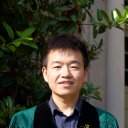
 Wei Niu
· 2 previous affiliations
- University of GeorgiaSince 2023
- Assistant Professor · Since 2023
- William & Mary2018–2023
- PhD student · 2018–2023
2 other authors named Wei Niu: Wei Niu (Amazon (United States) · 8 papers), Wei Niu (1 paper)
Research Overview
Wei Niu focuses on real-time machine learning systems, compiler optimization, and the deployment of advanced neural networks on resource-constrained embedded devices. His trajectory spans from foundational work in hardware-aware model pruning and fine-grained sparsity to the co-design of compression and compilation frameworks for mobile platforms. Recently, his efforts center on accelerating state space models and diffusion transformers for efficient edge execution.
Research Trajectory
His early work involved mobile computing infrastructure, where he participated in research on user-aware partitioning algorithms for mobile cloud computing based on maximum graph cuts (User-aware partitioning algorithm for mobile cloud computing based on maximum graph cuts). By 2020, his focus shifted decisively toward the optimization of deep neural networks for on-device execution. A major theme emerged around the area of Hardware Aligned Pruning for Accelerated Inference. He contributed to PCONV: The Missing but Desirable Sparsity in DNN Weight Pruning for Real-Time Execution on Mobile Devices, which introduced a "sweet spot" in pruning by utilizing fine-grained sparsity patterns inspired by computer vision theory, advancing the broader direction of N:M Pattern Constraints for SIMD Hardware Acceleration. Building on this, he developed hardware-friendly structured model pruning and compiler optimization techniques to enable real-time execution of applications like style transfer and super-resolution on mobile platforms (Towards Real-Time DNN Inference on Mobile Platforms with Model Pruning and Compiler Optimization). He further refined this approach with a pattern-based sparsity technique that prunes convolutional kernels into mathematically inspired shapes, achieving real-time inference while improving accuracy (An Image Enhancing Pattern-Based Sparsity for Real-Time Inference on Mobile Devices). This line of inquiry culminated in PatDNN: Achieving Real-Time DNN Execution on Mobile Devices with Pattern-based Weight Pruning, which addressed the extremes of non-structured and structured pruning by advancing a middle-ground design space.
In 2021, the scope of his work expanded to encompass more complex architectures and unified optimization frameworks. He participated in the development of RT3D, a framework enabling real-time execution of 3D Convolutional Neural Networks on standard smartphones via a novel kernel group structured sparsity scheme (RT3D: Achieving Real-Time Execution of 3D Convolutional Neural Networks on Mobile Devices). Recognizing the limitations of existing operator fusion approaches in deep networks, he introduced DNNFusion: accelerating deep neural networks execution with advanced operator fusion to handle diverse operators and layer connections. He also extended these optimizations to natural language processing, proposing a compression-compilation co-design framework for running BERT models on mobile devices (A Compression-Compilation Framework for On-mobile Real-time BERT Applications). Concurrently, he contributed to MEST, a memory-economic sparse training framework that utilizes elastic mutation and real-time data pruning to facilitate training directly on edge devices (MEST: Accurate and Fast Memory-Economic Sparse Training Framework on the Edge). In the area of Balancing Pruning Granularity for Accuracy and Speed, he collaborated on NPAS, a unified framework that simultaneously optimizes neural network structures and pruning schemes while accounting for compiler-level hardware performance (NPAS: A Compiler-Aware Framework of Unified Network Pruning and Architecture Search for Beyond Real-Time Mobile Acceleration).
His focus on generalizable and architecture-specific compilation continued into 2022. He designed GRIM, a framework applicable to both convolutional and recurrent neural networks that leverages fine-grained structured weight sparsity for mobile inference acceleration (GRIM: A General, Real-Time Deep Learning Inference Framework for Mobile Devices Based on Fine-Grained Structured Weight Sparsity). Addressing the complexities of mobile Digital Signal Processors (DSPs), he developed a globally optimizing compiler to support complex DNN workloads on chips with intricate instruction sets and VLIW pipelines (GCD2: A Globally Optimizing Compiler for Mapping DNNs to Mobile DSPs). Broadening his perspective on efficiency, he also systematized research on exploiting data redundancy—such as repeated or over-detailed information in images, videos, and text—to reduce computational costs (Survey: Exploiting Data Redundancy for Optimization of Deep Learning).
As transformer architectures became ubiquitous, his research adapted to address their specific bottlenecks. In 2024, he introduced SmartMem, a framework designed to eliminate layout transformations between computational operators in emerging transformers and large models on mobile devices (SmartMem: Layout Transformation Elimination and Adaptation for Efficient DNN Execution on Mobile). Contributing to the research direction of Hierarchical Token Pruning for Efficient Transformers, his lab developed ECP-ViT, which combines a brain-inspired core-periphery attention mechanism with a specialized compiler to achieve real-time execution of Vision Transformers on smartphones (Real-time Core-Periphery Guided ViT with Smart Data Layout Selection on Mobile Devices).
Most recently, his work has tackled the deployment of next-generation architectures like State Space Models (SSMs) and Diffusion Transformers (DiTs). Advancing the area of Hardware-Aware Pruning for Real-World Inference Speed, his group introduced a sparse learning framework that brings high-performance SSMs, such as Mamba, to mobile devices using novel kernel sparsity patterns and architecture-aware compiler optimizations (Sparse Learning for State Space Models on Mobile). He also collaborated on optimizing Diffusion Transformers, contributing to OUSAC, which accelerates DiTs by replacing redundant guidance approaches with a sparse, optimized schedule and adaptive caching (OUSAC: Optimized Guidance Scheduling with Adaptive Caching for DiT Acceleration). This was followed by participation in RSTR, a framework that uses evolutionary search to find sparse guidance schedules, significantly reducing the spatiotemporal redundancy and computational cost of DiTs (RSTR: Reducing SpatioTemporal Redundancy in Diffusion Transformers).
Current Directions
Recent work investigates the efficient deployment of next-generation sequence and generative models on resource-constrained hardware. The most recent papers in the evidence address the computational bottlenecks of State Space Models (such as Mamba) and Diffusion Transformers (DiTs). This involves developing novel sparse learning frameworks, architecture-aware compiler optimizations, and optimized guidance scheduling to reduce spatiotemporal redundancy. By adapting caching mechanisms and discovering sparse guidance schedules, these efforts aim to bring high-performance generative AI and advanced sequence modeling to mobile devices without sacrificing output quality.
Profile updated
Loading new papers…
Other researchers whose papers cluster into the same research directions — a proxy for overlapping technical interests and shared intellectual neighborhoods.
See something wrong? Report a mistake