

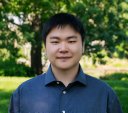
 Geng Yuan
· 3 previous affiliations
- University of GeorgiaSince 2023
- Assistant Professor · Since 2023
- Northeastern University2019–2023
- PhD student · 2019–2023
- Syracuse University2014–2019
- MS student · 2014–2019
Research Overview
Geng Yuan focuses on hardware-efficient deep learning, neural network compression, and in-memory computing architectures. His early work explored frequency-domain convolutions and memristor-based accelerators to bypass traditional computational bottlenecks. More recently, his research addresses the efficient training and fine-tuning of large-scale models on edge devices, emphasizing zeroth-order optimization and dynamic pruning techniques for resource-constrained environments.
Research Trajectory
Geng Yuan’s early research focused on accelerating neural networks by rethinking both algorithmic representations and underlying hardware. In 2017, he contributed to the area of Accelerating Neural Networks via Frequency Domain Convolutions with the introduction of CirCNN: accelerating and compressing deep neural networks using block-circulant weight matrices. This work utilized the Fast Fourier Transform to significantly reduce computational complexity and memory footprint while maintaining a regular network structure. Concurrently, he explored emerging hardware paradigms, reformulating signal processing algorithms for low-power matrix multiplication in Memristor crossbar-based ultra-efficient next-generation baseband processors.
By 2021, his focus expanded to encompass sparse training methodologies and advanced in-memory computing. Advancing the research direction of Bypassing the Von Neumann Bottleneck with In-Memory Computing, he developed FORMS: Fine-grained Polarized ReRAM-based In-situ Computation for Mixed-signal DNN Accelerator to resolve the challenge of representing signed weights in ReRAM crossbars without relying on redundant hardware or offset values. Parallel to his hardware research, he investigated the theoretical foundations of network pruning. In Lottery Ticket Preserves Weight Correlation: Is It Desirable or Not?, he analyzed the Lottery Ticket Hypothesis, demonstrating that superior sparse models could be achieved at standard learning rates through a refined pruning and fine-tuning approach. This theoretical grounding informed practical frameworks for edge devices, such as MEST: Accurate and Fast Memory-Economic Sparse Training Framework on the Edge, which introduced elastic mutation and soft memory bounds to maintain high accuracy at extreme sparsity ratios. He also contributed to the area of Hardware-Aware Neural Architecture Search with NPAS: A Compiler-Aware Framework of Unified Network Pruning and Architecture Search for Beyond Real-Time Mobile Acceleration, a unified framework that simultaneously optimizes network structures and pruning schemes to maximize actual compiler-level hardware performance on mobile devices.
Continuing to optimize training costs in 2022, he explored low-precision techniques and dynamic sparse training. He introduced You Already Have It: A Generator-Free Low-Precision DNN Training Framework Using Stochastic Rounding, a novel method that extracts random numbers directly from the DNN training process itself, thereby eliminating the hardware overhead typically required for stochastic rounding. Contributing to the broader area of Dynamic Data Pruning for Efficient Neural Network Training, he also investigated alternative ways to reduce computational overhead in Layer Freezing & Data Sieving: Missing Pieces of a Generic Framework for Sparse Training, demonstrating that these techniques can effectively lower training costs without the accuracy degradation often associated with extreme sparsity levels.
In 2024, the trajectory incorporated Transformer architectures, self-supervised learning, and continual learning on the edge. Returning to ReRAM architectures, he developed Zero-Space Cost Fault Tolerance for Transformer-based Language Models on ReRAM, which uses structured pruning and bit-flipping voting to embed redundant, error-correcting data into unused model parameters. To accelerate the training process itself, he introduced SmartFRZ: An Efficient Training Framework using Attention-Based Layer Freezing, utilizing a lightweight predictor to freeze layers upon convergence. Addressing the demands of streaming inference and adaptation, he contributed to the area of Cross Layer Co Design for Deep Learning Accelerators with EdgeOL: Efficient in-situ Online Learning on Edge Devices. He also guided research into reducing the computational overhead of self-supervised learning (SSL) with Waxing-and-Waning: a Generic Similarity-based Framework for Efficient Self-Supervised Learning, a framework that identifies and skips computations on highly similar regions between augmented image pairs.
Most recently, in 2025, his work tackles the efficiency bottlenecks of Vision Transformers and Large Language Models (LLMs). Advancing the research direction of Hierarchical Token Pruning for Efficient Transformers, he oversaw the development of Mutual Effort for Efficiency: A Similarity-based Token Pruning for Vision Transformers in Self-Supervised Learning, which leverages similarity information across Siamese networks to reduce training computation. A major recent focus is zeroth-order (ZO) optimization for memory-efficient LLM fine-tuning. He led End-to-End On-Device Quantization-Aware Training for LLMs at Inference Cost, replacing memory-heavy backpropagation with ZO optimization to enable on-device fine-tuning on consumer hardware. This approach was further refined in Harmony in Divergence: Towards Fast, Accurate, and Memory-efficient Zeroth-order LLM Fine-tuning, which mimics layer-specific learning rates to bridge the performance gap between ZO and standard training. Finally, expanding his efficiency methodologies into medical domains, he contributed to Advancing physiological time series reconstruction and imputation via mixture of receptive fields and experts fusion, a diffusion-based framework that processes signals like ECGs with significantly reduced computational overhead.
Current Directions
Recent work investigates the extreme memory and computational bottlenecks associated with training and fine-tuning foundation models. A primary focus is adapting zeroth-order optimization techniques to enable on-device quantization-aware training and fine-tuning of Large Language Models (LLMs) without the prohibitive memory costs of standard backpropagation. Alongside LLM optimization, current research addresses the efficiency of Vision Transformers in self-supervised learning through similarity-based token pruning. Additionally, recent efforts explore the application of computationally lightweight diffusion models and mixture-of-experts architectures for the reconstruction and imputation of physiological time-series data.
Profile updated
Loading new papers…
Other researchers whose papers cluster into the same research directions — a proxy for overlapping technical interests and shared intellectual neighborhoods.
See something wrong? Report a mistake