

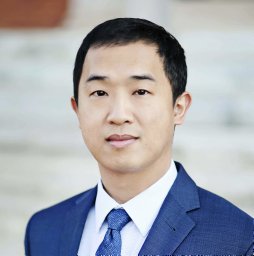
 Xiaolong Ma
· 5 previous affiliations
- University of ArizonaSince 2025
- Assistant Professor · Since 2025
- Current
- Clemson University2022–2025
- Assistant Professor · 2022–2025
- Northeastern University2019–2022
- PhD student · 2019–2022
- Research Assistant · 2019–2020
- Research Intern · 2020
- Syracuse University2016–2018
- Doctor of Philosophy (Ph.D.), Computer Engineering · 2016–2018
3 other authors named Xiaolong Ma: Xiaolong Ma (Argonne National Laboratory · 8 papers), Xiaolong Ma (1 paper), Xiaolong Ma (1 paper)
Research Overview
Xiaolong Ma focuses on scalable and efficient artificial intelligence systems, trustworthy machine learning, and model optimization. His research trajectory spans from hardware-friendly neural network compression and dynamic sparse training to recent advancements in large language models and computer vision. Currently, his work addresses concept unlearning in generative models and outlier-aware pruning strategies for high-sparsity language models.
Research Trajectory
Early in his career, Ma focused on hardware-friendly model compression and structured pruning. He participated in CirCNN: accelerating and compressing deep neural networks using block-circulant weight matrices, which leveraged Fast Fourier Transforms to reduce computational complexity and memory footprint. This work contributed to the research direction of Hardware Aligned Pruning for Accelerated Inference. Building on this foundation, he introduced PCONV: The Missing but Desirable Sparsity in DNN Weight Pruning for Real-Time Execution on Mobile Devices, proposing fine-grained pruning patterns within structured pruning to balance hardware efficiency with high accuracy. He also collaborated on AutoCompress: An Automatic DNN Structured Pruning Framework for Ultra-High Compression Rates, an ADMM-based framework for automatic hyperparameter determination in structured pruning.
Between 2021 and 2022, his focus expanded to training dynamics and foundational pruning theories. In Sanity Checks for Lottery Tickets: Does Your Winning Ticket Really Win the Jackpot?, he revisited the definitions and experimental setups of the lottery ticket hypothesis, providing quantitative analysis on the correlations between winning tickets and hyperparameters. Moving toward dynamic approaches, he developed Effective Model Sparsification by Scheduled Grow-and-Prune Methods, addressing the limitations of unidirectional pruning by dynamically exploring weight subsets. This significantly advanced the research areas of Training Sparse Neural Networks from Scratch and Dynamic Topology Evolution for Efficient Neural Network Training. Concurrently, he participated in adapting pruning techniques to novel architectures, as seen in SPViT: Enabling Faster Vision Transformers via Latency-Aware Soft Token Pruning, which designed a dynamic attention-based multi-head token selector for edge device deployment.
By 2024, his research group had significantly advanced dynamic sparse training and optimization. In A Single-Step, Sharpness-Aware Minimization is All You Need to Achieve Efficient and Accurate Sparse Training, his team connected network sparsity with neural loss function structures, proposing a sharpness-aware minimization technique to navigate chaotic loss surfaces. They further addressed neuron dormancy in NeurRev: Train Better Sparse Neural Network Practically via Neuron Revitalization, a strategy that awakens inactive neurons by pruning harmful large negative weights. The optimization of sparse masks was formalized in Advancing Dynamic Sparse Training by Exploring Optimization Opportunities, which introduced a bi-level framework treating weights and sparsity masks as interdependent variables. Beyond standard classification, his lab explored domain-specific optimizations, such as Data Overfitting for On-device Super-Resolution with Dynamic Algorithm and Compiler Co-design, which leveraged DNN overfitting properties for efficient video resolution upscaling. Addressing the scale of modern models, he introduced Outlier Weighed Layerwise Sparsity (OWL): A Missing Secret Sauce for Pruning LLMs to High Sparsity. This method shifted away from uniform pruning by preserving weights in layers with high activation outliers, contributing to the broader area of Understanding the Performance Cliff in Model Pruning.
Most recently, the trajectory has expanded into trustworthy AI, specifically machine unlearning in generative models. His group developed Sculpting Memory: Multi-Concept Forgetting in Diffusion Models via Dynamic Mask and Concept-Aware Optimization, utilizing adaptive masking to erase concepts without degrading overall image quality. They scaled this approach in Forget Many, Forget Right: Scalable and Precise Concept Unlearning in Diffusion Models, a training-free framework using information theory to surgically target parameters for selective knowledge erasure. This was further refined in Forget-It-All: Multi-Concept Machine Unlearning via Concept-Aware Neuron Masking, which achieved rapid unlearning by identifying and pruning specific neurons responsible for unwanted concepts. Additionally, he collaborated on Your Language Model Secretly Contains Personality Subnetworks, which applied activation-guided pruning to isolate specialized subnetworks within LLMs.
Current Directions
The most recent papers in the evidence indicate a strong focus on trustworthy and privacy-preserving machine learning, particularly through the lens of machine unlearning in large-scale generative models. Recent work investigates training-free, closed-form frameworks for multi-concept unlearning in text-to-image diffusion models. By employing dynamic masking, concept-aware optimization, and precise neuron localization, these methods aim to surgically erase unwanted or copyrighted concepts without degrading overall generation quality or requiring extensive retraining. Additionally, current research explores the internal structures of large language models, utilizing activation-guided pruning to identify and isolate specialized subnetworks that govern model behaviors and personas.
Profile updated
Loading new papers…
Other researchers whose papers cluster into the same research directions — a proxy for overlapping technical interests and shared intellectual neighborhoods.
See something wrong? Report a mistake