

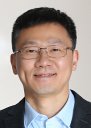
 Yuantao Gu
· 1 previous affiliation
- Tsinghua UniversitySince 2018
- Full Professor · Since 2018
Research Overview
Yuantao Gu focuses on signal processing, non-convex optimization, and the theoretical foundations of machine learning. His trajectory spans early contributions to adaptive filtering and sparse signal recovery to recent advancements in the training dynamics and guidance mechanisms of diffusion models. Currently, his work addresses multimodal remote sensing, machine unlearning, and zero-shot inverse problems using large generative models.
Research Trajectory
His early research focused on adaptive filtering and system identification. He introduced the LMS algorithm with gradient descent filter length (2004), dynamically adjusting the filter length along the negative gradient direction to achieve faster convergence and robust performance in diverse environments. Building on this foundation, he later integrated sparsity metrics into system identification, proposing the l0 Norm Constraint LMS Algorithm for Sparse System Identification (2009) to accelerate the convergence of small coefficients by adding a zero attractor to the iterations.
In the early 2010s, his focus expanded to the theoretical guarantees of non-convex optimization in signal processing. He developed Approximate Projected Generalized Gradient Methods with Sparsity-inducing Penalties (2012) and A Non-convex Approach for Sparse Recovery with Convergence Guarantee (2013). These works provided a critical theoretical bridge, proving that generalized gradient descent algorithms can reliably converge to the sparsest solutions from standard starting points, even when utilizing computationally efficient approximate projections. This research significantly advanced the research direction of Spectral Initialization for Non-Convex Signal Recovery and the broader area of Linear Stability for Robust Signal Recovery.
Concurrently, he investigated the robustness of sparse estimation under imperfect conditions. With collaborators, he analyzed performance bounds when both the sensing matrix and measurement vector are corrupted by noise in On the Performance Bound of Sparse Estimation With Sensing Matrix Perturbation (2013), deriving closed-form expressions for the constrained Cramér-Rao bound. This line of inquiry was extended to Maximum Likelihood Estimation From Sign Measurements With Sensing Matrix Perturbation (2014), which explored estimator consistency and mean-square error performance, contributing to work in the area of Signal Recovery Beyond the Gaussian Measurement Assumption.
More recently, his work has addressed foundational challenges in deep learning optimization and high-dimensional statistics. He designed an Adaptive Polyak Step-Size for Momentum Accelerated Stochastic Gradient Descent With General Convergence Guarantee (2025), extending theoretical support to non-convex objectives where manual hyperparameter tuning was previously required. In statistical estimation, he introduced de-biased methods in Minimax Estimation of Linear Functions of Eigenvectors in the Face of Small Eigen-Gaps (2025), achieving near-optimal performance for fine-grained eigenvector analysis in challenging scenarios. Applying advanced neural architectures to applied domains, his group has also developed robust frameworks for remote sensing. This includes A Novel Multibranch Self-Distillation Framework for Optimizing Remote Sensing Change Detection (2025) to handle varying change area ratios, and M2CD: A Unified MultiModal Framework for Optical-SAR Change Detection With Mixture of Experts and Self-Distillation (2025), which bridges distinct data modalities using a mixture-of-experts approach.
His most recent trajectory demonstrates a deep engagement with the mechanics and control of generative diffusion models. To resolve color distortion and over-saturation in classifier-free guidance (CFG), his team proposed Angle Domain Guidance: Latent Diffusion Requires Rotation Rather Than Extrapolation (2025), aligning images with prompts by rotating latent samples rather than extrapolating them into high-magnitude regions. He further dissected these mechanisms in Stage-wise Dynamics of Classifier-Free Guidance in Diffusion Models (2026), revealing how diversity is lost across distinct sampling stages and proposing a novel guidance schedule to improve both fidelity and variety. Extending diffusion models to zero-shot inverse problems, he co-developed MAP-RPS in Stage-wise Distortion–Perception Traversal in Zero-shot Inverse Problems with Diffusion Models (2026), allowing precise navigation between reconstruction accuracy and visual realism. Addressing the privacy risks of generative memorization, he also introduced ReTrack: Data Unlearning in Diffusion Models through Redirecting the Denoising Trajectory (2026), a surgical unlearning method that preserves overall image quality. Finally, expanding into multimodal evaluation, he contributed to Beyond Flat Taxonomies: Hierarchical Capability Profiling for Time-Series Understanding and Reasoning in Large Models (2026), establishing a comprehensive benchmark for complex temporal reasoning and cross-modal understanding.
Current Directions
The most recent papers in the evidence point to a sustained focus on the theoretical and practical refinement of large generative models. A primary direction investigates the internal dynamics of diffusion models, specifically aiming to control the sampling process to mitigate artifacts, balance the perception-distortion tradeoff in inverse problems, and enable surgical machine unlearning without degrading generation quality.
Parallel to this work in generative AI, recent research addresses the evaluation and optimization of foundation models across diverse modalities. This includes developing hierarchical taxonomies to systematically diagnose failure modes in time-series reasoning, as well as designing adaptive optimization algorithms (such as Polyak step-sizes for non-convex stochastic gradient descent) that reduce the need for manual hyperparameter tuning in complex machine learning tasks.
Profile updated
Loading new papers…
Other researchers whose papers cluster into the same research directions — a proxy for overlapping technical interests and shared intellectual neighborhoods.
See something wrong? Report a mistake