

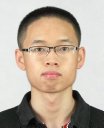
 Gen Li
4 previous affiliations
- Chinese University of Hong Kong2023–2025
- Assistant Professor · 2023–2025
- University of Pennsylvania2022–2023
- Postdoc · 2022–2023
- Tsinghua University2016–2021
- PhD student · 2016–2021
- Postdoc · 2021
9 other authors named Gen Li: Gen Li (Alibaba Group (China) · 23 papers), Gen Li (ETH Zurich · 22 papers), Gen Li (University of Houston · Clemson University · 16 papers), Gen Li (Nanyang Technological University · NTU MARS Lab · 8 papers), Gen Li (ByteDance (China) · 8 papers), and 4 more
Research Overview
Gen Li focuses on high-dimensional statistics, reinforcement learning, and the theoretical foundations of generative AI. His early work addressed non-convex optimization and sample efficiency in model-free reinforcement learning, establishing optimal bounds for exploration and offline learning. More recently, his research centers on the convergence properties, mathematical theory, and algorithmic acceleration of diffusion-based generative models.
Research Trajectory
He began his research trajectory by investigating high-dimensional statistical estimation, specifically focusing on the area of Overcomplete Tensor Decomposition for Latent Variable Discovery. In Nonconvex Low-Rank Tensor Completion from Noisy Data (2019), he developed a two-stage nonconvex algorithm that achieves optimal statistical guarantees for reconstructing low-rank symmetric tensors from incomplete and corrupted observations.
Transitioning into reinforcement learning (RL), his work sought to establish rigorous sample complexity bounds and analyze optimization landscapes. He contributed to the research direction of Optimization Geometry of Softmax Policy Gradient Methods, participating in the analysis of Softmax Policy Gradient Methods Can Take Exponential Time to Converge, which highlighted the optimization challenges of standard policy parameterizations. He subsequently led efforts to resolve fundamental sample efficiency barriers in episodic RL. In Breaking the Sample Complexity Barrier to Regret-Optimal Model-Free Reinforcement Learning, he established minimax-optimal regret bounds, advancing the broader area of Reference Advantage Decomposition for Optimal Model Free Reinforcement Learning and contributing to the research area of Minimizing Burn-In Costs for Sample-Optimal Reinforcement Learning. Extending these theoretical guarantees to offline settings, he introduced pessimistic variants of Q-learning in Pessimistic Q-Learning for Offline Reinforcement Learning: Towards Optimal Sample Complexity, demonstrating that model-free algorithms can match model-based sample complexity by incorporating variance reduction and the principle of pessimism. He continued to explore RL through collaborative work on Minimax-optimal reward-agnostic exploration in reinforcement learning, which designed algorithms to find optimal policies across multiple reward functions without initial reward guidance.
Concurrently, his focus shifted toward the theoretical foundations of generative AI, particularly diffusion models. He participated in establishing non-asymptotic guarantees for the research area of Convergence and Complexity of Deterministic Diffusion Samplers with A Sharp Convergence Theory for The Probability Flow ODEs of Diffusion Models, proving nearly linear convergence rates for probability flow ODE samplers in discrete time.
By 2025, his research was heavily concentrated on the mathematical underpinnings of diffusion models. He led the development of theoretical frameworks for single-step sampling techniques in Towards a mathematical theory for consistency training in diffusion models. He also significantly advanced the understanding of convergence rates. In Improved Convergence Rate for Diffusion Probabilistic Models, he utilized a randomized midpoint method to achieve a new state-of-the-art iteration complexity for score-based models. He further refined these bounds in O(d/T) Convergence Theory for Diffusion Probabilistic Models under Minimal Assumptions, demonstrating that high accuracy can be achieved relying only on finite first-order moments and $\ell_2$-accurate score estimates.
Alongside convergence theory, he investigated the mechanics of generation quality and speed. He provided the first theoretical proof that classifier-free guidance systematically reduces low-probability samples in Provable Efficiency of Guidance in Diffusion Models for General Data Distribution. Addressing generation speed, he collaborated on Faster Diffusion Models via Higher-Order Approximation, which introduced a training-free sampling algorithm using high-order ODE solvers. He also extended diffusion theory to discrete domains, providing a rigorous foundation for non-autoregressive text generation in Breaking AR’s Sampling Bottleneck: Provable Acceleration via Diffusion Language Models. Beyond diffusion, he contributed to the analysis of transformer architectures, co-authoring Transformers Meet In-Context Learning: A Universal Approximation Theory, which proved that transformers can emulate proximal gradient descent to approximate general function classes without weight updates.
In his most recent work, he has continued to challenge conventional assumptions about diffusion sampling efficiency. Serving as principal investigator, he oversaw Are First-Order Diffusion Samplers Really Slower? A Fast Forward-Value Approach, which demonstrated that simple first-order samplers can outperform complex higher-order methods by evaluating the model at a "lookahead" point. He also addressed the dependency of denoising steps on data dimensionality, contributing to the research direction of Robustness of Diffusion Models to Average Score Errors. In Dimension-free convergence of diffusion models for approximate Gaussian mixtures, he proved that for distributions resembling Gaussian Mixture Models, diffusion models can achieve convergence rates that are independent of both the ambient dimension and the number of mixture components.
Current Directions
The most recent papers in the evidence indicate a strong focus on the mathematical foundations and algorithmic acceleration of diffusion-based generative models. Current work investigates the theoretical limits of convergence, seeking to establish dimension-free bounds and optimal iteration complexities under minimal assumptions. This includes analyzing the efficacy of first-order versus higher-order ordinary differential equation (ODE) solvers for sampling, as well as formalizing the mechanisms behind consistency training and classifier-free guidance. Additionally, recent research explores the application of continuous diffusion processes to discrete domains, aiming to overcome the sampling bottlenecks of traditional autoregressive language models.
Profile updated
Loading new papers…
Other researchers whose papers cluster into the same research directions — a proxy for overlapping technical interests and shared intellectual neighborhoods.
See something wrong? Report a mistake