

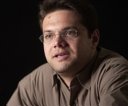
 Petros Boufounos
· 3 previous affiliations
- Deputy Director · Since 2023
- Senior Team Leader · Since 2022
- Distinguished Research Scientist · Since 2021
- Deputy Director/Distinguished Research Scientist · Since 2009
- Summer Intern · 2003
- Rice University2006–2009
- Postdoctoral Research Associate · 2006–2009
- Postdoc · 2006–2008
- Postdoctoral Associate · 2006
- Graduate Research Assistant · 2000–2006
- PhD student · 2002–2006
- MS student · 2000–2002
- Undergrad student · 1996–2000
Research Overview
Petros Boufounos focuses on signal acquisition, compressive sensing, and computational imaging, with a particular emphasis on developing robust algorithms for sparse recovery and quantized signal representations. His trajectory spans theoretical work in one-bit compressive sensing and greedy optimization to advanced applications in radar, lidar, and multi-spectral imaging. Most recently, his research investigates neural dynamic fusion and transformer-based architectures for high-precision wireless sensing and 3D pose estimation.
Research Trajectory
Boufounos began his research trajectory investigating biological signal analysis, culminating in his early work on Signal processing for DNA sequencing. He subsequently shifted his focus toward the mathematical foundations of signal acquisition and quantization. In Quantization Noise Shaping on Arbitrary Frame Expansions, he generalized classical oversampled noise shaping to arbitrary finite frame expansions, contributing to the broader area of Noise Shaping for Quantized Signal Representations. This interest in efficient acquisition led to a significant contribution in 1-Bit compressive sensing, which demonstrated that sparse signals could be recovered using only the sign of randomized measurements, drastically reducing hardware requirements for signal acquisition systems.
Building on these compressive sensing principles, his work expanded into robust optimization and sparse recovery. He participated in developing the Binary Iterative Hard Thresholding (BIHT) algorithm in Robust 1-Bit Compressive Sensing via Binary Stable Embeddings of Sparse Vectors, which provided theoretical guarantees for reconstruction accuracy under extreme quantization. During this period, he also advanced the research direction of Iterative Hard Thresholding for Sparse Optimization and the broader field of Bridging Theoretical and Empirical Gaps in Sparse Recovery. A key development was the Gradient Support Pursuit (GraSP) algorithm, introduced in Greedy sparsity-constrained optimization, which extended greedy sparse optimization to arbitrary cost functions beyond standard squared-error loss. He further generalized these concepts to nonlinear problems in Learning Model-Based Sparsity via Projected Gradient Descent, utilizing the Stable Model-Restricted Hessian condition to guarantee geometric convergence for structured sparse signals. This work directly advanced the area of Automated Sparsity Selection in High Dimensional Models.
In the latter half of the 2010s, Boufounos applied sparse recovery and optimization techniques to complex computational imaging and sensing systems. His research addressed challenges in distributed radar systems, where antenna position ambiguity and asynchronous clocks degrade image quality. In Sparse Blind Deconvolution for Distributed Radar Autofocus Imaging, he proposed an optimization framework to resolve antenna perturbations in near-field imaging. He extended this by modeling synchronization errors as a convolution with a sparse delay signal in Coherent Radar Imaging Using Unsynchronized Distributed Antennas. Together, these efforts contributed significantly to the research direction of Joint Optimization for Blind Image Restoration. Concurrently, he explored novel hardware architectures, such as a real-time time-of-flight depth sensor utilizing random modulation in High-Resolution Lidar Using Random Demodulation.
His work in computational imaging also tackled the fundamental limits imposed by physical scattering. He collaborated on the SEAGLE technique in SEAGLE: Sparsity-Driven Image Reconstruction Under Multiple Scattering, which combined an iterative forward model with total variation regularization to account for multiple electromagnetic scattering. This aligned with his broader contributions to the area of Nonlinear Inverse Scattering for High-Contrast Media, which he further advanced in High-Contrast Limited-Angle Reflection Tomography by proposing a constrained incremental frequency inversion framework for severely ill-posed reflection regimes.
As deep learning began to intersect with traditional signal processing, Boufounos investigated methods to integrate interpretable architectures into image fusion and denoising. He guided the development of a signal processing-inspired learning solution in Unrolled Projected Gradient Descent for Multi-spectral Image Fusion, which unrolled the iterations of the projected gradient descent algorithm to fuse low-resolution multi-spectral images with high-resolution panchromatic data. He also addressed mis-registration in image fusion by decomposing parameter matrices to isolate inliers in Robust Mutual Information-Based Multi-Image Registration. In the domain of inverse problems, he explored plug-and-play denoising in Learning Plug-And-Play Proximal Quasi-Newton Denoisers, deploying a convolutional neural network to estimate element-wise noise levels within an unfolded proximal quasi-Newton algorithm. Additionally, he developed robust approaches for recovering low-rank Hankel matrices from contaminated signals in Robust Parameter Estimation of Contaminated Damped Exponentials.
Moving into the 2020s, Boufounos increasingly integrated modern deep learning architectures with radio frequency and radar sensing. He guided the development of a Neural Dynamic Fusion framework in Multi-Band Wi-Fi Neural Dynamic Fusion, which aligns asynchronous Wi-Fi signals across different frequency bands using continuous-time latent spaces modeled by Neural Ordinary Differential Equations. His research also addressed advanced perception tasks using radar data. In RAPTR: Radar-based 3D Pose Estimation using Transformer, he and his collaborators developed a framework for 3D human pose estimation that relies on weak supervision to eliminate the need for expensive 3D keypoint labels. Furthermore, Indoor Multi-View Radar Object Detection via 3D Bounding Box Diffusion explored multi-view indoor radar perception by lifting 2D bounding box diffusion processes into 3D radar space, enhancing cross-view feature association for complex indoor environments.
Current Directions
The most recent work in the evidence indicates a strong focus on unified multi-modal perception and high-precision wireless sensing. This research addresses the challenges of heterogeneous sensor suites—particularly radar and Wi-Fi—by leveraging advanced generative and sequence-modeling architectures like diffusion models, transformers, and neural differential equations. A major ongoing theme is the extraction of complex spatial and kinematic information, such as 3D human pose and object bounding boxes, from noisy or weakly supervised radio frequency data. By bridging continuous-time dynamical systems with deep learning, this direction aims to improve the robustness and resolution of indoor perception and tracking systems without relying on traditional, highly calibrated optical sensors.
Profile updated
Loading new papers…
Other researchers whose papers cluster into the same research directions — a proxy for overlapping technical interests and shared intellectual neighborhoods.
See something wrong? Report a mistake