

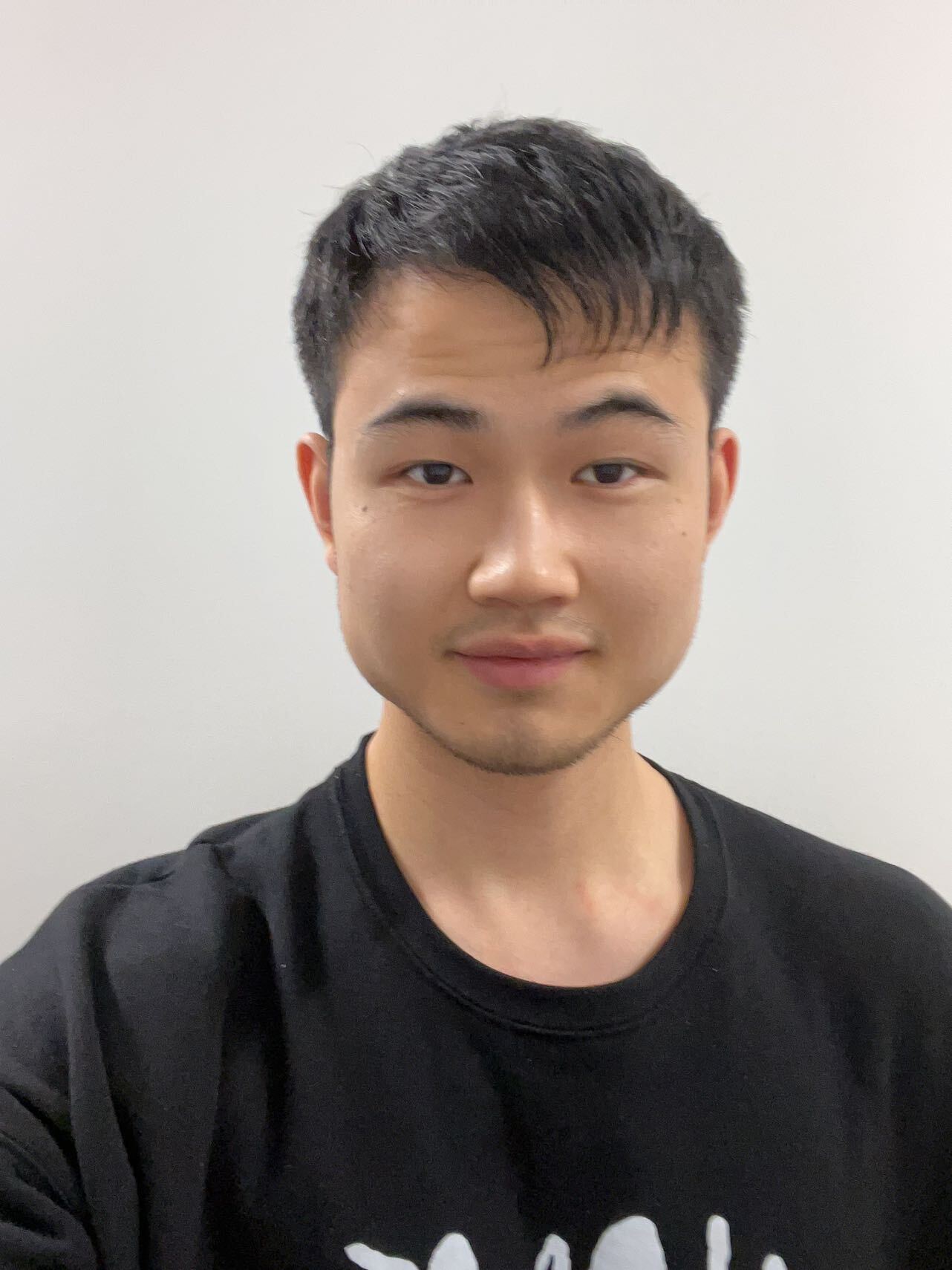
 Yu Wang
· 5 previous affiliations
- University of OregonSince 2024
- Assistant Professor · Since 2024
- Vanderbilt UniversitySince 2019
- PhD student · Since 2019
- Adobe Systems (United States)2023–2024
- Intern · 2023–2024
- Intern · 2022
- Harbin Institute of Technology2015–2019
- Undergrad student · 2015–2019
50 other authors named Yu Wang: Yu Wang (Tsinghua University · 679 papers), Yu Wang (Tianjin University · 79 papers), Yu Wang (Shanghai Jiao Tong University · 62 papers), Yu Wang (53 papers), Yu Wang (Massachusetts Institute of Technology · 42 papers), and 45 more
Research Overview
Yu Wang focuses on machine learning, graph neural networks, and agentic artificial intelligence. His trajectory spans foundational work in graph representation learning, addressing algorithmic fairness and topological imbalances, to recent architectures integrating large language models with structured knowledge. His current research emphasizes trustworthy reasoning, graph-augmented retrieval, and efficient language model deployment.
Research Trajectory
Wang’s early research explored deep learning architectures for computer vision, including the development of recursive convolutional networks for crowd counting in A Deeply-Recursive Convolutional Network For Crowd Counting (2018). His focus subsequently shifted toward the foundational infrastructure of graph neural networks (GNNs). He participated in the development of CogDL: A Comprehensive Library for Graph Deep Learning (2021), an open-source library designed to optimize the training and evaluation of GNNs through custom sparse operators and unified pipelines.
Building on this infrastructure, Wang began addressing critical vulnerabilities in GNNs, particularly their performance on imbalanced and biased datasets. He introduced methods to handle minority class labels in Imbalanced Graph Classification via Graph-of-Graph Neural Networks (2022). Recognizing that real-world networks rarely meet the balanced data assumptions of standard models, he developed techniques for Fair Graph Representation Learning with Imbalanced and Biased Data (2022). He further investigated how feature propagation in GNNs can inadvertently expose protected information, proposing solutions in Improving Fairness in Graph Neural Networks via Mitigating Sensitive Attribute Leakage (2022). This interest in equitable machine learning extended to model interpretability. In Fairness and Explainability: Bridging the Gap towards Fair Model Explanations (2023), he advanced the concept of procedure-oriented fairness, ensuring models provide equally high-quality explanations across demographic groups—a key contribution to the research direction of Procedural Fairness and Decision Rationale Alignment.
Wang has also applied advanced graph architectures to domain-specific challenges. In drug discovery, he developed MolKGNN, detailed in Interpretable Chirality-Aware Graph Neural Network for Quantitative Structure Activity Relationship Modeling in Drug Discovery (2023), which explicitly models molecular chirality to improve screening on highly imbalanced datasets. Alongside this applied work, he collaborated on a comprehensive overview of privacy vulnerabilities in graph systems with A Survey on Privacy in Graph Neural Networks: Attacks, Preservation, and Applications (2024), aligning with ongoing research in the broader area of Differential Privacy for Evolving Graph Structures. Returning to fundamental graph mechanics, he investigated why GNNs succeed on certain nodes but fail on others in A Topological Perspective on Demystifying GNN-Based Link Prediction Performance (2024), advancing the study of Robust Graph Learning under Topological Distribution Shifts.
In recent years, Wang’s trajectory has expanded to integrate structured knowledge with large language models (LLMs). He introduced the Knowledge Graph Prompting (KGP) method in Knowledge Graph Prompting for Multi-Document Question Answering (2024) to help LLMs navigate logical associations across multiple texts. He also directed a comprehensive synthesis of the field in Personalization of Large Language Models: A Survey (2024), bridging the gap between personalized text generation and downstream recommendation systems. This synthesis work continued with Retrieval-Augmented Generation with Graphs (GraphRAG) (2025), which formalized how interconnected graph data can enable multi-hop reasoning in retrieval systems. To ensure the reliability of these hybrid systems, he developed the UAG framework in Towards Trustworthy Knowledge Graph Reasoning: An Uncertainty Aware Perspective (2025), utilizing conformal prediction to provide statistical guarantees for LLM-KG reasoning.
Concurrently, Wang has explored generative AI across various domains. He applied LLMs to social computing in Amplifying Your Social Media Presence: Personalized Influential Content Generation with LLMs (2025), injecting network structure into prompts to optimize content engagement. In the realm of graph generation, he proposed a large-scale pre-training paradigm in A Large-scale Training Paradigm for Graph Generative Models (2025), enabling zero-shot generalization across diverse domains. Returning to drug discovery, he introduced the ScaffAug framework in Scaffold-Aware Generative Augmentation and Reranking for Enhanced Virtual Screening (2025) to address data imbalance through generative augmentation. Addressing the computational constraints of massive models, he provided a roadmap for efficient deployment in A Survey on Small Language Models (2025). More recently, Wang contributed to multimodal post-training in VICO: Visual Environments Co-Evolving for Vision-Language Model Reasoning (2026), collaborating on a co-evolutionary framework that dynamically edits and re-renders visual environments to calibrate task difficulty during reinforcement learning.
Current Directions
The most recent papers in the evidence address the intersection of large language models, structured knowledge, and generative AI. Recent work investigates how to ground LLM reasoning in graph-structured data, formalizing the paradigm of GraphRAG to enable complex, multi-hop retrieval. Alongside this, Wang is developing frameworks for trustworthy knowledge graph reasoning that use conformal prediction to provide statistical guarantees and quantify uncertainty. His current research also explores large-scale training paradigms for graph generative models, co-evolutionary reinforcement learning for vision-language models, and the optimization and deployment of small language models for resource-constrained environments.
Profile updated
Loading new papers…
Other researchers whose papers cluster into the same research directions — a proxy for overlapping technical interests and shared intellectual neighborhoods.
See something wrong? Report a mistake