

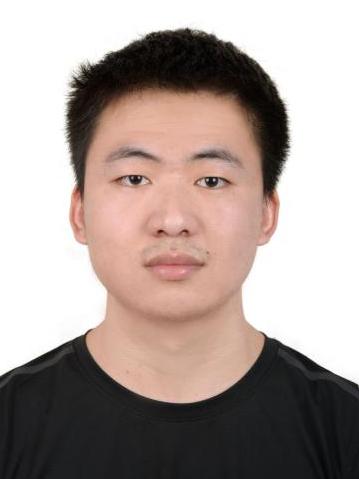
 Haoyu Han
· 2 previous affiliations
- Michigan State UniversityCurrent
- Current
- PhD student · 2021–2026
- MS student · 2018–2021
- Undergrad student · 2014–2018
2 other authors named Haoyu Han: Haoyu Han (Harvard University · 4 papers), Haoyu Han (Beijing Institute of Technology · 1 paper)
Research Overview
Haoyu Han focuses on machine learning on graphs, large language models, and the integration of structured knowledge into artificial intelligence systems. His early work addressed the optimization, spectral properties, and structural biases of graph neural networks. More recently, his research investigates retrieval-augmented generation, exploring how graph-structured data can enhance the reasoning capabilities of language models.
Research Trajectory
Haoyu Han’s research began with a focus on spatial-temporal modeling for recommendation systems. His early work addressed the complexities of Point-of-Interest (POI) recommendation, where user preferences are heavily influenced by both geographic constraints and temporal dynamics. In STGCN: A Spatial-Temporal Aware Graph Learning Method for POI Recommendation, he introduced a framework that captures user-region periodic patterns, moving beyond simple distance metrics to model how user preferences for different regions shift over time.
Following this, his focus shifted toward the foundational optimization and training dynamics of Graph Neural Networks (GNNs). Recognizing that the standard end-to-end training of GNNs can be computationally inefficient and memory-intensive, he explored alternative optimization strategies. He formulated GNN training through a multi-view learning perspective in Graph Neural Networks as Multi-View Learning, treating graph structure, node features, and node labels as distinct views. This theoretical reframing enabled the development of alternating optimization algorithms, which he detailed in Alternately Optimized Graph Neural Networks, demonstrating that GNNs could be trained more efficiently without sacrificing semi-supervised classification performance.
Building on his expertise in GNN architectures, Han began investigating the spectral properties of graphs to improve representation learning. Contributing to the research direction of Spectral Augmentation for Graph Representation Learning and the broader area of Scaling Spectral Graph Neural Networks, he developed methods to selectively perturb graph frequencies. In Spectral-Aware Augmentation for Enhanced Graph Representation Learning, he proposed the GASSER framework, a graph contrastive learning approach that replaces random edge dropping with targeted spectral perturbations based on a graph's homophily, thereby preserving task-relevant information while generating robust training views.
This interest in graph homophily and structural patterns led to deeper investigations into the biases inherent in GNNs. Han identified and quantified a phenomenon where nodes located closer to labeled data systematically outperform more distant nodes. Advancing the research direction of Reducing Label Position Bias in Graph Neural Networks, he introduced the Label Proximity Score (LPS) and a corresponding debiasing method in Towards Label Position Bias in Graph Neural Networks. He continued to address fairness and structural imbalances in Structural Fairness-aware Active Learning for Graph Neural Networks. Concurrently, he tackled the challenge of applying GNNs to real-world graphs that exhibit mixed homophilic and heterophilic patterns. Contributing to the area of Adaptive Spectral Filtering for Heterophilic Graph Neural Networks, he demonstrated that uniform global filters are often suboptimal. To resolve this, he developed a mixture-of-experts approach in Node-wise Filtering in Graph Neural Networks: A Mixture of Experts Approach, allowing the network to apply adaptive, node-specific filtering strategies.
Around 2024, Han’s trajectory expanded to intersect with the rapid advancements in Large Language Models (LLMs). He initially participated in research exploring how LLMs could be applied directly to graph tasks, such as in Label-free Node Classification on Graphs with Large Language Models (LLMs). This evolved into a dedicated focus on the research direction of Graph Reasoning for Large Language Models, specifically through the lens of Retrieval-Augmented Generation (RAG). He authored a comprehensive survey, Retrieval-Augmented Generation with Graphs (GraphRAG), which categorized emerging techniques and established a holistic framework for leveraging relational graph data to ground LLM outputs. He further formalized this space with RAG vs. GraphRAG: A Systematic Evaluation and Key Insights, providing a rigorous empirical comparison of traditional text-based retrieval against graph-structured retrieval across various tasks.
Most recently, Han has focused on moving beyond static retrieval pipelines toward dynamic, agentic reasoning over knowledge graphs. In Reasoning by Exploration: A Unified Approach to Retrieval and Generation over Graphs, he introduced the RoE framework, which unifies retrieval and generation by training LLMs via reinforcement learning to actively explore knowledge graphs step-by-step. He also collaborated on Beyond Static Retrieval: Opportunities and Pitfalls of Iterative Retrieval in GraphRAG, which proposed a dual-thought retrieval framework to capture the "connective tissue" between disparate facts that single-pass retrieval often misses. His ongoing efforts to systematize this field are reflected in his recent instructional work, Rigorizing Retrieval-augmented Generation with Structured Knowledge Intelligence (6 Hrs), which addresses the practical and theoretical challenges of modeling heterogeneous structured knowledge for high-stakes AI applications.
Current Directions
Han’s most recent work investigates the intersection of structured knowledge representation and large language model reasoning. A primary focus is the evolution of Graph-based Retrieval-Augmented Generation (GraphRAG) from static, single-hop retrieval systems into dynamic, iterative reasoning frameworks. Recent papers in the evidence address the limitations of traditional "retrieve-then-generate" pipelines, proposing unified architectures where language models actively explore graph topologies to synthesize multi-hop answers.
Additionally, his current research emphasizes the rigorous evaluation and standardization of how LLMs interact with heterogeneous data structures, such as knowledge graphs, tabular schemas, and document trees. By combining supervised fine-tuning with reinforcement learning, his recent frameworks aim to improve the generalization of graph-augmented language models to unseen relational structures, ensuring more accurate and grounded knowledge synthesis in complex, knowledge-intensive tasks.
Profile updated
Loading new papers…
Other researchers whose papers cluster into the same research directions — a proxy for overlapping technical interests and shared intellectual neighborhoods.
See something wrong? Report a mistake