

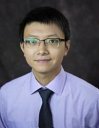
 Hao Wu
· 5 previous affiliations
- Adobe Systems (United States)Since 2026
- Applied Research Scientist (Senior staff) · Since 2026
- Meta (United States)2020–2026
- Staff Research Scientist · 2020–2026
- Amazon (United States)2016–2020
- Research Scientist · 2017–2020
- Computer Vision Intern · 2016
- University of Houston2012–2017
- PhD student · 2012–2017
- Research Assistant · 2012–2013
- Undergrad student · 2008–2012
32 other authors named Hao Wu: Hao WU (87 papers), Hao Wu (Shanghai Jiao Tong University · 68 papers), Hao Wu (Tencent (China) · Tsinghua University · 63 papers), Hao Wu (52 papers), Hao Wu (Eastern Institute for Advanced Study · Shanghai Jiao Tong University · 20 papers), and 27 more
Research Overview
Hao Wu focuses on the scalability, architectural efficiency, and algorithmic optimization of Graph Neural Networks (GNNs), with a particular emphasis on large-scale temporal networks and industrial-scale recommendation systems. His work addresses fundamental bottlenecks in graph learning, including the "neighbor explosion" problem in deep GNNs, the high memory overhead of Graph Transformers, and the computational complexity of processing dynamic graph structures. By developing novel sampling techniques and simplified architectural frameworks, Wu contributes to the deployment of graph-based machine learning in high-throughput environments such as advertising and social network analysis.
Research Trajectory
Wu’s research trajectory reflects a transition from the study of complex physical and social systems toward the development of efficient deep learning architectures for large-scale data. His early work was rooted in computational physics and social network analysis, where he explored the mathematical representation of multi-valued solutions and influence dynamics. Between 2010 and 2012, his research involved Overcoming Selection Bias from Passive Content Consumption, addressing the "visibility trap" in social data by accounting for users who consume content without active participation. During this period, he also contributed to Topic-Aware Influence Modeling in Social Networks, moving beyond global influence metrics like PageRank to understand how expertise and persuasion vary across different subject domains.
Parallel to these social inquiries, Wu’s early technical contributions extended into numerical methods for wave physics. He participated in research regarding Phase Space Representations for Multi-valued Wave Solutions, which addressed the mathematical challenges of "caustics" where wave amplitudes theoretically reach infinity. This work necessitated Overcoming the Resolution Bottleneck in Highly Oscillatory Simulations, a problem in computational physics where grid fineness must exceed the smallest oscillation. These early experiences in handling high-frequency data and complex system representations provided a foundation for his later focus on computational efficiency in machine learning.
By 2019, Wu’s focus shifted toward the challenges of learning from imperfect data, specifically Learning from Biased Positive and Unlabeled Data. This work addressed scenarios where only a small subset of positive examples is confirmed, a common problem in fraud detection and medical diagnosis. This interest in data efficiency evolved into a broader concern for model scalability, leading to his participation in research on Scaling Neural Networks with Frequency Domain Convolutions in 2021. This research proposed shifting convolutional operations into the frequency domain to bypass the computational costs of standard spatial sliding-window approaches, particularly for high-resolution inputs.
Since 2023, Wu has concentrated almost exclusively on the architecture and training dynamics of GNNs. He has moved away from traditional recurrent and attention-based mechanisms for temporal graphs, advocating instead for simplified MLP-based structures that maintain performance while reducing complexity. His most recent work involves the application of vector quantization to graph data and the development of frameworks capable of handling billion-scale graphs in industrial settings.
Current Directions
Wu’s current research is centered on three primary pillars: the simplification of temporal graph learning, the scalability of Graph Transformers, and the optimization of GNN training through advanced sampling.
In the domain of temporal networks, Wu has challenged the necessity of complex recurrent neural networks (RNNs) and self-attention mechanisms (SAMs). His collaborative work suggests that simpler architectures, utilizing multi-layer perceptrons (MLPs) and neighbor mean-pooling, can achieve competitive results with significantly lower computational overhead. This direction aims to make temporal graph learning more accessible for real-time applications where the latency of SAMs or RNNs is prohibitive.
Another major focus is the adaptation of the Transformer architecture for graph-structured data. While Transformers have dominated text and vision, their application to graphs is hindered by the quadratic complexity of global attention. Wu participates in research that utilizes virtual connections and mini-batching strategies to make Graph Transformers scalable to massive datasets. Furthermore, he is exploring "graph tokenization," a method that converts complex graph structures into compact, discrete tokens using self-supervised learning. This approach allows standard Transformer models to process graphs with a drastically reduced memory footprint.
Finally, Wu continues to address the "neighbor explosion" problem—the exponential growth of required nodes when calculating embeddings in deep GNNs. His work on staleness-based subgraph sampling utilizes historical embeddings to approximate full-batch training. By analyzing the approximation errors inherent in using "stale" (out-of-batch) node embeddings, Wu and his collaborators have developed sampling methods that allow for constant GPU memory consumption even when training on exceptionally large graphs.
Representative Work
Wu’s recent contributions are documented in several key papers that highlight his focus on efficiency and scalability in graph learning.
In 2023, Wu contributed to the development of GraphMixer, as detailed in Do We Really Need Complicated Model Architectures For Temporal Networks?. This work questions the de facto reliance on RNNs and self-attention for temporal graph learning. Wu and his colleagues proposed a simplified architecture consisting of an MLP-based link-encoder, a mean-pooling node-encoder, and an MLP link classifier. The study demonstrated that these conceptually simpler components could outperform or match more complex models, suggesting a more efficient path for temporal information extraction.
Addressing the scalability of Graph Transformers, Wu participated in the research presented in VCR-Graphormer: A Mini-batch Graph Transformer via Virtual Connections. This framework introduces virtual connections to facilitate mini-batch training, allowing Graph Transformers to be applied to real-world datasets that were previously too large for standard Transformer architectures. This work represents a significant step in bringing the benefits of attention-based graph modeling to large-scale industrial contexts.
Wu’s work on training efficiency is further exemplified by his research into Staleness-based subgraph sampling for large-scale GNNs training. This paper addresses the challenge of obtaining accurate node embeddings without the memory costs associated with neighbor explosion. By using historical embeddings for out-of-batch nodes, the proposed method approximates full-batch training. Wu’s contribution involved analyzing the approximation error caused by embedding staleness and designing a subgraph sampling method that specifically mitigates these errors, maintaining constant GPU memory usage. This research was further expanded in Staleness-based Subgraph Sampling for Training GNNs on Large-Scale Graphs, reinforcing the utility of historical embeddings in large-scale GNN optimization.
In 2025, Wu collaborated on the development of Learning Graph Quantized Tokenizers. This work introduces GQT, a framework that applies Residual Vector Quantization to graphs. By converting graph structures into discrete tokens, the framework enables vanilla Transformers to achieve state-of-the-art performance while reducing memory footprints by up to 270x. This work bridges the gap between discrete tokenization strategies used in Large Language Models and the continuous nature of graph representations.
Finally, Wu’s involvement in industrial applications is seen in the Billion-Scale Graph Deep Learning Framework for Ads Recommendation. In this project, he contributed to a framework designed for the extreme scale of modern advertising systems, where graph-based models must process billions of nodes and edges to provide accurate recommendations. This work demonstrates the practical impact of his research on GNN scalability and efficient architecture design.
Profile updated
| Paper | Venue | Year |
|---|---|---|
| Learning Graph Quantized TokenizersGitHublimei0307/ | ICLR | 2025 |
Loading new papers…
Other researchers whose papers cluster into the same research directions — a proxy for overlapping technical interests and shared intellectual neighborhoods.
See something wrong? Report a mistake