

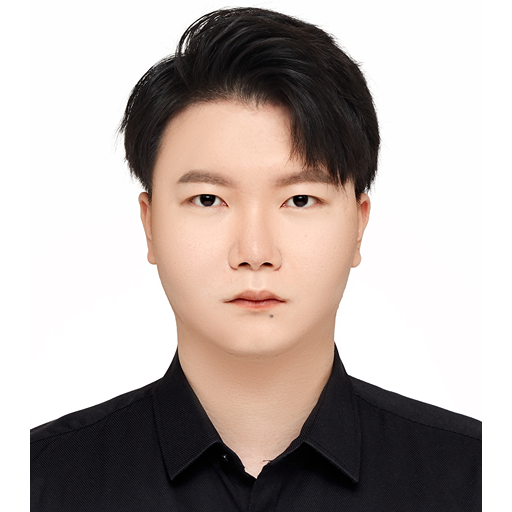
 Hao Wu
· 4 previous affiliations
- Eastern Institute for Advanced StudySince 2024
- Researcher · Since 2024
- Current
- MS student · 2022–2024
- Zhejiang University2017–2021
- Undergrad student · 2017–2021
32 other authors named Hao Wu: Hao WU (87 papers), Hao Wu (Shanghai Jiao Tong University · 68 papers), Hao Wu (Tencent (China) · Tsinghua University · 63 papers), Hao Wu (52 papers), Hao Wu (14 papers), and 27 more
Research Overview
Hao Wu focuses on the evaluation and optimization of multimodal large language models, with specific applications in medical image understanding and computational efficiency. His early work established rigorous benchmarks for pathology and specialized transformer architectures for remote sensing. More recently, his research addresses the computational bottlenecks of multimodal models through systematic compression techniques and vision token reduction strategies.
Research Trajectory
Wu’s research initially centered on evaluating the reasoning capabilities of large multimodal models (LMMs) in highly specialized scientific and medical domains. In 2024, he led the development of PathMMU, a large-scale, expert-validated benchmark designed to test LMMs on pathology tasks. This study revealed a significant "expertise gap" between human pathologists and state-of-the-art models, demonstrating that models often rely on textual shortcuts rather than genuine visual analysis. This work contributes to several broader research areas, including the direction of Eliminating Linguistic Shortcuts in Multimodal Evaluation, the area of Visual Necessity Filtering for Multimodal Reasoning Benchmarks, and work in Multi-Scale Feature Integration in Computational Pathology.
Alongside medical imaging, he participated in research applying transformer architectures to remote sensing challenges. In Crater-DETR (2024), he and his collaborators proposed a variant of the DEtection TRansformer network designed to identify densely distributed and small-scale craters. The architecture utilized cross-attention operators and dense auxiliary head supervision to resolve foreground-background confusion in complex satellite imagery. Returning to pathology the following year, he contributed to PathBench (2025), which advanced the evaluation of LMMs by assessing their capabilities at both the localized patch level and the gigapixel whole-slide image (WSI) level.
As multimodal models grew in scale and complexity, Wu’s focus shifted toward addressing their substantial computational and memory overhead. In 2026, he authored From Data to Model: A Survey of the Compression Lifecycle in MLLMs, which provided a unified perspective on compression methods across the entire model pipeline, from raw data processing to language model inference.
Building on this systemic view of model efficiency, he introduced HiDrop (2026), a framework for hierarchical vision token reduction. By identifying a specific "vision processing window" across model layers, this approach skips unnecessary computation in shallow layers, aggressively prunes tokens in the middle layers, and exits vision processing early in deep layers. This method significantly reduces computational costs while maintaining accuracy, contributing directly to the research direction of Hierarchical Token Pruning for Efficient Transformers.
Current Directions
The most recent papers in the evidence address the computational bottlenecks of Multimodal Large Language Models (MLLMs). Recent work investigates systemic approaches to model compression, mapping the lifecycle of data and token processing to identify structural inefficiencies. A major focus is the development of hierarchical token reduction strategies that dynamically prune and manage vision tokens across network layers. This research aims to drastically reduce training and inference costs without sacrificing the complex reasoning capabilities required for advanced multimodal tasks.
Profile updated
Loading new papers…
Other researchers whose papers cluster into the same research directions — a proxy for overlapping technical interests and shared intellectual neighborhoods.
See something wrong? Report a mistake