

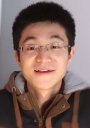
 Yu Guang Wang
· 2 previous affiliations
- Shanghai Jiao Tong UniversitySince 2021
- Associate Professor · 2021–2027
- Research Scientist · 2020–2021
Research Overview
Yu Guang Wang focuses on geometric deep learning, graph neural networks, and applied harmonic analysis. His research trajectory spans from foundational deep learning theory and topological data analysis to the development of physics-inspired neural message passing. Currently, his work addresses AI for science, particularly advancing generative models for protein design and causal representation learning.
Research Trajectory
His early research investigated the stability and optimization of neural networks. He introduced an improved Extreme Learning Machine algorithm designed to ensure full column rank in hidden layer outputs, which enhanced prediction stability for regression tasks (A study on effectiveness of extreme learning machine). Expanding into the theoretical limits of deep learning, he later directed research demonstrating that shallow neural networks with random weights cannot achieve zero approximation error for smooth functions, contributing to the broader area of Neural Networks as Ridge Splines in the Radon Domain (On the Approximation Lower Bound for Neural Nets with Random Weights).
By 2021, his focus shifted toward integrating topology and harmonic analysis into graph neural networks (GNNs). He participated in the development of Message Passing Simplicial Networks, a framework that lifts graphs into topological spaces to capture higher-order interactions beyond simple pairs, proving them strictly more expressive than standard GNNs (Weisfeiler and Lehman Go Topological: Message Passing Simplicial Networks). Concurrently, he explored the intersection of neural networks and persistent homology, guiding work on extracting and learning topological invariants directly from data (Can neural networks learn persistent homology features?).
Drawing on applied harmonic analysis, he contributed significantly to the research direction of Multi-scale Spectral Decomposition for Graph Representation Learning. This included collaborating on Undecimated Framelet Graph Convolution, which applies multi-scale signal processing to GNNs for improved noise robustness and data compression (How Framelets Enhance Graph Neural Networks). He further formalized these methods by developing fast G-framelet transforms for decimated systems on graphs (Decimated Framelet System on Graphs and Fast G-Framelet Transforms) and introducing a novel graph pooling operation based on compressive Haar transforms to filter fine-detail information in the wavelet domain (Haar Graph Pooling). To scale these geometric methods, he developed a theoretical framework for distributed manifold learning using filtered hyperinterpolation, enabling the processing of massive datasets with optimal approximation guarantees (Distributed Learning via Filtered Hyperinterpolation on Manifolds). He also advanced the theoretical understanding of GNN expressiveness by quantifying their linear regions, proving that deeper graph convolutional networks are exponentially more expressive than shallow ones due to the influence of graph structure (Lower and Upper Bounds for Numbers of Linear Regions of Graph Convolutional Networks).
Parallel to his methodological work, he applied geometric deep learning to the natural sciences. In oncology, he introduced a framework that models the tumor microenvironment as a complex social network of cells to predict patient survival in gastric cancer (Cell graph neural networks enable the precise prediction of patient survival in gastric cancer). In computational biology, he has focused on protein engineering, contributing to the broader area of Integrating Evolutionary Sequences with Geometric Protein Structures. He led the design of a lightweight equivariant graph neural network for multi-task protein representation learning, which recovers amino acid types from noisy three-dimensional local environments to predict higher-order mutant functions (Lightweight Equivariant Graph Representation Learning for Protein Engineering). He also developed GraDe-IF, a discrete graph denoising diffusion model for inverse protein folding that embeds evolutionary knowledge to generate diverse, biologically plausible sequences for a given 3D backbone (Graph Denoising Diffusion for Inverse Protein Folding).
Between 2023 and 2025, his work increasingly incorporated physics and dynamical systems into network propagation. He collaborated on modeling neural message passing as an interacting particle system with Allen-Cahn reaction-diffusion dynamics. This approach, which separates particles without blowing up, advanced work in the areas of Preserving Dirichlet Energy in Deep Graph Neural Networks and Balancing Attraction and Repulsion in Deep Graph Propagation (ACMP: Allen-Cahn Message Passing with Attractive and Repulsive Forces for Graph Neural Networks). He also contributed to the area of Scaling Spectral Graph Neural Networks by helping develop UniFilter, an adaptive polynomial basis that adjusts to a graph's homophily ratio to mitigate over-smoothing and over-squashing (How Universal Polynomial Bases Enhance Spectral Graph Neural Networks: Heterophily, Over-smoothing, and Over-squashing). Building on these dynamical system approaches, he recently directed research applying particle system theory to hypergraph message passing, addressing heterophily and over-smoothing in complex multi-node relationships (How Particle System Theory Enhances Hypergraph Message Passing).
Most recently, his research has expanded into the reliability and interpretability of foundational models. He established a Probably Approximately Correct (PAC) learning theory for Out-of-Distribution (OOD) detection in Transformers, defining the conditions under which these models can reliably distinguish in-distribution data from outliers (How Out-of-Distribution Detection Learning Theory Enhances Transformer: Learnability and Reliability). Additionally, he introduced CREATOR, an algorithm for linear causal representation learning that identifies hidden causal variables and their topological ordering without requiring identical noise distributions across datasets, offering new tools for uncovering latent logic in complex systems (Linear Causal Representation Learning by Topological Ordering, Pruning, and Disentanglement).
Current Directions
The most recent papers in the evidence indicate a focus on the theoretical foundations of representation learning and the reliability of large-scale models. Recent work investigates the learnability of Out-of-Distribution (OOD) detection in Transformers, establishing formal PAC learning guarantees for identifying anomalous data. Additionally, current research addresses causal representation learning, developing algorithms to discover latent causal variables and their topological ordering in high-dimensional systems under relaxed distributional assumptions. He also continues to advance higher-order graph neural networks, utilizing particle system theory to mitigate over-smoothing and heterophily in hypergraph message passing.
Profile updated
Loading new papers…
Other researchers whose papers cluster into the same research directions — a proxy for overlapping technical interests and shared intellectual neighborhoods.
See something wrong? Report a mistake