

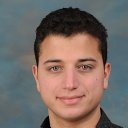
 Dominique Beaini
· 8 previous affiliations
- Valence DiscoverySince 2019
- Research Unit Lead · Since 2021
- Senior Machine Learning Scientist · 2020–2021
- Machine Learning Scientist · 2019–2020
- Associate Industry Member · Since 2021
- Associate Professor · 2021–2024
- Université de MontréalSince 2022
- Adjunct Professor in Informatics · Since 2022
- Valence Labs powered by recursionSince 2023
- Principal Researcher · Since 2023
- Valence Discovery - An ML drug discovery company2019–2020
- Principal Researcher · 2019–2020
- Ecole Polytechnique de Montreal2015–2019
- PhD student · 2016–2019
- Teaching Assistant (Chargé de Laboratoire) · 2015–2017
- Polytechnique Montréal2015–2018
- Doctor of Philosophy (PhD) in Engineering, Mechanical Engineering · 2016–2018
- Master of Engineering (M.Eng.), Mechatronics, Robotics, Computer Vision · 2015–2016
- General Electric (United States)2016–2017
- PhD Research Intern in Computer Vision and Deep Learning · 2016–2017
Research Overview
Dominique Beaini focuses on graph representation learning, molecular modeling, and the development of scalable foundation models for scientific discovery. His early work advanced the expressive power and scalability of graph neural networks and graph transformers. Recently, his research has shifted toward multimodal biological modeling, integrating molecular structures with phenomic data to predict cellular impacts and binding affinities.
Research Trajectory
Beaini’s early research concentrated on improving the expressivity and structural awareness of graph neural networks (GNNs). In 2020, he participated in developing Principal Neighbourhood Aggregation for Graph Nets, which provided theoretical and empirical foundations for using multiple aggregation functions to improve how models capture neighborhood information. Building on the need for more expressive architectures, he introduced Directional Graph Networks in 2021. This work utilized vector fields derived from Laplacian eigenvectors to guide message passing, significantly advancing the research direction of Anisotropic Message Passing for Directional Graph Learning by allowing GNNs to distinguish directions and mitigate over-smoothing. Concurrently, he collaborated on Rethinking Graph Transformers with Spectral Attention, which leveraged learned positional encodings based on the full Laplacian spectrum. This architecture improved graph distinction capabilities, contributing to the broader area of Spectral Positional Encodings for Graph Transformers and the research direction of Resolving Sign and Basis Ambiguity in Graph Spectral Representations.
Moving into 2022, his research expanded to address the limitations of standard message-passing paradigms in capturing distant node interactions. He guided the creation of the Long Range Graph Benchmark, a critical resource for evaluating models designed to capture long-range dependencies in graph neural networks. Building on this need for robust and scalable architectures, he developed a Recipe for a General, Powerful, Scalable Graph Transformer. This work categorized local, global, and relative encodings to establish a foundation with linear complexity, significantly advancing the research directions of Scaling Graph Transformers to Large Graphs and Hybrid Graph Networks for Long Range Dependencies.
By 2024, Beaini's focus shifted heavily toward computational chemistry, molecular biology, and the scaling of foundation models for scientific tasks. He led the development of Towards Foundational Models for Molecular Learning on Large-Scale Multi-Task Datasets, introducing the Graphium library alongside massive multi-task datasets to train foundation models across thousands of molecular tasks. He further explored these scaling dynamics in On the Scalability of GNNs for Molecular Graphs, investigating how to effectively scale graph architectures for drug discovery.
Simultaneously, he pioneered methods for linking chemical structures to biological impacts. He directed research on How Molecules Impact Cells: Unlocking Contrastive PhenoMolecular Retrieval and subsequently introduced Molphenix: A Multimodal Foundation Model for PhenoMolecular Retrieval. These works established a joint latent space between molecular structures and microscopy-based phenomic experiments using contrastive learning, enabling zero-shot molecular structure identification conditioned on cellular morphology. In the domain of 3D molecular structures, he oversaw the development of ET-Flow: Equivariant Flow-Matching for Molecular Conformer Generation, which combined physics-inspired harmonic priors with equivariant transformers to generate accurate conformers efficiently.
In recent years, his collaborative efforts have expanded into quantum chemistry and complex biological reasoning. In 2025, he participated in Self-Refining Training for Amortized Density Functional Theory, which introduced a strategy to predict electronic states and sample molecular conformations without relying on massive pre-labeled datasets. In 2026, he contributed to Towards Autonomous Mechanistic Reasoning in Virtual Cells, a multi-agent framework designed to ground large language models in verifiable biological mechanisms rather than hallucinated narratives. He also participated in the development of Boltz-2: Towards Accurate and Efficient Binding Affinity Prediction, a structural biology foundation model aimed at improving the prediction of biomolecular complex structures and their binding affinities.
Current Directions
The most recent papers in the evidence indicate a focus on integrating machine learning with deep physical and biological mechanisms. Recent work investigates the use of self-refining training strategies to accelerate quantum chemical calculations, specifically in amortized Density Functional Theory, reducing the reliance on large pre-computed datasets. Additionally, current research addresses the modeling of complex biomolecular interactions, focusing on foundational structural biology models that predict both 3D structure and binding affinity. Another emerging theme involves autonomous mechanistic reasoning, utilizing multi-agent frameworks and directed graphs of discrete actions to ensure large language models generate verifiable, structured biological predictions for virtual cell simulations.
Profile updated
Loading new papers…
Other researchers whose papers cluster into the same research directions — a proxy for overlapping technical interests and shared intellectual neighborhoods.
See something wrong? Report a mistake