

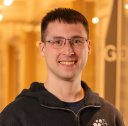
 Ladislav Rampášek
· 4 previous affiliations
- Google (United States)Since 2023
- Researcher · Since 2023
- Isomorphic LabsCurrent
- Current
- Université de Montréal2020–2023
- Postdoc · 2020–2023
- University of Toronto2012–2020
- PhD student · 2012–2020
Research Overview
Ladislav Rampášek focuses on graph representation learning, specifically the architectural design of Graph Neural Networks (GNNs) and Graph Transformers. His work addresses the limitations of message-passing paradigms in capturing long-range interactions, the development of robust benchmarking protocols for graph-structured data, and the integration of positional and structural encodings to enhance model expressivity. His research trajectory reflects an evolution from computational genomics and bioinformatics toward foundational machine learning methods for complex relational data.
Research Trajectory
The early phase of Rampášek’s research, spanning approximately 2014 to 2016, was primarily situated within the domain of computational biology and genomics. During this period, his work focused on the development of algorithmic solutions for high-throughput sequencing data and structural bioinformatics. This included the design of probabilistic frameworks for non-invasive prenatal testing and the optimization of motif search algorithms in long genomic sequences. These contributions addressed the computational challenges of processing large-scale biological datasets where precision and efficiency are paramount.
In 2017, Rampášek’s focus shifted toward more generalized machine learning problems, particularly those involving high-dimensional data and model interpretability. This period was characterized by an investigation into End-to-End Feature Selection using Continuous Relaxations, a method designed to overcome the combinatorial explosion inherent in selecting optimal feature subsets. This work was particularly relevant to the "small $n$, large $p$" problem common in Learning from High Dimensional Low Sample Size Biomedical Data, where traditional statistical models often struggle with overfitting. During this time, he also explored Non-Linear Feature Selection, moving beyond linear assumptions to capture complex variable dependencies. His research also touched upon generative modeling, including Normalizing Flows for Expressive Latent Variable Models and Generative Semi-Supervised Learning with Latent Labels, which sought to improve the flexibility of variational frameworks.
Since 2021, Rampášek has become a prominent contributor to the field of graph representation learning. His work in this area has been twofold: identifying the structural limitations of existing GNN architectures and proposing scalable alternatives that leverage global information. He has been instrumental in critiquing the standard message-passing paradigm, which often fails to capture long-range dependencies due to "over-squashing" or limited receptive fields. To address this, he has developed hierarchical models and graph-specific Transformer architectures that decouple the model's receptive field from the graph's local connectivity.
A significant portion of his recent work as a senior researcher has been dedicated to the systematic evaluation of graph learning models. He has led efforts to move beyond ad-hoc benchmarking by developing data-driven taxonomies that probe what specific characteristics—such as node features versus graph topology—a model is actually leveraging. This focus on rigorous evaluation has culminated in the creation of new benchmarks specifically designed to test a model's ability to handle long-range interactions, a critical requirement for applications in molecular chemistry and social network analysis.
Current Directions
Rampášek’s current research is centered on the development of "foundation-style" encoders for graphs. This involves creating Learning Universal Topological Vocabularies for Graph Transfer that can learn unified latent representations of various positional and structural encodings. By pre-training these encoders on diverse graph datasets, the goal is to provide a highly transferable feature extractor that can augment any GNN or Graph Transformer, reducing the need for manual feature engineering and improving performance across disparate tasks.
Furthermore, he continues to refine the "GPS" (General, Powerful, Scalable) framework for Graph Transformers. This direction focuses on balancing the local inductive biases of message passing with the global modeling capabilities of self-attention. His recent collaborative work also explores the revival of message-passing techniques in specialized domains like molecular property prediction, investigating whether well-tuned local components can match the performance of more complex global attention mechanisms in 3D molecular spaces.
Representative Work
Probabilistic method for detecting copy number variation in a fetal genome using maternal plasma sequencing In this first-author paper from 2014, Rampášek addressed the challenge of non-invasive prenatal testing (NIPT). The research introduced a probabilistic method to identify copy number variants (CNVs) in a fetus by analyzing the small fraction of fetal DNA present in maternal blood plasma. This work was significant for extending NIPT beyond whole-chromosome aneuploidies to smaller, sub-chromosomal genomic variations, utilizing maternal plasma sequencing to detect events that were previously difficult to resolve non-invasively.
Dropout Feature Ranking for Deep Learning Models As the second author of this 2017 study, Rampášek contributed to the development of a general feature ranking method for deep neural networks. The research addressed the "black box" nature of deep learning by proposing a simple yet effective ranking mechanism based on dropout. This method was designed to identify the most informative features in a dataset, which is critical for hypothesis-driven fields like healthcare and biology where interpretability and resource constraints (e.g., the cost of diagnostic tests) are primary concerns.
Hierarchical Graph Neural Nets can Capture Long-Range Interactions In this 2021 first-author paper, Rampášek investigated the failure of standard message-passing GNNs to model long-range interactions. He introduced the Hierarchical Graph Net (HGNet), which utilizes a multi-resolution representation of the input graph. The architecture guarantees that any two connected nodes can exchange information through a path of logarithmic length relative to the graph size. This work demonstrated that hierarchical structures could maintain local information while significantly expanding the model's receptive field, providing a theoretical and empirical basis for capturing global graph properties.
Recipe for a General, Powerful, Scalable Graph Transformer As the lead author of this 2022 work, Rampášek proposed the GPS (General, Powerful, Scalable) framework, a modular recipe for building Graph Transformers. The paper addressed the lack of a common foundation in the rapidly growing field of graph Transformers, specifically regarding the use of positional and structural encodings. By categorizing these encodings into local, global, and relative types and introducing a linear-complexity Transformer architecture, the research provided a scalable solution that achieved state-of-the-art results across diverse benchmarks, moving the field toward more standardized and efficient graph modeling.
Taxonomy of Benchmarks in Graph Representation Learning Serving as the senior author, Rampášek led this 2022 effort to taxonomize graph benchmarking datasets. The research introduced a "sensitivity profile" approach, which measures how GNN performance changes in response to specific graph perturbations. This data-driven taxonomy allows researchers to understand whether a particular benchmark is testing a model's ability to process node features or its ability to leverage complex structural topology. This work provided a principled framework for evaluating the actual strengths and weaknesses of new GNN architectures.
Graph Positional and Structural Encoder In this 2024 paper (last author), Rampášek introduced GPSE, a pre-trained graph encoder designed to capture rich positional and structural representations. Because graphs lack a canonical node ordering, positional and structural encodings (PSEs) are essential for node identifiability. GPSE learns a common latent representation for multiple hand-crafted PSEs, acting as a transferable feature extractor. This "foundation-style" approach allows GPSE to augment any GNN or Graph Transformer, significantly improving performance on downstream tasks while being more computationally efficient than manual feature engineering.
Profile updated
| Paper | Venue | Year |
|---|---|---|
| Long Range Graph BenchmarkGitHubvijaydwivedi75/ | NeurIPS | 2022 |
| Dr.VAE: improving drug response prediction via modeling of drug perturbation effectsGitHubrampasek/ | Bioinformatics | 2019 |
Loading new papers…
Other researchers whose papers cluster into the same research directions — a proxy for overlapping technical interests and shared intellectual neighborhoods.
See something wrong? Report a mistake