

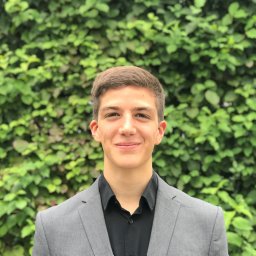
 Hannes Stark
· 5 previous affiliations
- Massachusetts Institute of TechnologySince 2022
- PhD student · 2022–2027
- BIB Augsburg gGmbH2020–2021
- Mathematics Instructor · 2020–2021
- Technical University of Munich2019–2021
- Teaching Assistant: Operations Research · 2021
- Master of Science - MS, Informatics · 2019–2021
- Teaching Assistant: Introduction to Deep Learning · 2020–2021
- Allianz2017–2019
- Dual Student · 2017–2019
- Universität der Bundeswehr München2018–2019
- Student Research Assistant · 2018–2019
Research Overview
Hannes Stark focuses on geometric deep learning, generative modeling for molecular structures, and computational drug discovery. His trajectory spans from early work on 3D molecular representations to advanced diffusion and flow-matching frameworks for protein-ligand docking and sequence design. Currently, he investigates structural biology foundation models and efficient methods for predicting biomolecular interactions and binding affinities.
Research Trajectory
Hannes Stark's early research focused on improving the representational capacity of neural networks for molecular property prediction, particularly by incorporating three-dimensional geometric information. He introduced 3D Infomax improves GNNs for Molecular Property Prediction, a self-supervised pre-training method that enables Graph Neural Networks (GNNs) to infer implicit 3D molecular geometry from 2D graphs. This approach was further expanded in 3D Pre-training improves GNNs for Molecular Property Prediction, which detailed how maximizing mutual information between 3D summary vectors and GNN representations enhances performance on downstream molecular tasks. This foundational work contributed to the broader area of Modeling Protein Flexibility for Structure-Based Drug Design.
Building on these geometric deep learning techniques, Stark shifted toward the direct prediction of biomolecular interactions. He developed EquiBind: Geometric Deep Learning for Drug Binding Structure Prediction, a model that performs direct-shot prediction of drug-protein binding structures. By bypassing computationally expensive sample-and-score methods, this work provided significant speedups and advanced the research direction of Neural Surrogate Models for Accelerated Molecular Discovery as well as the area of Autonomous Discovery of Protein Binding Sites. Following this, he co-developed DiffDock: Diffusion Steps, Twists, and Turns for Molecular Docking, which reframed molecular docking as a generative modeling problem over the non-Euclidean manifold of ligand poses. This diffusion-based approach mapped translational, rotational, and torsional degrees of freedom, contributing to work in Generative Modeling of Multi-modal Molecular Conformations and Coarse Grained Representations for Macromolecular Dynamics.
In 2024, Stark's work expanded significantly across diverse generative frameworks, including flow matching, diffusion models, and sequence design. He contributed to Generative Modeling of Molecular Dynamics Trajectories, which introduced MDGEN, a framework treating molecular dynamics as "molecular videos" using SE(3)-invariant tokenization to accelerate simulation. He also collaborated on Equivariant 3D-conditional diffusion model for molecular linker design, presenting DiffLinker, a method capable of connecting an arbitrary number of disconnected molecular fragments for fragment-based drug discovery.
A major theme during this period was the application of flow matching to both discrete and continuous molecular data, advancing the research direction of Efficient Generative Modeling via Flow Matching. He introduced Dirichlet Flow Matching with Applications to DNA Sequence Design, adapting continuous flow matching to discrete categorical data on a simplex to generate high-fidelity DNA sequences. In a related sequence-design effort, he developed CodonMPNN for Organism Specific and Codon Optimal Inverse Folding, a deep learning model that generates DNA codon sequences directly from protein structures while optimizing for host-specific expression. Returning to structural design, he proposed Harmonic Self-Conditioned Flow Matching for joint Multi-Ligand Docking and Binding Site Design (FLOWSITE), a unified generative process that simultaneously designs protein binding pockets and predicts ligand docking poses. He also participated in the development of Equivariant Flow Matching for Molecular Conformer Generation, which combined equivariant transformers with a harmonic prior to efficiently generate 3D molecular conformations.
More recently, Stark has focused on high-level structural control and the estimation of complex thermodynamic properties. Leading the project, his group developed FreeFlow: Latent Flow Matching for Free Energy Difference Estimation, a simulation-free method that estimates free energy differences between molecular systems within a compressed latent space. He also introduced ProtComposer: Compositional Protein Structure Generation with 3D Ellipsoids, which provides steerable, compositional control over protein generation using 3D bounding volumes.
Moving into 2026, his collaborative efforts have targeted foundation models and adaptive inference techniques. He contributed to One protein is all you need, which introduced ProteinTTT, a test-time training method that specializes general-purpose protein language models to single target sequences on the fly. Additionally, he participated in the development of Boltz-2: Towards Accurate and Efficient Binding Affinity Prediction, a structural biology foundation model designed to predict both biomolecular complex structures and their binding affinities, incorporating experimental method conditioning and multi-chain template integration.
Current Directions
The most recent papers in the evidence indicate a focus on structural biology foundation models and adaptive inference techniques for biomolecular systems. Current work investigates methods for predicting complex binding affinities and structures, as seen in the development of the Boltz-2 model. Additionally, recent research explores test-time training paradigms that allow general-purpose protein language models to adapt dynamically to specific target sequences. This ongoing work emphasizes improving the accuracy, efficiency, and controllability of generative models and predictive frameworks in computational biology and drug discovery.
Profile updated
Loading new papers…
Other researchers whose papers cluster into the same research directions — a proxy for overlapping technical interests and shared intellectual neighborhoods.
See something wrong? Report a mistake