

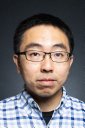
 Xiaowen Dong
· 3 previous affiliations
- University of OxfordSince 2017
- Associate Professor · Since 2021
- Assistant Professor · 2017–2021
- Postdoc · 2014–2017
- PhD student · 2009–2014
Research Overview
Xiaowen Dong focuses on signal processing and machine learning techniques for analyzing data with complex structures, particularly through graph signal processing and graph neural networks. His trajectory spans from foundational work on inferring graph topologies from observed signals to developing scalable architectures for deep graph learning. Most recently, his research investigates the theoretical limits of graph models, long-range interactions, and the generalization capabilities of graph foundation models.
Research Trajectory
Dong’s early research established foundational methods for processing and clustering structured data across multiple modalities. He introduced techniques for combining multi-layer graphs in Clustering With Multi-Layer Graphs: A Spectral Perspective, utilizing joint matrix factorization and graph regularization to efficiently merge the spectrum of multiple graph layers. He subsequently addressed the inverse problem of constructing meaningful graphs from data in Learning Laplacian Matrix in Smooth Graph Signal Representations, formulating the learning of graph topologies such that input data naturally form smooth signals on the resulting graph.
This foundational work led to comprehensive syntheses of the emerging intersection between graph signal processing (GSP) and machine learning. In Learning Graphs From Data: A Signal Representation Perspective, he surveyed classical and GSP-based solutions for graph learning, contributing to the broader area of Learning Latent Graph Topologies Directly from Data and the research direction of Graph Smoothness Regularization for Signal Processing and Learning. He further bridged these concepts with modern deep learning in Graph Signal Processing for Machine Learning: A Review and New Perspectives, detailing how graph filters and transforms could inform novel machine learning algorithms.
Moving deeper into graph neural networks (GNNs), his research began addressing the practical challenges of incomplete data and complex relational structures. With collaborators, he explored the area of Learning on Graphs with Missing Node Attributes in On the Unreasonable Effectiveness of Feature Propagation in Learning on Graphs with Missing Node Features, which utilized Dirichlet energy minimization to create a scalable diffusion-based algorithm for handling missing features. Expanding beyond pairwise relationships, his group developed Hypergraph-MLP: Learning on Hypergraphs without Message Passing. This approach integrated hypergraph structural information directly into training to avoid the latency, structural sensitivity, and oversmoothing issues typical of standard message-passing models. They later advanced this line of work in Training-Free Message Passing for Learning on Hypergraphs, introducing a preprocessing module that decouples structural processing from model learning to drastically reduce computational costs while maintaining high performance.
Concurrently, Dong has maintained a strong focus on the theoretical characterization of graph signals and neural networks. He analyzed reconstruction errors in On the Impact of Sample Size in Reconstructing Noisy Graph Signals: A Theoretical Characterisation, proving that increasing sample size at low signal-to-noise ratios can paradoxically degrade reconstruction for both least-squares and Laplacian-regularized methods. He extended this theoretical lens to downstream applications in On the Impact of Downstream Tasks on Sampling and Reconstructing Noisy Graph Signals, demonstrating that sampling strategies optimized for reconstruction are often suboptimal for tasks like classification, and introducing a classification-optimal sampling scheme for linearized GCNs. His lab also examined the structural robustness of these models in On the Stability of Graph Convolutional Neural Networks: A Probabilistic Perspective, characterizing their sensitivity to minor topological perturbations. Broadening his evaluation of complex AI systems, he also proposed a theoretical framework to assess large language model multi-agent systems based on sequential reasoning requirements in On the Importance of Task Complexity in Evaluating LLM-Based Multi-Agent Systems.
A major recent theme in his trajectory is understanding and scaling the receptive fields of graph models, contributing to the research direction of Measuring Effective Receptive Fields through Jacobian Sensitivity. His lab formalized a principled range measure in On Measuring Long-Range Interactions in Graph Neural Networks to quantify reliance on distant nodes, revealing that many presumed long-range tasks are dominated by local interactions. To overcome the limitations of "small-world" benchmarks, they subsequently introduced a large-scale dataset and measurement framework in Towards Quantifying Long-Range Interactions in Graph Machine Learning: a Large Graph Dataset and a Measurement.
To address the scalability and generalization of graph architectures, his group developed k-Maximum Inner Product Attention for Graph Transformers and the Expressive Power of GraphGPS, which reduces standard attention to linear memory complexity by selecting only the most relevant keys. They also demonstrated that attention mechanisms might not be strictly necessary for large-scale tasks, proposing an alternative architecture in Scalable Message Passing Neural Networks: No Need for Attention in Large Graph Representation Learning that integrates convolutional message passing into a transformer-style block. Finally, investigating zero-shot capabilities, his lab proposed a framework for adapting architectures at inference time in Can Graph Foundation Models Generalize Over Architecture?, learning task-specific bases of graph operators to improve performance across diverse datasets.
Current Directions
Based on his most recent work, Dong’s current research focuses on the scalability, expressivity, and theoretical limits of advanced graph machine learning architectures. A primary direction involves quantifying and capturing long-range dependencies in graph neural networks. By developing formal metrics and large-scale datasets that move beyond traditional small-world graphs, his lab is rigorously evaluating whether models truly leverage global information or merely overfit to local clusters.
Another major focus is the design of scalable architectures for massive networks. This includes developing linear-complexity attention mechanisms for graph transformers and demonstrating that deep, attention-free message-passing networks can achieve competitive performance on large-scale transductive learning tasks. Furthermore, his recent papers investigate the generalization capabilities of Graph Foundation Models (GFMs). By exploring inference-time architectural adaptations and task-specific operator learning, his work aims to overcome the limitations of fixed-architecture models and enable true zero-shot generalization across diverse graph domains. Finally, he continues to bridge graph signal processing and machine learning by theoretically characterizing how downstream tasks, sample sizes, and noise levels impact optimal signal sampling and reconstruction strategies.
Profile updated
Loading new papers…
Other researchers whose papers cluster into the same research directions — a proxy for overlapping technical interests and shared intellectual neighborhoods.
See something wrong? Report a mistake