

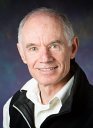
 Yoram Bresler
· 1 previous affiliation
- University of Illinois Urbana-ChampaignSince 1997
- Full Professor · Since 1997
Research Overview
Yoram Bresler focuses on computational imaging, inverse problems, and statistical signal processing. His work spans fundamental performance bounds for shape estimation and compressed sensing techniques for medical imaging to the development of transform learning frameworks. Recently, his research investigates the integration of deep generative models and machine learning with physics-based image reconstruction and parameter estimation.
Research Trajectory
Bresler’s early research addressed complex inverse problems in computational imaging. In A Bayesian Approach to Reconstruction from Incomplete Projections of a Multiple Object 3D Domain, he introduced an estimation framework for three-dimensional reconstruction from highly noisy and incomplete line integral projections, utilizing stochastic dynamic models to represent prior knowledge of object properties.
Moving into the early 2000s, his work expanded to establish fundamental performance limits for shape estimation. With collaborators, he developed techniques to analyze the performance of two-dimensional parametric shape estimators, detailed in Asymptotic global confidence regions in parametric shape estimation problems. This research derived lower bounds on the probability that boundary estimates fall within asymptotic confidence regions. He subsequently extended this foundational work in Cramer-Rao bounds for parametric shape estimation in inverse problems, providing general formulas for computing Cramér-Rao lower bounds when estimating object boundaries from noisy measurements across multiple unknown objects and backgrounds.
In the following decade, Bresler participated in applying compressed sensing principles to medical imaging modalities. This included work on extending compressed sensing theory to severely ill-conditioned nonlinear problems, such as in Compressive Diffuse Optical Tomography: Noniterative Exact Reconstruction Using Joint Sparsity. He also contributed to methods for highly accelerated magnetic resonance imaging, exploiting temporal redundancy along motion trajectories in Motion Adaptive Patch-Based Low-Rank Approach for Compressed Sensing Cardiac Cine MRI.
A major theme in Bresler's trajectory is the advancement of the research direction Transform Learning for Efficient Sparse Representations. Unlike traditional synthesis dictionary models where sparse coding is computationally expensive, his group developed sparsifying transform models that allow for exact and efficient computations. In Structured Overcomplete Sparsifying Transform Learning with Convergence Guarantees and Applications., he proposed a union of sparsifying transforms model (OCTOBOS) that reduces sparse coding to a form of clustering. He further expanded this framework for large-scale data in Online Sparsifying Transform Learning - Part I: Algorithms, enabling real-time sparse representation and denoising.
By 2020, his research sought to unify multiple image priors. In Image Recovery via Transform Learning and Low-Rank Modeling: The Power of Complementary Regularizers, his group introduced the STROLLR model, which simultaneously leverages local patch sparsity and non-local low-rank structures for image restoration. To bridge the gap between empirical applications and theoretical understanding, he provided a systematic analysis of these relationships in A Set-Theoretic Study of the Relationships of Image Models and Priors for Restoration Problems. This period also saw a synthesis of transform learning and modern neural network architectures for clinical applications. In Transform Learning for Magnetic Resonance Image Reconstruction: From Model-Based Learning to Building Neural Networks., he reviewed the evolution of these methods, contributing to the broader area of Deep Algorithm Unrolling for Computational Image Reconstruction. Concurrently, he investigated the vulnerabilities of deep learning networks used as inverse problem solvers, exploring methods to defend against adversarial examples in Improving Robustness of Deep-Learning-Based Image Reconstruction.
Expanding beyond image reconstruction, Bresler explored multi-modal machine learning. In Joint Dimensionality Reduction for Separable Embedding Estimation, he proposed a supervised dimensionality reduction method that jointly learns linear embeddings for disparate data sources, providing theoretical guarantees for the learned embeddings.
Most recently, Bresler has focused on integrating deep generative models with physical and statistical frameworks. In Generative Models for Inverse Imaging Problems: From mathematical foundations to physics-driven applications, he detailed how techniques like variational autoencoders and score-based models can be combined with physical measurement models. Returning to his earlier focus on fundamental performance limits, he pioneered data-driven approaches to statistical bounds. In Learning to Bound: A Generative Cramér-Rao Bound, his group introduced a method to approximate the Cramér-Rao bound without requiring an explicit analytical statistical model, utilizing deep generative models instead. He extended this concept to non-asymptotic conditions in Learning the Barankin Lower Bound on DOA Estimation Error, developing a Generative Barankin Bound using conditional normalizing flows to evaluate direction-of-arrival estimation performance when measurement statistics are unknown.
Current Directions
The most recent papers in the evidence indicate a strong focus on the intersection of deep generative modeling and statistical signal processing. Current work investigates how modern generative architectures—such as score-based models, variational autoencoders, and conditional normalizing flows—can be integrated with physical measurement models to solve complex inverse imaging problems. A major ongoing theme is the development of data-driven approaches to fundamental performance limits. By leveraging generative models to learn underlying measurement distributions, this research seeks to compute theoretical bounds, such as the Cramér-Rao and Barankin lower bounds, in scenarios where explicit analytical statistical models are unavailable or where measurements exhibit complex, non-Gaussian statistics.
Profile updated
Loading new papers…
Other researchers whose papers cluster into the same research directions — a proxy for overlapping technical interests and shared intellectual neighborhoods.
See something wrong? Report a mistake