

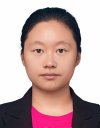
 Dou Quan
· 1 previous affiliation
- Xidian UniversitySince 2011
- Associate Professor · Since 2022
- PhD student · 2015–2021
- Undergrad student · 2011–2015
Research Overview
Dou Quan focuses on remote sensing image analysis, medical image reconstruction, and multimodal representation learning. His trajectory spans from foundational image registration and segmentation techniques to advanced uncertainty quantification in clinical AI and cross-modal alignment. His most recent work investigates dynamic preference inference in reinforcement learning and state space models for complex image registration.
Research Trajectory
Early research established a dual focus on remote sensing and medical image analysis. In 2018, he explored deep learning frameworks for aligning satellite imagery in A deep learning framework for remote sensing image registration. Concurrently, he investigated clinical applications, developing methods for Brain Tumor Segmentation with Uncertainty Estimation and Overall Survival Prediction.
This interest in model reliability led to participation in large-scale benchmarking efforts within the area of Uncertainty Quantification for Reliable Medical AI. In 2022, he contributed to the comprehensive analysis of the QU-BraTS: MICCAI BraTS 2020 Challenge on Quantifying Uncertainty in Brain Tumor Segmentation – Analysis of Ranking Scores and Benchmarking Results. This collaborative work demonstrated that a model's segmentation accuracy does not inherently guarantee reliable error signaling, advancing the broader research direction of Quantifying Spatial Uncertainty via Generative Sampling.
Expanding into multimodal architectures, he directed research on speech emotion recognition in 2023. His team introduced the Multimodal Transformer Augmented Fusion (MTAF) framework in Multimodal transformer augmented fusion for speech emotion recognition. By utilizing hybrid fusion strategies and cross-transformer encoders, this work captured fine-grained interactions between acoustic and semantic features, contributing to the field of Bridging the Modality Gap in Multimodal Representation Learning.
Returning to complex remote sensing challenges in 2024, he addressed the significant radiometric differences between optical and Synthetic Aperture Radar (SAR) imagery. He proposed a hybrid matching method utilizing attention-enhanced structural features in Robust Optical and SAR Image Matching Using Attention-Enhanced Structural Features. In the domain of semantic segmentation, he collaborated on a framework for Reliable Knowledge Propagation to tackle generalized source-free domain adaptation, detailed in Generalized Source-free Domain-adaptive Segmentation via Reliable Knowledge Propagation. Parallel to his remote sensing work, he continued advancing medical imaging by developing a complex-valued cascading cross-domain convolutional neural network for undersampled cardiac magnetic resonance (CMR) images, presented in C3-Net: Complex-Valued Cascading Cross-Domain Convolutional Neural Network for Reconstructing Undersampled CMR Images.
His recent trajectory demonstrates a diversification into advanced neural architectures across multiple domains. In cognitive communications, he addressed complex channel conditions by proposing a coarse-to-fine feature alignment method in C2F-Net: Coarse-to-Fine Feature Alignment for Cross-Channel Automatic Modulation Classification. For remote sensing, he introduced a multi-expert learning framework integrated with state space models (Mamba) in Multi-Expert Learning Framework with the State Space Model for Optical and SAR Image Registration, improving registration accuracy in texture-poor landscapes while maintaining computational efficiency. He also developed a fully-attentional model for satellite image time series segmentation in TS2-ViT: A Time-Spectral-Space Vision Transformer for Satellite Image Time Series Segmentation, and explored retrieval-augmented generation for describing environmental changes in RAGCC: Remote Sensing Image Change Captioning Based on Rag. In the medical domain, he participated in the CMRxRecon challenge, contributing to The state-of-the-art in cardiac MRI reconstruction: Results of the CMRxRecon challenge in MICCAI 2023, which aligns with the research direction of Robust Reconstruction for Non-Cartesian Magnetic Resonance Imaging.
Most recently, in 2026, he expanded into reinforcement learning, co-developing a framework for dynamic preference inference in Learning What Matters Now: Dynamic Preference Inference under Contextual Shifts. This work allows agents to adapt their objective priorities on the fly as environmental conditions change, facilitating complex trade-offs without manual reward tuning.
Current Directions
The most recent papers in the evidence address advanced neural architectures for complex spatial and temporal data, alongside adaptive decision-making in reinforcement learning. Recent work investigates the integration of state space models to improve the computational efficiency and accuracy of cross-modal image registration, particularly in challenging, texture-poor environments. In parallel, research explores fully-attentional vision transformers for satellite image time series segmentation and the application of retrieval-augmented generation to remote sensing change captioning. Beyond perception tasks, current efforts also extend to reinforcement learning, focusing on dynamic preference inference frameworks that enable autonomous agents to adapt their objective priorities in response to contextual shifts without manual reward engineering.
Profile updated
Loading new papers…
Other researchers whose papers cluster into the same research directions — a proxy for overlapping technical interests and shared intellectual neighborhoods.
See something wrong? Report a mistake