

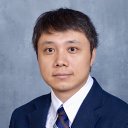
 Yonghui Wu
· 1 previous affiliation
- University of FloridaSince 2017
- Associate Professor · Since 2022
- Assistant Professor · 2017–2021
1 other author named Yonghui Wu: Yonghui Wu (94 papers)
Research Overview
Yonghui Wu focuses on clinical natural language processing, the development of medical large language models, and information extraction from electronic health records. His trajectory spans from early machine learning pipelines for clinical concept recognition to the creation of domain-specific foundation models like GatorTron. Recently, his research emphasizes scaling biomedical vision-language models and applying multi-task instruction tuning to extract complex patient trajectories and social determinants of health.
Research Trajectory
His early trajectory includes foundational work in clinical concept extraction and representation learning, reflecting broader research interests in areas such as Discontinuous Entity Recognition. He participated in developing Recognizing Disjoint Clinical Concepts in Clinical Text Using Machine Learning-based Methods and explored foundational representation learning by investigating A Study of Neural Word Embeddings for Named Entity Recognition in Clinical Text. Continuing this focus on unstructured data, he examined What Can Neural Networks Learn from Unlabeled Clinical Narratives?. This period also involved building robust, open-source tools for the medical informatics community, including A long journey to short abbreviations: developing an open-source framework for clinical abbreviation recognition and disambiguation (CARD) and contributing to CLAMP - a toolkit for efficiently building customized clinical natural language processing pipelines.
Transitioning toward deep learning and privacy-preserving NLP, he directed research on patient confidentiality, investigating A study of deep learning methods for de-identification of clinical notes in cross-institute settings. This aligns with his sustained contributions to the area of Cross-Institutional Portability of Clinical Language Models. As the field shifted toward foundation models, he spearheaded the development of clinical models from scratch, culminating in A large language model for electronic health records. This work demonstrated how massive parameter scales could be adapted for unstructured EHRs, advancing the broader research direction of Neural Scaling Laws in Specialized Clinical and Scientific Domains.
Building on these foundation models, he introduced GatorTron and GatorTronGPT: Large Language Models for Clinical Narratives, providing powerful tools for analyzing and generating clinical text. His lab applied these models to complex extraction tasks, such as Extracting Thyroid Nodules Characteristics from Ultrasound Reports Using Transformer-based Natural Language Processing Methods. These publications directly advanced several key research areas, including Domain Specific Pretraining for Clinical Language Models, Entity Attribute Attribution in Complex Contexts, and Cascaded Architectures for Relation Extraction. Further clinical applications included Identifying Symptoms of Delirium from Clinical Narratives Using Natural Language Processing to phenotype transient cognitive decline, and Narrative Feature or Structured Feature? A Study of Large Language Models to Identify Cancer Patients at Risk of Heart Failure, which combined narrative features with structured medical codes to predict cardiotoxicity. He also developed the open-source SODA package in Identifying social determinants of health from clinical narratives: A study of performance, documentation ratio, and potential bias to systematically extract social factors while examining algorithmic fairness. Additionally, his team tackled generative tasks, presenting a hybrid extractive-abstractive approach in UF-HOBI at "Discharge Me!": A Hybrid Solution for Discharge Summary Generation Through Prompt-based Tuning of GatorTronGPT Models.
Recent work expands into multi-modal learning, advanced tuning, and real-world clinical integration. He designed the PLuS2 study protocol in Protocol for an observational cohort study integrating real-world data and microsimulation to assess imaging surveillance strategies in stage I–IIIA NSCLC patients in OneFlorida+, leveraging language models to extract clinical nuances for optimizing lung cancer surveillance. He also participated in benchmarking decoder-only architectures and parameter-efficient fine-tuning in A Study of Large Language Models for Patient Information Extraction: Model Architecture, Fine-Tuning Strategy, and Multi-task Instruction Tuning. Pushing beyond text, he directed research on Scaling up biomedical vision-language models: Fine-tuning, instruction tuning, and multi-modal learning. Most recently, his work includes A topic modeling analysis of stigma dimensions, social, and related behavioral circumstances in clinical notes among patients with HIV, applying natural language processing to understand complex social and behavioral factors in patient care.
Current Directions
The most recent papers in the evidence indicate a focus on expanding clinical natural language processing into multi-modal and highly specialized domains. Recent work investigates the scaling and instruction tuning of biomedical vision-language models, moving beyond text-only electronic health records to integrate visual clinical data. Additionally, ongoing research addresses the optimization of clinical workflows and patient surveillance, combining real-world data extracted via large language models with microsimulation to evaluate cancer screening strategies. Another active area involves refining the architecture and tuning strategies of decoder-only models, utilizing multi-task instruction tuning and parameter-efficient fine-tuning to improve zero-shot and few-shot information extraction. Finally, recent studies apply advanced topic modeling to clinical notes to better understand complex social determinants of health, such as stigma and behavioral circumstances in vulnerable patient populations.
Profile updated
Loading new papers…
Other researchers whose papers cluster into the same research directions — a proxy for overlapping technical interests and shared intellectual neighborhoods.
See something wrong? Report a mistake