

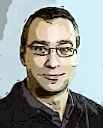
 Goran Nenadic
· 7 previous affiliations
- University of ManchesterSince 2004
- Full Professor · Since 2017
- Professor of Computer Science · Since 2004
- Research Scientist (honorary) · Since 2010
- Lead · Since 2016
- The Alan Turing Institute2018–2023
- Turing fellow · 2018–2023
- Journal of Biomedical Semantics2010–2018
- Editor in Chief · 2010–2018
- University of Salford2001–2003
- PhD, Computer Science · 2001–2003
- University of Belgrade1994–1997
- MSc/MPhil, Computer Science · 1994–1997
Research Overview
Goran Nenadic focuses on clinical natural language processing, privacy-preserving synthetic data generation, and explainable artificial intelligence in healthcare. His work spans the extraction of structured insights from complex medical narratives to the development of rigorous frameworks for differential privacy in language models. Recently, his research emphasizes leveraging large language models for automated medical coding, argument mining, and high-fidelity clinical text synthesis.
Research Trajectory
Nenadic’s recent work addresses the fundamental challenge of transforming unstructured clinical narratives into standardized, actionable formats, contributing to the broader area of Hybrid Architectures for Domain Specific Information Extraction. To evaluate the readiness of automated systems for these tasks, he and his collaborators conducted a comprehensive study, Exploring the consistency, quality and challenges in manual and automated coding of free-text diagnoses from hospital outpatient letters. Much like efforts in the area of The Limits of Automated Metrics for Machine Translation, this work benchmarked natural language processing tools against human clinicians in mapping free-text diagnoses to SNOMED CT terms, demonstrating that automated tools can achieve high acceptability rates for population health research.
Building on this need for accurate clinical coding, his research has increasingly focused on making these systems interpretable. In Structured Information Matters: Explainable ICD Coding with Patient-Level Knowledge Graphs, he introduced an approach that transforms messy clinical notes into structured patient-level graphs. By integrating these graphs with language models, the method significantly improved coding accuracy while reducing the input data size. Recognizing that accurate predictions must be trusted by clinicians, he further explored explainability in Evaluation and LLM-Guided Learning of ICD Coding Rationales. This research introduced the RD-IV-10 dataset and demonstrated that while models may be faithful to their internal logic, their explanations often misalign with human expertise—a gap that can be bridged by using large language models as distant supervisors. Alongside document-level coding, Nenadic has advanced entity-level extraction. In TriG-NER: Triplet-Grid Framework for Discontinuous Named Entity Recognition, he developed a novel grid-based tagging system combined with a token-level triplet loss, effectively capturing complex, discontinuous medical entities and outperforming general-purpose models on biomedical benchmarks.
Beyond extraction, Nenadic has investigated how language models can synthesize and reason over complex discourse. This work intersects with research directions such as The Segmentation Bottleneck in Discourse Analysis and Elementary Discourse Unit Segmentation for Granular Text Processing. In the domain of specialized medical summarization, he guided the development of a highly efficient system detailed in The Manchester Bees at PerAnsSumm 2025: Iterative Self-Prompting with Claude and o1 for Perspective-aware Healthcare Answer Summarisation. By utilizing an iterative self-prompting technique, the system achieved top-tier factuality and precision without the need for extensive, resource-heavy fine-tuning. Expanding into broader discourse structures, Nenadic has extensively analyzed argument mining. He provided a comprehensive overview of the field's shift toward reasoning-oriented paradigms in Large Language Models in Argument Mining: A Survey, tracking the evolution from rigid classifiers to flexible, prompt-driven architectures. He subsequently applied generative techniques to this domain in Arg-LLaDA: Argument Summarization via Large Language Diffusion Models and Sufficiency-Aware Refinement. This paper reframed argument summarization as an iterative denoising process, pairing a language diffusion model with a sufficiency-aware refinement module to produce summaries that are more structurally sound and faithful than those generated by standard autoregressive models.
A major and defining arc of Nenadic's recent trajectory is the development of robust methodologies for generating medical text, specifically advancing the research direction of Synthetic Data for Privacy Preserving Clinical AI. As the demand for clinical data grows, his work addresses the critical bottleneck of patient privacy. He explored foundational techniques for de-identification in Generating Synthetic Free-text Medical Records with Low Re-identification Risk using Masked Language Modeling, utilizing masked language models to create synthetic records. He expanded this approach in Synthetic4Health: generating annotated synthetic clinical letters, demonstrating that synthetic clinical letters generated via strategic text masking can effectively substitute for real-world data in downstream tasks like named entity recognition while preserving clinical utility.
To handle highly specific clinical generation tasks, Nenadic investigated constrained decoding strategies, contributing to the area of Beam Search for Global Sequence Optimization. In LT3: Generating Medication Prescriptions with Conditional Transformer, he introduced a task-specific model that employs a backtracking beam search algorithm to generate diverse, high-quality synthetic medication prescriptions. Moving toward formal privacy guarantees, he developed Term2Note: Synthesising Differentially Private Clinical Notes from Medical Terms. This framework decomposes long medical records and conditions their generation on differentially private medical terms, successfully bridging the gap between strict privacy constraints and downstream machine learning utility. Finally, recognizing the need to rigorously evaluate these privacy claims, Nenadic participated in the development of SynBench: A Benchmark for Differentially Private Text Generation. This benchmarking study highlighted the limitations of current methods in complex domains and revealed how hidden data leakage from model pre-training can compromise formal differential privacy guarantees.
Current Directions
The most recent papers in the evidence indicate a strong focus on the safe and interpretable deployment of large language models in healthcare. Current work investigates the generation of high-fidelity, privacy-preserving synthetic clinical data, exploring how formal differential privacy guarantees can be maintained despite the memorization risks inherent in LLM pre-training. Additionally, Nenadic is actively researching methods to align automated clinical reasoning with human expertise, utilizing knowledge graphs and distant supervision to ensure that AI-generated medical codes and summaries are both accurate and clinically plausible.
Profile updated
| Paper | Venue | Year |
|---|---|---|
| PULSAR at MEDIQA-Sum 2023: Large Language Models Augmented by Synthetic Dialogue Convert Patient Dialogues to Medical RecordsGitHubyuping-wu/ | Clef (working Notes) | 2023 |
Loading new papers…
Other researchers whose papers cluster into the same research directions — a proxy for overlapping technical interests and shared intellectual neighborhoods.
See something wrong? Report a mistake