

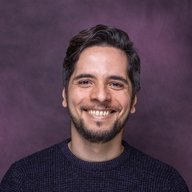
 Iacer Calixto
· 6 previous affiliations
- Amsterdam University Medical CentersSince 2022
- Principal Investigator · Since 2026
- Assistant Professor · Since 2022
- University of Amsterdam2018–2022
- Postdoctoral Research Fellow · 2018–2022
- New York University2019–2022
- Postdoctoral Research Fellow · 2019–2022
- Researcher PHD Student · 2013–2017
- Research Scientist · 2016
- PhD student · 2017
- Université Marie et Louis Pasteur2012–2013
- Master's degree, Natural Language Processing (Traitement Automatique de Langues TAL) · 2012–2013
Research Overview
Iacer Calixto focuses on natural language processing, multimodal machine translation, and the application of large language models to clinical healthcare. His early work explored how visual context can resolve linguistic ambiguities and improve translation systems. More recently, his research investigates the behavioral evaluation, debiasing, and functional utility of medical language models for diagnostic tasks.
Research Trajectory
His early research investigated methods for evaluating machine translation systems when reference texts are unavailable. Target-Centric Features for Translation Quality Estimation explored predicting translation quality by introducing novel features such as inverse glass-box scores, while highlighting the critical role of hyperparameter optimization in machine learning pipelines.
He subsequently transitioned into multimodal neural machine translation (MNMT), focusing on how visual information can enhance text generation. He introduced a doubly-attentive decoder in Doubly-Attentive Decoder for Multi-modal Neural Machine Translation that independently attends to source-language words and spatial visual features from pre-trained convolutional networks, bridging the gap between image description and translation. This integration of global visual features was further refined in Incorporating Global Visual Features into Attention-based Neural Machine Translation. To address real-world scenarios where images are unavailable at test time, he developed a latent variable approach in Latent Variable Model for Multi-modal Translation. By treating images as observed outcomes of a hidden representation during training, the model learns to "imagine" visual context, significantly advancing the research direction of Grounding Machine Translation in Visual Context. He also conducted rigorous manual evaluations of these systems in An error analysis for image-based multi-modal neural machine translation, demonstrating that visual signals improve non-visual linguistic structures as well. This analysis contributed to several broader areas, including Visual State Initialization for Multimodal Sequence Generation, Hierarchical Attention for Multi-modal Representation Learning, and Aligning Visual Features with Language Model Embeddings.
Expanding into cross-lingual transfer, he demonstrated in English Intermediate-Task Training Improves Zero-Shot Cross-Lingual Transfer Too that fine-tuning multilingual models on data-rich English tasks significantly boosts zero-shot performance across dozens of target languages. He also explored grounding multilingual models by predicting Wikipedia hyperlinks in Wikipedia Entities as Rendezvous across Languages: Grounding Multilingual Language Models by Predicting Wikipedia Hyperlinks.
His research subsequently examined how vision-and-language (V&L) models process complex linguistic phenomena. He participated in the development of VALSE: A Task-Independent Benchmark for Vision and Language Models Centered on Linguistic Phenomena, a diagnostic benchmark revealing that many state-of-the-art models struggle with spatial relations and counting when tested against meaning-altering foils. He also utilized visual imagery to disambiguate sensitive expressions in Detecting Euphemisms with Literal Descriptions and Visual Imagery. To efficiently enhance language models with external world knowledge, his group proposed retrieving structured representations in Endowing Language Models with Multimodal Knowledge Graph Representations. He further formalized multimodal disambiguation by introducing a new benchmark across multiple languages in SemEval-2023 Task 1: Visual Word Sense Disambiguation. Both of these efforts significantly advanced the research direction of Visual Grounding for Semantic Disambiguation. Additionally, he explored the cognitive foundations of these systems, proposing avenues for aligning artificial intelligence with neuroscience in Video-and-Language (VidL) models and their cognitive relevance.
The most recent phase of his trajectory focuses on clinical natural language processing. He investigated early disease prediction using primary care notes in Soft-Prompt Tuning to Predict Lung Cancer Using Primary Care Free-Text Dutch Medical Notes. Expanding on medical AI evaluation, his team introduced DeVisE: Behavioral Testing of Medical Large Language Models, a framework using over 166,000 counterfactual scenarios to uncover demographic biases and superficial correlations in clinical reasoning. Most recently, he evaluated the diagnostic utility of LLM-generated summaries in DistillNote: LLM-based clinical note summaries improve heart failure diagnosis, demonstrating that highly compressed medical notes can preserve critical predictive signals for complex downstream tasks.
Current Directions
Recent work investigates the application and rigorous evaluation of large language models in clinical healthcare settings. The most recent papers in the evidence address the behavioral testing of medical language models, focusing on how these systems handle complex clinical reasoning and counterfactual patient scenarios. This includes developing frameworks to uncover demographic biases and superficial correlations that standard benchmarks often miss. Additionally, current research explores the functional utility of LLM-generated clinical summaries, measuring how effectively highly compressed medical notes preserve critical diagnostic signals for conditions such as heart failure.
Profile updated
Loading new papers…
Other researchers whose papers cluster into the same research directions — a proxy for overlapping technical interests and shared intellectual neighborhoods.
See something wrong? Report a mistake