

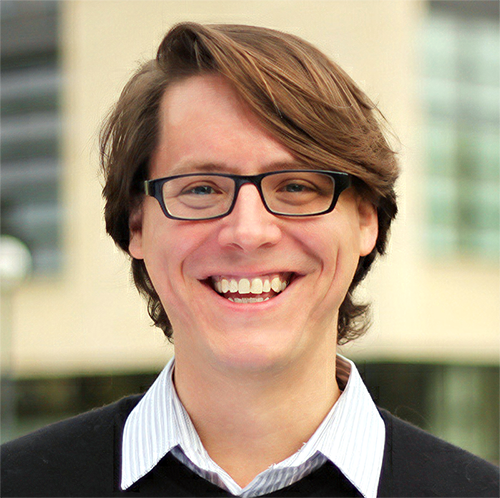
 Jason Alan Fries
· 4 previous affiliations
- Snorkel AISince 2021
- Research Scientist / Consultant · Since 2021
- Stanford University2015–2025
- Assistant Professor · 2025
- Research Scientist · 2017–2025
- Postdoctoral Fellowship, Computer Science · 2015–2017
- University of Iowa2007–2015
- Graduate Research Assistant · 2009–2015
- Undergraduate Research Assistant · 2007–2009
- Cerner Corporation2006
- University of Iowa Campus Ambassador · 2006
Research Overview
Jason Alan Fries focuses on training and evaluating foundation models for healthcare, leveraging longitudinal electronic health record (EHR) data to capture human health progression. His trajectory spans early innovations in programmatic weak supervision to recent efforts in multimodal medical AI and rigorous benchmark development. Currently, he investigates the evaluation of large language models in medicine and the interpretation of zero-shot clinical reasoning.
Research Trajectory
The early phase of this research trajectory centered on overcoming the manual labeling bottleneck in machine learning. This work included participation in the development of Snorkel: Rapid Training Data Creation with Weak Supervision in 2017. By utilizing a generative model to denoise and combine multiple noisy labeling functions, the system allowed users to programmatically generate training data. This foundational work established a long-standing focus on the research direction of Probabilistic Label Aggregation from Noisy Heuristics and the broader area of Programmatic Weak Supervision.
In subsequent years, these data-centric paradigms were translated specifically to the biomedical domain. With Ontology-driven weak supervision for clinical entity classification in electronic health records (2021), he introduced the Trove framework, which leverages medical ontologies and expert rules as weak supervisors to train clinical natural language processing (NLP) models. He expanded on this methodology in SWELLSHARK: A Generative Model for Biomedical Named Entity Recognition without Labeled Data, minimizing human annotation effort by unifying existing biomedical lexicons to train high-accuracy taggers. Extending beyond text, he applied these principles to medical imaging in Weakly supervised classification of aortic valve malformations using unlabeled cardiac MRI sequences. This study demonstrated that noisy heuristics defined by domain experts could successfully train deep learning models on thousands of unlabeled MRI scans, outperforming models reliant on limited hand-labeled data.
As clinical models scaled, his research increasingly investigated their reliability and the structural barriers to reproducibility. In Evaluation of domain generalization and adaptation on improving model robustness to temporal dataset shift in clinical medicine, he and his collaborators benchmarked algorithms against a decade of ICU data. The findings revealed that popular robust algorithms struggled to mitigate performance degradation as healthcare practices evolved, highlighting critical challenges in the area of Temporal Dataset Shift in Machine Learning Models. Recognizing the systemic issues in biomedical AI, he led efforts to quantify "dataset debt" in Dataset Debt in Biomedical Language Modeling, finding severe deficits in programmatic access and licensing documentation across the field. To remedy this fragmentation, he introduced BigBIO: A Framework for Data-Centric Biomedical Natural Language Processing, a community library providing streamlined access to over 120 curated datasets. Concurrently, he contributed to large-scale NLP research in Multitask Prompted Training Enables Zero-Shot Task Generalization, exploring how explicit multitask learning induces zero-shot capabilities and advancing the direction of Mitigating Prompt Sensitivity Through Diverse Phrasing.
By 2023, his focus shifted toward standardizing evaluation and building foundation models for longitudinal health data. To address the lack of shared assets in healthcare machine learning, he co-developed EHRSHOT: An EHR Benchmark for Few-Shot Evaluation of Foundation Models. This longitudinal dataset was designed specifically to validate pretrained models, contributing significantly to the field of Learning from Limited Data in Specialized Medical Domains. He also oversaw the creation of INSPECT: A Multimodal Dataset for Pulmonary Embolism Diagnosis and Prognosis, which combined CT scans, radiology reports, and EHRs to advance multimodal AI benchmarking. Investigating the portability of these models, he explored cross-institutional viability in A Multi-Center Study on the Adaptability of a Shared Foundation Model for Electronic Health Records. Alongside this infrastructure work, he developed the HyDE framework in Efficient Diagnosis Assignment Using Unstructured Clinical Notes, utilizing disease-agnostic neural networks and entity masking to extract diagnoses zero-shot, furthering work in the area of Label Efficiency via Domain Specific Foundation Models.
Recent work has bridged longitudinal EHR data with advanced imaging and generative AI evaluation. In Time-to-Event Pretraining for 3D Medical Imaging (2024), he introduced a framework that frames pretraining as a survival analysis problem. By predicting the timing of future clinical events from paired EHRs, the model demonstrated substantial gains in forecasting health outcomes. Moving into 2026, his research has centered on the rigorous assessment of generative models in medicine. He led the comprehensive benchmarking effort Holistic evaluation of large language models for medical tasks with MedHELM and examined the nuances of model inference in How to interpret ‘zero-shot’ results from generative EHR models.
Current Directions
The most recent papers in the evidence address the rigorous evaluation and interpretation of large language models in healthcare. Recent work investigates holistic benchmarking frameworks for medical tasks, as seen in the development of MedHELM, to systematically measure the capabilities, biases, and limitations of generative AI in clinical settings. Additionally, ongoing research explores the methodological challenges of interpreting zero-shot results from generative models applied to electronic health records, ensuring that these systems can be safely and accurately integrated into complex medical decision-making processes.
Profile updated
Loading new papers…
Other researchers whose papers cluster into the same research directions — a proxy for overlapping technical interests and shared intellectual neighborhoods.
See something wrong? Report a mistake