

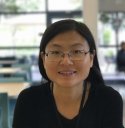
 Ying Wang
· 1 previous affiliation
- Stevens Institute of TechnologySince 2019
- Associate Professor · Since 2019
19 other authors named Ying Wang: Ying Wang (Jilin University · 108 papers), Ying WANG (University of Chinese Academy of Sciences · 25 papers), Ying Wang (Chinese Academy of Sciences · 18 papers), Ying Wang (AMI - Advanced Machine Intelligence · New York University · 6 papers), Ying Wang (5 papers), and 14 more
Research Overview
Ying Wang focuses on the intersection of next-generation (NextG) wireless communications, cybersecurity, and quantum computing. Her work emphasizes the development of data-driven frameworks for protocol security, real-time network optimization, and the integration of machine learning with quantum systems. Currently affiliated with the BC Cancer Agency, her research trajectory reflects an evolution from experimental 5G infrastructure and smart health applications toward advanced vulnerability detection in cellular protocols and the optimization of quantum algorithms.
Research Trajectory
The early stage of Wang’s research, beginning around 2021, was characterized by the development of experimental platforms for 5G and interdisciplinary applications. This period focused on the creation of end-to-end mobile data-driven testbeds designed to evaluate system security and user experience in both indoor and outdoor environments. During this phase, she explored the utility of 5G infrastructure for vertical applications, including smart health and pandemic response. This included investigating Wi-Fi log data for contact tracing and leveraging 5G-enabled edge computing for telemedicine and decision support systems.
By 2022 and 2023, her focus shifted toward the security and reliability of 5G and NextG protocols. This work addressed the inherent vulnerabilities in the 5G Radio Resource Control (RRC) protocol and the broader protocol stack. She developed methodologies for real-time channel awareness and Radio Access Network (RAN) scheduling optimization, specifically targeting the detection and mitigation of jamming. This period also saw the introduction of deep learning frameworks for fuzz testing and root cause analysis, aimed at identifying and characterizing vulnerabilities in cellular networks. Her work in this area frequently utilized Joint Latent Representation and Density Estimation for Anomaly Detection to identify irregular patterns in network traffic and protocol behavior.
In the most recent phase of her work (2024–2026), Wang has expanded her research into quantum computing and Unmanned Aerial Vehicle (UAV) communications. Her quantum research explores the application of neural network architectures, such as squeeze-and-excitation networks, to quantum circuits and the use of quantum random number generators to enhance generative models. In the domain of UAVs, she has focused on cooperative classification models to differentiate between Line-of-Sight (LOS) and Non-Line-of-Sight (NLOS) conditions, which is critical for maintaining link reliability in aerial networks. This work often intersects with developments in Multiplicative Fading in Reconfigurable Intelligent Surfaces and other 6G-enabling technologies.
Current Directions
Wang’s current research is increasingly focused on the intersection of artificial intelligence and quantum information science. She is investigating methods to accelerate Variational Quantum Eigensolvers (VQE) through adaptive parameter freezing, aiming to reduce the measurement overhead and convergence time of quantum algorithms. Additionally, she is exploring the capabilities and limitations of large language models (LLMs) in the context of quantum computing education and research, specifically evaluating their understanding of quantum security and error correction.
In the networking domain, she continues to refine frameworks for automated vulnerability detection in NextG systems. This includes the application of supervised graph embedding and formal verification techniques to identify complex security flaws in 5G and 6G protocols. Her work also maintains a focus on the operational adaptability of UAV communication environments, leveraging Bayesian optimization and domain-specific insights to improve real-time signal classification and network efficiency.
Representative Work
Development of a Data-Driven Mobile 5G Testbed: Platform for Experimental Research As the lead author, Wang describes the design and implementation of a 5G testbed intended for both indoor and outdoor experimental research. The paper establishes a framework for collecting data across multiple network components, providing a foundation for AI-based security and performance improvements in various vertical applications. This work highlights the flexibility of 5G in supporting customized solutions for specific industries while addressing the resulting security challenges.
AI-Powered Real-Time Channel Awareness and 5G NR Radio Access Network Scheduling Optimization In this first-author paper, Wang presents a cognitive system named CARS (Channel Awareness and RAN Scheduling) designed to mitigate jamming in 5G New Radio (NR) environments. The system utilizes multi-dimensional temporal machine learning models to detect and classify jamming in less than 0.8 seconds. By optimizing scheduling based on these real-time classification results, the framework ensures consistent network performance even under adversarial conditions.
DEFT: A Novel Deep Framework for Fuzz Testing Performance Evaluation in NextG Vulnerability Detection Wang led the development of DEFT, a framework designed to evaluate the performance of fuzz testing in the context of NextG vulnerability detection. This research addresses the need for robust testing methodologies to secure emerging cellular protocols. The framework provides a structured approach to assessing how effectively different fuzzing techniques can identify security flaws in complex network stacks.
RAFT: A Real-Time Framework for Root Cause Analysis in 5G and Beyond Vulnerability Detection Continuing her work on network security, Wang introduced RAFT, a framework for real-time root cause analysis. This research focuses on not only detecting vulnerabilities but also identifying the underlying protocol or system failures that lead to them. The framework is designed to operate within the high-speed requirements of 5G and future 6G networks, enabling faster remediation of security threats.
Quantum Squeeze-and-Excitation Networks In this lead-author publication, Wang explores the integration of classical deep learning architectures with quantum computing. By adapting the squeeze-and-excitation mechanism—originally designed for convolutional neural networks—to the quantum domain, the research aims to improve the representational power and efficiency of quantum neural networks. This work represents a significant step in her transition toward quantum machine learning.
TITAN: A Trajectory-Informed Technique for Adaptive Parameter Freezing in Large-Scale VQE As part of a collaborative team, Wang participated in the development of TITAN, a framework designed to accelerate Variational Quantum Eigensolvers. The technique involves predicting and "freezing" redundant parameters in a quantum circuit before training begins. This approach reduces measurement overhead by 40–60% and significantly speeds up convergence, demonstrating a practical method for improving the scalability of quantum algorithms for chemical and material science simulations.
Profile updated
Loading new papers…
Other researchers whose papers cluster into the same research directions — a proxy for overlapping technical interests and shared intellectual neighborhoods.
See something wrong? Report a mistake