

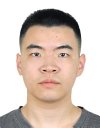
 Kaining Zhang
2 previous affiliations
- Nanyang Technological University2024–2025
- Postdoc · 2024–2025
- The University of Sydney2018–2024
- PhD student · 2020–2024
- MS student · 2018–2019
1 other author named Kaining Zhang: Kaining Zhang (Hunan University · 13 papers)
Research Overview
Kaining Zhang focuses on the theoretical foundations and algorithmic efficiency of quantum machine learning (QML), with a particular emphasis on the trainability, optimization, and data-loading constraints of variational quantum circuits. Zhang’s work addresses the fundamental bottlenecks that prevent near-term quantum devices from achieving practical advantage, specifically the "barren plateau" phenomenon in quantum neural networks and the complexities of mapping classical data into quantum states. By developing initialization strategies, architectural constraints, and entanglement-aware data loaders, Zhang aims to bridge the gap between theoretical quantum speedups and the physical limitations of noisy intermediate-scale quantum (NISQ) hardware.
Research Trajectory
Zhang’s research trajectory began with a focus on the fundamental complexity of quantum algorithms and their application to non-convex optimization. In 2019, this work centered on the relationship between Bridging Query Complexity and Gate Complexity in Quantum Algorithms and the role of the Spectral Gap as a Quantum Speed Limit. During this period, Zhang investigated how quantum oracles could be leveraged to escape saddle points in high-dimensional optimization landscapes, a critical requirement for training complex models. This early work established a rigorous mathematical foundation for evaluating when a quantum algorithm provides a genuine speedup over classical second-order methods.
By 2020, Zhang’s focus shifted toward the structural challenges of Quantum Neural Networks (QNNs). As the field recognized that random circuit architectures often lead to vanishing gradients, Zhang began investigating Informed Initialization to Bypass Quantum Barren Plateaus. This period marked a transition from general algorithmic complexity to the specific problem of QNN trainability. Zhang proposed specific architectural constraints, such as tree tensor networks and step-controlled structures, to ensure that gradients decay only polynomially rather than exponentially with the number of qubits.
Between 2022 and 2024, Zhang expanded this inquiry into the broader landscape of quantum data and generative learning. This phase involved analyzing how the nature of quantum data itself—specifically its randomness and entanglement—affects the generalization capabilities of QML models. Zhang identified what is termed the "curse of random quantum data," suggesting that the very features that provide quantum advantage can also suppress training efficiency if not properly managed. During this time, Zhang also contributed to the development of quantum reinforcement learning and imitation learning, exploring how quantum advantage might be realized in decision-making tasks.
Most recently, Zhang has addressed the Readout Bottleneck in Quantum Linear Algebra and the challenges of Efficient Quantum State Learning via Structured Multi-Copy Measurements. This current phase of research focuses on the practicalities of data ingestion and state estimation. By developing scalable data loaders that account for the internal entanglement of target states, Zhang’s recent work seeks to reduce the gate overhead required to interface classical datasets with digital quantum computers, a prerequisite for any end-to-end quantum machine learning pipeline.
Current Directions
Zhang’s current research is concentrated on three primary areas: scalable quantum data loading, adaptive parameter management in variational solvers, and the refinement of QML generalization bounds.
A significant current focus is the development of the AQER framework, which seeks to optimize the process of state preparation by systematically "unraveling" entanglement. This work addresses the scalability of digital quantum computers by reducing the circuit depth required to load complex datasets. Additionally, Zhang is exploring "trajectory-informed" techniques for variational quantum eigensolvers (VQE), which identify and freeze redundant parameters early in the training process to reduce measurement overhead.
Zhang also continues to investigate the intersection of deep learning and quantum property estimation. This involves using synthetic labeled datasets and consistency-check mechanisms to enhance the performance of models tasked with predicting quantum observables, particularly under the constraints of limited physical measurements.
Representative Work
Quantum Optimization and Curvature
In Quantum algorithm for finding the negative curvature direction in non-convex optimization, Zhang (as first author) addressed a core subroutine in second-order non-convex optimization: the identification of negative curvature directions to escape saddle points. The work demonstrates a quantum algorithm with a query complexity that is polylogarithmic in the dimension of the optimization function, representing an exponential speedup over known classical methods. This research also proposed an efficient method for the classical readout of the resulting quantum state, addressing a common bottleneck in hybrid quantum-classical workflows.
Trainability and Circuit Architecture
Zhang’s work on the trainability of QNNs provides theoretical guarantees for overcoming the vanishing gradient problem. In Toward Trainability of Quantum Neural Networks, Zhang (as first author) proved that while random structures lead to exponential gradient decay, specific architectures—namely tree tensor networks and step-controlled designs—maintain polynomial decay. This finding established a viable path for scaling QNNs to larger qubit counts without losing the ability to optimize parameters via gradient-based methods.
Initialization Strategies for Deep Circuits
Building on the trainability research, Escaping from the Barren Plateau via Gaussian Initializations in Deep Variational Quantum Circuits introduced a practical initialization strategy for deep variational circuits. Zhang (as first author) provided theoretical proofs that under proper Gaussian initialization of parameters, the gradient norm remains manageable even as circuit depth and qubit count increase. This work challenged the prevailing view that deep quantum circuits are inherently untrainable, offering a method to preserve gradient signals in complex variational landscapes.
Generalization and Quantum Data
In The curse of random quantum data, Zhang (as first author) investigated the role of data encoding in QML performance. The study quantified how the randomness of quantum data affects training efficiency and generalization. The findings suggest that as the number of qubits increases, the performance of QML models can be exponentially suppressed if the data encoding is sufficiently random. This "curse" highlights a fundamental tension between the expressivity of quantum states and the learnability of the underlying patterns, providing a cautionary framework for designing quantum data representations.
Quantum Imitation Learning
Zhang contributed to the extension of quantum advantage into the domain of sequential decision-making in Quantum Imitation Learning. As the second author, Zhang helped develop two distinct algorithms: Quantum Behavioral Cloning (Q-BC) for offline learning from extensive expert data, and Quantum Generative Adversarial Imitation Learning (Q-GAIL) for online, on-policy scenarios with limited data. This work represents an effort to apply the computational efficiencies of quantum circuits to the high-computational burden of training classical imitation learning models.
Scalable Data Loading
In the recent work AQER: A Scalable and Efficient Data Loader for Digital Quantum Computers, Zhang (as first author) introduced a method for loading classical data into quantum states that scales more effectively than traditional approaches. By linking the difficulty of state preparation to the internal entanglement of the target state, the AQER method constructs circuits that systematically unravel this entanglement. The approach achieves significant improvements in accuracy while utilizing fewer quantum gates, addressing one of the most persistent practical barriers to implementing QML on digital quantum hardware.
Profile updated
Loading new papers…
Other researchers whose papers cluster into the same research directions — a proxy for overlapping technical interests and shared intellectual neighborhoods.
See something wrong? Report a mistake