

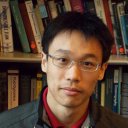
 Yian Ma
· 4 previous affiliations
- University of California San DiegoSince 2020
- Assistant Professor · Since 2020
- Postdoc · 2017–2019
- University of Washington2012–2017
- PhD student · 2012–2017
- Shanghai Jiao Tong University2008–2012
- Undergrad student · 2008–2012
Research Overview
Yian Ma focuses on scalable Bayesian inference, the theoretical foundations of stochastic optimization, and uncertainty quantification in complex machine learning models. His trajectory spans the development of accelerated sampling algorithms and convergence guarantees for overparameterized neural networks. Currently, his work addresses multi-objective optimization and the purification of differential privacy mechanisms for reliable, large-scale decision making.
Research Trajectory
Ma’s early research established fundamental theoretical results in sampling and optimization. In Sampling can be faster than optimization (2019), he challenged the prevailing assumption that optimization strictly outperforms sampling in high-dimensional spaces. By analyzing specific non-convex problems, he demonstrated that sampling algorithms like Langevin dynamics can achieve polynomial time complexity where traditional optimization faces exponential hurdles. This foundational work on exploring probability distributions naturally extended to sequential decision-making. He participated in bridging the theoretical elegance of Thompson Sampling with practical implementations for non-trivial machine learning models in On Approximate Thompson Sampling with Langevin Algorithms (2020), contributing to the research direction of Approximate Thompson Sampling for Sequential Decision Making. Continuing his focus on sampling dynamics, he formulated gradient-based Markov chain Monte Carlo (MCMC) as an optimization problem over the space of probability measures in Is there an analog of Nesterov acceleration for gradient-based MCMC? (2021). This work established that an underdamped Langevin algorithm effectively performs accelerated gradient descent, yielding faster convergence rates for a class of non-convex functions. Concurrently, he applied these principles of uncertainty quantification to domain-specific challenges, such as Quantifying Uncertainty in Deep Spatiotemporal Forecasting (2021).
Moving into 2022 and 2023, Ma’s focus expanded to the training dynamics of deep neural networks and the handling of complex, multi-fidelity data. He investigated the mechanics of early stopping in On Optimal Early Stopping: Overparametrization versus Underparametrization (2022), revealing that in practical, overparameterized deep learning scenarios, the optimal early stopping time actually decreases as model size grows—a finding that helps mitigate the double descent phenomenon. He further explored the optimization of large models in Aiming towards the minimizers: fast convergence of SGD for overparametrized problems (2023), proving that Stochastic Gradient Descent (SGD) can match the convergence speed of full-batch Gradient Descent by satisfying a novel "Aiming" regularity condition. This theoretical grounding was complemented by an analysis of batch size limits in SGD batch saturation for training wide neural networks (2023), which characterized how linear scaling benefits plateau in non-convex settings.
Alongside optimization theory, Ma developed scalable frameworks for real-world data challenges. He guided the development of Multi-fidelity Hierarchical Neural Processes (2022), a deep learning architecture that fuses cheap, low-accuracy simulations with expensive, high-fidelity data to provide reliable uncertainty estimates in high-dimensional spaces. He continued to accelerate complex simulations through active learning in Deep Bayesian Active Learning for Accelerating Stochastic Simulation (2023), introducing Interactive Neural Processes to intelligently query simulators and build accurate surrogate models with fewer samples. In the realm of reinforcement learning, he addressed the practical challenge of non-immediate rewards in Posterior Sampling with Delayed Feedback for Reinforcement Learning with Linear Function Approximation (2023), adapting posterior sampling techniques to environments where feedback is significantly delayed.
In recent years, Ma has advanced the theoretical guarantees of variational inference and differential privacy. He contributed to the broader area of Convergence and Stability of Black-Box Variational Inference by analyzing the sticking-the-landing estimator in Linear Convergence of Black-Box Variational Inference: Should We Stick the Landing? (2024), proving it achieves a geometric convergence rate under perfect variational family specification. He also participated in foundational privacy research, co-authoring Purifying Approximate Differential Privacy with Randomized Post-processing (2025). This work introduced a framework to convert approximate differential privacy mechanisms into pure differential privacy without sacrificing utility, advancing research directions such as Purifying Approximate Differential Privacy and Privacy Preserving Analysis via Wasserstein Sensitivity.
His most recent work tackles the complexities of multi-objective optimization and second-order inference methods. In Preference Optimization on Pareto Sets: On a Theory of Multi-Objective Optimization (2025), he explored how to navigate Pareto-optimal solutions when balancing conflicting objectives like accuracy and fairness. He extended this to massive search spaces in Divide and Learn: Multi-Objective Combinatorial Optimization at Scale (2026), reformulating difficult combinatorial problems into more manageable bandit subproblems. Additionally, he contributed to Stochastic Gradient Variational Inference with Price's Gradient Estimator from Bures-Wasserstein to Parameter Space (2026), demonstrating that the performance gains in certain variational inference frameworks stem from the use of Price's gradient estimator and its incorporation of second-order Hessian information, rather than the underlying geometric manifold.
Current Directions
Recent work investigates the intersection of multi-objective optimization, advanced variational inference, and rigorous privacy guarantees. The most recent papers in the evidence address the scalability of combinatorial optimization when balancing conflicting objectives, mapping out Pareto-optimal frontiers for complex decision-making tasks. Additionally, ongoing research refines the theoretical underpinnings of stochastic gradient estimators—particularly leveraging second-order information to stabilize and accelerate variational inference—while continuing to develop post-processing frameworks that elevate approximate differential privacy to pure privacy standards.
Profile updated
Loading new papers…
Other researchers whose papers cluster into the same research directions — a proxy for overlapping technical interests and shared intellectual neighborhoods.
See something wrong? Report a mistake