

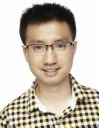
 Yang Zhang
· 3 previous affiliations
- Research Staff Employee · Since 2017
- PhD student · 2012–2017
- Tsinghua University2008–2012
- Undergrad student · 2008–2012
33 other authors named Yang Zhang: Yang Zhang (Helmholtz Center for Information Security · 184 papers), Yang Zhang (National University of Singapore · 136 papers), Yang Zhang (National University of Singapore · 126 papers), Yang Zhang (Miami University · 104 papers), Yang Zhang (Nanjing University of Aeronautics and Astronautics · 86 papers), and 28 more
Research Overview
Yang Zhang focuses on speech and audio processing, generative modeling, and the reasoning capabilities of large language models. His early work established foundational methods for disentangling speaker identity and prosody in voice conversion. More recently, his research investigates the reliability, efficiency, and formal reasoning capacities of foundation models, alongside continued advances in multimodal architectures.
Research Trajectory
Zhang's early research concentrated on acoustic modeling and speech synthesis. In 2012, he introduced Probabilistic acoustic tube: a probabilistic generative model of speech for speech analysis/synthesis, which integrated pitch, energy, and the spectral envelope into a unified probabilistic framework. This work contributed to the broader area of Factorizing Speech into Content Timbre and Prosody, moving away from fragmented feature extraction to improve pitch tracking and unsupervised phoneme clustering.
Building on this foundation, his research expanded into deep learning approaches for voice conversion and representation learning. A major focus became the research direction of Disentangling Speaker Identity and Speech Content. In AutoVC: Zero-Shot Voice Style Transfer with Only Autoencoder Loss (2019), he developed a framework achieving many-to-many and zero-shot voice transfer using a carefully designed information bottleneck, demonstrating that a standard autoencoder could match data distributions without the instability of adversarial networks. This work also touched upon challenges in the area of The Reconstruction Ceiling of Neural Audio Codecs. He further advanced speech disentanglement with collaborators in ContentVec: An Improved Self-Supervised Speech Representation by Disentangling Speakers (2022), which utilized voice-converted teacher labels and contrastive regularization to explicitly separate speaker identity from linguistic content, thereby improving performance on content-centric tasks like speech recognition.
Around 2024, Zhang's trajectory broadened significantly to address the reliability, scaling, and reasoning capabilities of foundation models. He investigated the empirical properties of model training in A Hitchhiker's Guide to Scaling Law Estimation, conducting a meta-analysis of numerous models to provide rigorous best practices for predicting large-scale performance from smaller checkpoints. Concurrently, he explored the robustness of generative models across multiple modalities. In the visual domain, he addressed issues in the area of Solving Catastrophic Neglect in Text-to-Image Diffusion with Correcting Diffusion Generation Through Resampling, introducing a particle filtering framework to rectify missing objects and distortions during the denoising process. He also bridged diffusion models and audio processing by overseeing the development of Speech Self-Supervised Learning Using Diffusion Model Synthetic Data.
In the domain of large language models (LLMs), Zhang's 2024 work tackled uncertainty, reasoning, and knowledge editing. He contributed to the research direction of Preserving Model Utility During Machine Unlearning in Revisiting Who's Harry Potter: Towards Targeted Unlearning from a Causal Intervention Perspective, proposing a causal intervention framework to erase specific entities without degrading general utility. To better understand model confidence, his group developed Decomposing Uncertainty for Large Language Models through Input Clarification Ensembling, a black-box method that distinguishes between inherent prompt ambiguity (aleatoric uncertainty) and a lack of model knowledge (epistemic uncertainty). He also investigated how problem presentation affects mathematical reasoning in Paraphrase and Solve: Exploring and Exploiting the Impact of Surface Form on Mathematical Reasoning in Large Language Models, proposing a self-consistency approach over paraphrases to mitigate models' sensitivity to surface forms.
Moving into 2025, Zhang focused on enhancing the formal reasoning, factuality, and efficiency of LLMs. Contributing to the area of Structured Intermediate Representations for Code Synthesis, he co-authored Planning Anything with Rigor: General-Purpose Zero-Shot Planning with LLM-based Formalized Programming, which reframed the LLM's role from a direct planner to a formalizer, enabling the solution of highly constrained, long-horizon tasks. To combat hallucinations, he explored two distinct approaches: Fictitious Synthetic Data Can Improve LLM Factuality via Prerequisite Learning disentangled internal knowledge from task skills using synthetic data, while A Probabilistic Framework for LLM Hallucination Detection via Belief Tree Propagation introduced a hidden Markov tree model to recursively verify logical consistency. Addressing the computational cost of advanced reasoning, he introduced ThinkPrune: Pruning Long Chain-of-Thought of LLMs via Reinforcement Learning, a reinforcement learning framework that trains models to generate more concise reasoning paths without sacrificing accuracy.
Zhang has also continued to innovate at the intersection of speech and language modeling. In 2025, his team presented ProsodyLM: Uncovering the Emerging Prosody Processing Capabilities in Speech Language Models, which utilized a novel tokenization scheme to explicitly encode word-level prosody alongside text. This trajectory of multimodal integration extends into 2026 with Unlocking Speech–Text Compositional Powers: Instruction-Following Speech Language Models without Instruction Tuning, a framework that transplants the instruction-following capabilities of text LLMs onto speech-adapted models using weight arithmetic. Additionally, his recent work encompasses embodied and visual reasoning, as seen in Simulation to Rules: A Dual-VLM Framework for Formal Visual Planning, which bridges raw visual perception and formal logical reasoning for robotics and planning systems.
Current Directions
Recent work investigates the intersection of formal reasoning, model efficiency, and multimodal integration in foundation models. A primary focus is enhancing the reliability of large language models by mitigating hallucinations through probabilistic verification and prerequisite learning, as well as optimizing long-horizon reasoning via reinforcement learning. Additionally, Zhang is actively exploring neuro-symbolic approaches to planning, utilizing LLMs and vision-language models to bridge raw perception with rigorous, formalized logical rules. In the audio domain, his current research addresses the compositional capabilities of speech language models, developing methods to seamlessly integrate text-based instruction following with expressive, prosody-aware speech generation.
Profile updated
Loading new papers…
Other researchers whose papers cluster into the same research directions — a proxy for overlapping technical interests and shared intellectual neighborhoods.
See something wrong? Report a mistake