

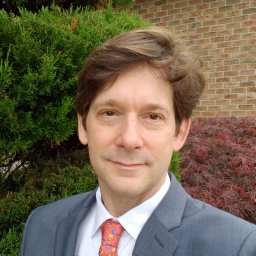
 Mark A. Hasegawa-Johnson
· 3 previous affiliations
- University of Illinois Urbana-ChampaignSince 1999
- Full Professor · Since 2011
- Professor · Since 1999
- Associate Professor · 2005–2011
- Assistant Professor · 1999–2005
- Post-Doctoral Fellow · 1996–1999
- Research Assistant · 1991–1996
- PhD student · 1984–1996
Research Overview
Mark A. Hasegawa-Johnson focuses on statistical speech technology, audio-visual speech processing, and the development of robust systems for atypical and low-resource languages. His trajectory spans from foundational multi-modal corpus creation to advanced self-supervised representation learning that disentangles speaker identity from linguistic content. His current work investigates unsupervised speech recognition and the discovery of acoustic units without relying on transcribed data or pronunciation models.
Research Trajectory
Hasegawa-Johnson's early research established critical datasets and methodologies for processing speech in challenging acoustic environments. With collaborators at the University of Illinois, he developed the AVICAR: audio-visual speech corpus in a car environment (2004), a massive multi-modal dataset recorded inside a moving vehicle. This work provided the high-fidelity data necessary for voice-controlled systems to function in the real world, advancing the research direction of Visual Anchoring for Robust Speech Enhancement. Building on this commitment to robust, real-world speech processing, he introduced the Dysarthric speech database for universal access research (2008). By compiling high-quality audio and video recordings of speakers with cerebral palsy, this project aimed to bridge the gap in assistive technology and expand the capabilities of automatic speech recognition (ASR) for individuals with neuromotor disabilities.
Addressing the challenge of data scarcity in global languages, his research explored innovative transcription methods. In Acquiring Speech Transcriptions Using Mismatched Crowdsourcing (2015), he demonstrated that non-native crowd workers could be utilized as a "noisy channel" to recover Hindi words with high accuracy using information-theoretic repetition codes.
A major theme in his subsequent work involves separating the linguistic components of speech from speaker-specific characteristics. He contributed to the development of AutoVC: Zero-Shot Voice Style Transfer with Only Autoencoder Loss (2019), a framework that achieves high-quality voice transfer using a carefully designed information bottleneck. This significantly advanced the area of Zero Shot Speaker Generalization for Speech Synthesis. Continuing this trajectory, he explored Unsupervised Speech Decomposition via Triple Information Bottleneck (2020) and later helped develop ContentVec: An Improved Self-Supervised Speech Representation by Disentangling Speakers (2022). ContentVec explicitly separates speaker identity from linguistic content through contrastive student regularization, contributing broadly to the research directions of Disentangling Speaker Identity and Speech Content and Factorizing Speech into Content Timbre and Prosody.
During this period, Hasegawa-Johnson also addressed structural and fairness challenges in end-to-end speech systems. To combat label imbalance in spoken language understanding, he proposed a differentiable approximation for fairness in Deep F-Measure Maximization for End-to-End Speech Understanding (2020). For multi-talker scenarios, he introduced an integrated system in Identify Speakers in Cocktail Parties with End-to-End Attention (2020) that jointly optimizes speech source extraction and speaker identification. His work extended into multimodal grounding, where he developed A DNN-HMM-DNN Hybrid Model for Discovering Word-Like Units from Spoken Captions and Image Regions (2020) to learn mappings between image concepts and acoustic features without textual transcriptions. He further oversaw research on the image-to-speech task in Show and Speak: Directly Synthesize Spoken Description of Images (2020).
Returning to atypical speech patterns, he introduced a data-driven approach in Frame-Level Stutter Detection (2022), utilizing artificial stutter pretraining and multiple-instance learning to pinpoint and clean dysfluencies in time. In parallel, he explored semantic representation in One-Shot Exemplification Modeling via Latent Sense Representations (2023), creating a system capable of generating contextually accurate sentences from a single example.
His recent focus has heavily emphasized the theoretical and practical foundations of unsupervised speech recognition. In A Theory of Unsupervised Speech Recognition (2023), he provided a rigorous framework using random matrix theory to explain the learnability and stability of these systems. Applying these insights, he developed Unsupervised Speech Recognition with N-Skipgram and Positional Unigram Matching (2023), a memory-efficient alternative to adversarial networks that advances the area of Unsupervised Acoustic Unit Discovery in Zero Resource Speech. Continuing to refine self-supervised architectures, he introduced SiamCTC: Learning Speech Representations through Monotonic Temporal Alignment (2025), a framework designed to improve model robustness by rethinking the temporal alignment of different audio views. This trajectory culminates in Towards unsupervised speech recognition without pronunciation models (2026), which frames ASR as a joint speech-text token-infilling problem, successfully bypassing the need for phoneme-level representations entirely.
Current Directions
The most recent papers in the evidence indicate a sustained focus on eliminating the need for transcribed data and phonetic resources in speech technology, contributing to the broader goal of Scaling Speech Recognition to Low Resource Languages. Recent work investigates fully unsupervised automatic speech recognition (ASR) architectures that bypass traditional pronunciation models entirely by framing recognition as a joint speech-text token-infilling problem. Alongside this, ongoing research explores robust self-supervised representation learning through monotonic temporal alignment, seeking more stable and efficient ways to process variable speech signals in zero-resource environments.
Profile updated
Loading new papers…
Other researchers whose papers cluster into the same research directions — a proxy for overlapping technical interests and shared intellectual neighborhoods.
See something wrong? Report a mistake