

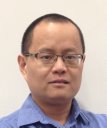
 Yang Wang
· 5 previous affiliations
- Concordia UniversitySince 2022
- Associate Professor · Since 2022
- University of Manitoba2012–2022
- Associate Professor · 2012–2022
- Huawei Technologies (China)2020–2022
- Principal Researcher · 2020–2022
- Postdoc · 2010–2012
- Simon Fraser University2004–2010
- Graduate Student · 2004–2010
30 other authors named Yang Wang: Yang Wang (University of Hong Kong · 405 papers), Yang Wang (Hefei University of Technology · 225 papers), Yang Wang (University of Science and Technology of China · 173 papers), Yang Wang (Microsoft (United States) · Microsoft Research Asia (China) · 99 papers), Yang Wang (Chang'an University · 24 papers), and 25 more
Research Overview
Yang Wang focuses on computer vision and machine learning, with specific emphasis on test-time adaptation, dense visual labeling, and cross-modal understanding. His trajectory spans early work in unsupervised action recognition to recent advancements in adapting foundation models and neural architectures to dynamic, real-world distribution shifts. Currently, he investigates self-supervised adaptation techniques for personalized sensing and robust object detection.
Research Trajectory
Wang's early research addressed the challenge of understanding human motion in video sequences. He introduced methods for the Unsupervised Discovery of Action Classes, utilizing linear programming relaxation and spectral clustering to identify action categories from coarse human shapes without labeled training data. Building on this foundation, he later developed Hidden Part Models for Human Action Recognition: Probabilistic versus Max Margin, which combined global and local patch features within a hidden conditional random field framework to discriminatively model human actions.
Shifting toward dense image prediction, his work explored how to better integrate local and global contextual information. In Gated Feedback Refinement Network for Dense Image Labeling, he and his collaborators proposed an end-to-end architecture that progressively refines coarse predictions while preventing ambiguous information from passing forward. This contribution advanced the research direction of Gating Skip Connections to Prevent Noisy Feature Propagation and broader work in the area of Spatial and Structural Priors for Dense Visual Tasks.
As deep learning models grew more complex, Wang began investigating how to adapt models to specific inputs and modalities. He contributed to Test-Time Fast Adaptation for Dynamic Scene Deblurring via Meta-Auxiliary Learning, which integrated external dataset training with internal, image-specific self-supervised learning to improve deblurring performance on unseen images. Concurrently, he explored cross-modal understanding, leading the development of a cross-modal self-attention module in Referring Segmentation in Images and Videos With Cross-Modal Self-Attention Network. This work adaptively focused on informative words and visual regions, contributing to the research direction of Resolving Referential Ambiguity in Vision-Language Models. Continuing his work on complex visual relationships, his research group proposed the Semantic-Aware Graph Matching Mechanism for Multi-Label Image Recognition. By formulating multi-label recognition as an instance-label matching problem, this framework utilized graph matching to effectively mine the associations between image contents and their corresponding labels.
A major theme in Wang's recent trajectory is test-time adaptation (TTA)—enabling models to handle distribution shifts in new environments without extensive retraining. He co-developed Meta-Adaptive Batch Normalization in Test-Time Domain Adaptation by Learning Domain-Aware Batch Normalization, advancing the research direction of Normalization for Small Batch and Test Time Adaptation. This approach also intersected with his work in the areas of Aligning Auxiliary Tasks for Robust Test-Time Adaptation and Meta-Learning Auxiliary Tasks for Gradient Alignment. To address the challenges of non-independent and identically distributed (non-i.i.d.) data streams, where label shifts cause conflicting optimization objectives, he guided the research in Distribution Alignment for Fully Test-Time Adaptation with Dynamic Online Data Streams. Furthermore, he explored parameter-efficient adaptation through Adapting to Distribution Shift by Visual Domain Prompt Generation, which condensed a learned knowledge bank into domain-specific prompts to steer visual features using only a few unlabeled images.
Wang has actively applied these adaptation paradigms to specific, challenging domains. For crowd counting, he developed MetaUSACC: Unlabeled scene adaptation for crowd counting via meta-auxiliary learning and Crowd Counting Using Meta-Test-Time Adaptation, utilizing self-supervised auxiliary tasks combined with meta-learning to adapt models to new target scenes. Similarly, in the domain of personalized sensing, he addressed anatomical variations between individuals. His work on TTAGaze: Self-Supervised Test-Time Adaptation for Personalized Gaze Estimation enabled gaze models to adapt using small amounts of unlabeled data. He also extended these concepts to decentralized settings, introducing a meta-learning framework for 3D gaze estimation in Hypernetwork Aggregation for Decentralized Personalized Federated Learning.
Most recently, Wang's research has expanded into specialized imaging and novel rendering techniques. He adapted self-distillation frameworks to handle endogenous domain shifts in security scanners with ALDI-ray: Adapting the ALDI Framework for Security X-ray Object Detection. Additionally, he participated in the development of FACT-GS: Frequency-Aligned Complexity-Aware Texture Reparameterization for 2D Gaussian Splatting, which introduced a frequency-aware warping field to dynamically allocate sampling density for sharper, more efficient 3D rendering.
Current Directions
The most recent papers in the evidence indicate a strong focus on robust adaptation mechanisms for dynamic and specialized visual environments. Wang is actively investigating test-time adaptation strategies that require minimal or no labeled data, particularly for handling non-i.i.d. data streams and endogenous domain shifts. This includes developing parameter-efficient techniques like visual domain prompt generation and meta-auxiliary learning to adapt foundation models to new target scenes. Furthermore, his recent collaborative work explores advanced rendering and representation techniques, such as frequency-aware texture reparameterization for 2D Gaussian Splatting, highlighting an ongoing interest in optimizing complex visual architectures for both performance and efficiency.
Profile updated
Loading new papers…
Other researchers whose papers cluster into the same research directions — a proxy for overlapping technical interests and shared intellectual neighborhoods.
See something wrong? Report a mistake