

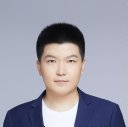
 Xupeng Miao
· 3 previous affiliations
- Purdue University West LafayetteSince 2024
- Assistant Professor · Since 2024
- Peking UniversityCurrent
- Current
- PhD student · 2017–2022
- Carnegie Mellon University2022–2024
- Postdoc · 2022–2024
Research Overview
Xupeng Miao focuses on machine learning systems, distributed computing, and data management, with an emphasis on optimizing the training and deployment of large-scale models. His trajectory spans from building parameter servers and heterogeneity-aware distributed training frameworks to developing advanced serving systems for large language models. Currently, his work addresses efficient inference, speculative decoding, and resource allocation across heterogeneous hardware.
Research Trajectory
Early in his career, Miao focused on distributed data processing and machine learning training infrastructure. He led the development of PS2: Parameter Server on Spark to integrate parameter servers natively into the Spark ecosystem, bridging the gap between data processing pipelines and machine learning training without modifying Spark's core. Moving toward heterogeneous cloud environments, he introduced a partial-reduce communication primitive in Heterogeneity-Aware Distributed Machine Learning Training via Partial Reduce. This work decomposed synchronous all-reduce operations into parallel-asynchronous steps to improve tolerance to stragglers and communication delays.
By 2022, his focus expanded to scaling deep learning models across multiple GPUs. He developed Galvatron: Efficient Transformer Training over Multiple GPUs Using Automatic Parallelism to automate parallelization strategies for large transformers. This was complemented by the open-source release of Hetu: a highly efficient automatic parallel distributed deep learning system, which scales workloads seamlessly across massive clusters. To address dynamic cluster performance, he introduced SDPipe: A Semi-Decentralized Framework for Heterogeneity-aware Pipeline-parallel Training, combining centralized scheduling with decentralized communication. During this period, he also participated in optimizing tensor programs through derivation-based transformations in EINNET: Optimizing Tensor Programs with Derivation-Based Transformations and contributed to improving Mixture-of-Experts (MoE) routing via a warmup-and-sparsify mechanism in Dense-to-Sparse Gate for Mixture-of-Experts.
As large language models (LLMs) became central to machine learning, Miao's research pivoted heavily toward efficient LLM serving. He mapped out the algorithmic and systemic challenges of the field in Towards Efficient Generative Large Language Model Serving: A Survey from Algorithms to Systems, exploring areas such as Disaggregated Prefill and Decode for LLM Inference and the broader direction of Speculative Decoding for Autoregressive Models. Building on these concepts, he developed SpecInfer: Accelerating Generative Large Language Model Serving with Tree-based Speculative Inference and Verification. This system organizes speculative token predictions into a tree for parallel verification, advancing the research area of Speculative Decoding for Accelerated Autoregressive Inference.
To reduce the monetary cost of deploying these models, he designed SpotServe: Serving Generative Large Language Models on Preemptible Instances, a distributed serving system capable of handling frequent instance preemptions and migrations on modern clouds. He also addressed the intersection of inference and parameter-efficient fine-tuning with FlexLLM: Token-Level Co-Serving of LLM Inference and Finetuning with SLO Guarantees, which fuses tasks at the token level to maintain latency guarantees, contributing to the domain of Operator Fusion for Memory-Bound Deep Learning. Further work on transformer efficiency included evaluating long-context handling capabilities in X-former Elucidator: Reviving Efficient Attention for Long Context Language Modeling. Additionally, he collaborated on LSH-MoE: Communication-efficient MoE Training via Locality-Sensitive Hashing, which clusters tokens to reduce network overhead, addressing challenges in the area of Mitigating the All-to-All Communication Bottleneck in Distributed MoEs.
His most recent work continues to push the boundaries of system optimization and resource allocation. He contributed to Mirage: A Multi-Level Superoptimizer for Tensor Programs, which unifies algebraic and schedule transformations across multiple GPU execution levels. To further optimize LLM deployment, he framed inference as a max-flow problem in Helix: Serving Large Language Models over Heterogeneous GPUs and Network via Max-Flow, a key advancement in the area of Overcoming the Hardware Homogeneity Assumption. He also explored fault-tolerant distributed training in Elastor: Elastic and Efficient Model Partitioning and Checkpointing for Fault-Tolerant Distributed Training. Expanding into reinforcement learning and video generation, he participated in shaping response length distributions for LLM training in DARTS: Distribution-Aware Active Rollout Trajectory Shaping for Accelerating LLM Reinforcement Learning and exploiting frame-block similarity for video diffusion transformers in EchoAttention: Exploiting Token-Pair Redundancy and Frame-Block Similarity for Efficient Video Generation. Continuing to innovate in heterogeneous inference, Miao co-developed Accelerating Cross-Model LLM Inference via Attention Map Reuse, introducing MapFlow to enable prefix caching across different architectures by transferring and translating attention maps rather than KV states. In neural rendering systems, Miao also guided the creation of PolySplat: Workload-Regime-Aware Rasterization for 3D Gaussian Splatting, resolving GPU rasterization bottlenecks such as warp underutilization and scheduling tail penalties across extreme resolutions and Gaussian counts.
Current Directions
The most recent papers in the evidence indicate a continued focus on optimizing large-scale model deployment across complex, heterogeneous hardware environments. Recent work investigates multi-level superoptimization for tensor programs and frames LLM inference scheduling as a max-flow problem to maximize throughput on diverse GPU clusters. Additionally, current research addresses fault-tolerant distributed training through elastic model partitioning and checkpointing. Beyond core LLM serving and cross-model state reuse, recent efforts also extend system optimization to neural rendering through workload-regime-aware rasterizers for 3D Gaussian splatting.
Profile updated
Loading new papers…
Other researchers whose papers cluster into the same research directions — a proxy for overlapping technical interests and shared intellectual neighborhoods.
See something wrong? Report a mistake