

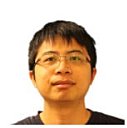
 Yida Wang
· 1 previous affiliation
- Amazon (United States)Since 2017
- Principal Researcher · Since 2017
2 other authors named Yida Wang: Yida Wang (li auto · 71 papers), Yida Wang (Shanghai Jiao Tong University · 2 papers)
Research Overview
Yida Wang focuses on machine learning systems, deep learning compilers, and the optimization of tensor programs for large foundation models. His trajectory spans from early web data extraction to comprehensive systems engineering for distributed training and inference. Currently, his work addresses pipeline parallelism, dynamic context scaling, and the automated diagnosis of logic errors in large language model deployments.
Research Trajectory
His early research included work on web data extraction, developing iRobot: an intelligent crawler for web forums in 2008.
Transitioning to machine learning systems, he focused heavily on the compilation and execution of dynamic models. He introduced DietCode: Automatic Optimization for Dynamic Tensor Programs and Grape: Practical and Efficient Graphed Execution for Dynamic Deep Neural Networks on GPUs, addressing the complexities of dynamic computational graphs. To improve the efficiency of deep learning on hardware accelerators, he developed Hidet: Task-Mapping Programming Paradigm for Deep Learning Tensor Programs. By allowing developers to directly embed scheduling logic within tensor programs, Hidet overcomes the limitations of traditional loop-oriented scheduling, drastically reducing tuning times and advancing work in the area of Operator Fusion for Memory-Bound Deep Learning.
In parallel, his research addressed the reliability and scalability of distributed training architectures. He designed GEMINI: Fast Failure Recovery in Distributed Training with In-Memory Checkpoints to minimize downtime during large-scale model training. During a highly productive period in 2024, he led multiple initiatives to optimize pipeline parallelism. This included the development of DynaPipe: Optimizing Multi-task Training through Dynamic Pipelines and DiffusionPipe: Training Large Diffusion Models with Efficient Pipelines. He also introduced Slapo: A Schedule Language for Progressive Optimization of Large Deep Learning Model Training to systematically improve training schedules, alongside DISTMM: Accelerating Distributed Multimodal Model Training to handle the specific bottlenecks of multimodal architectures. His work extends to hardware-specific optimizations, as seen in his research on Fast Convolution Meets Low Precision: Exploring Efficient Quantized Winograd Convolution on Modern CPUs. Drawing on his role as a Principal Scientist at AWS AI, he also investigated the Distributed Training of Large Language Models on AWS Trainium, demonstrating how custom accelerators can be leveraged for massive workloads.
As the context windows for large language models expanded to millions of tokens, he addressed the resulting memory and load-balancing bottlenecks. He developed DCP: Addressing Input Dynamism In Long-Context Training via Dynamic Context Parallelism, which replaces static context parallelism with dynamic strategies to handle heterogeneous sequences and improve length-aware parallelization. To further maximize hardware utilization, his group introduced PipeFill: Using GPUs During Bubbles in Pipeline-parallel LLM Training. By scheduling pending jobs during the idle pipeline bubbles that typically consume 15-30% of a training job's GPU allocation, PipeFill significantly reduces the overhead of scaling up large models.
In 2026, his research expanded into concurrent execution and automated debugging for LLM infrastructure. He oversaw the development of PLoRA: Efficient Concurrent LoRA Training for Large Language Models, a system that packs heterogeneous training jobs onto a shared base model using custom CUDA kernels. This approach drastically increases throughput, contributing to the research direction of Concurrent Execution and Multi-Tenancy for GPU Efficiency. He also collaborated on TritonRL: Training LLMs to Think and Code Triton Without Cheating, which uses reinforcement learning and a hierarchical reward structure to generate high-performance GPU kernels with smaller, domain-specialized models. Additionally, he participated in the design of Ekka: Automated Diagnosis of Silent Errors in LLM Inference. By employing LLM agents to perform differential debugging against trusted references, Ekka identifies root causes of accuracy degradation without relying on crash logs, advancing the broader area of Detecting Silent Logic Errors in Machine Learning Systems.
Current Directions
The most recent papers in the evidence indicate a strong focus on maximizing hardware utilization and ensuring the reliability of large language model deployments. Recent work investigates concurrent execution strategies, such as packing multiple Low-Rank Adaptation (LoRA) training jobs to eliminate pipeline bubbles and improve GPU throughput. Additionally, current research addresses the automated diagnosis of silent logic errors in LLM serving frameworks, utilizing differential debugging and reinforcement learning to maintain model accuracy and generate highly optimized GPU kernels without manual intervention.
Profile updated
Loading new papers…
Other researchers whose papers cluster into the same research directions — a proxy for overlapping technical interests and shared intellectual neighborhoods.
See something wrong? Report a mistake