

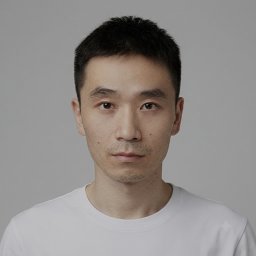
 Yida Wang
· 8 previous affiliations
- li autoSince 2023
- Senior Research Engineer · Since 2023
- 理想汽车2024–2026
- AI算法专家 · 2026
- 高级AI算法工程师 · 2024–2026
- Synthesia2022–2023
- Research Internship · 2022–2023
- Technical University of Munich2017–2022
- Ph.D., Computer Science · 2017–2022
- Research Internship · 2021
- Engineering Fellow · 2020
- Bleenco2018–2020
- Reseach Fellow · 2018–2020
- MS student · 2014–2017
- Undergrad student · 2010–2014
2 other authors named Yida Wang: Yida Wang (Amazon (United States) · 78 papers), Yida Wang (Shanghai Jiao Tong University · 2 papers)
Research Overview
Yida Wang focuses on 3D computer vision, point cloud processing, and semantic scene completion. His trajectory spans from early work on synthetic data generation and volumetric reconstruction to the development of efficient neural architectures for point cloud aggregation. Most recently, his research addresses real-time neural rendering and the generation of multi-view driving scenes.
Research Trajectory
Yida Wang's early research addressed object recognition by leveraging 3D models to overcome the scarcity of real training data. He introduced ZigzagNet: Efficient Deep Learning for Real Object Recognition Based on 3D Models, which modified convolutional neural networks to utilize synthetic data rendering and multi-task learning, establishing compact architectures for texture-less models.
Moving into volumetric reconstruction, he developed methods to reconstruct and semantically label 3D scenes from single depth images. In Adversarial Semantic Scene Completion from a Single Depth Image, he utilized multiple adversarial loss terms to correlate latent features from partial 2.5D data with a variational 3D auto-encoder. He expanded on this with ForkNet: Multi-Branch Volumetric Semantic Completion From a Single Depth Image, proposing a shared latent space across multiple generators to reconstruct distinct geometric and semantic representations. This architecture also enabled the generation of high-quality synthetic training datasets to supplement limited real-world samples.
A major phase of his work shifted toward unorganized 3D data, specifically addressing how neural networks process point clouds. He proposed SoftPoolNet: Shape Descriptor for Point Cloud Completion and Classification, introducing "soft pooling" to organize extracted features based on their activations and regional convolutions to maximize global activation entropy. This approach was extended in SoftPool++: An Encoder-Decoder Network for Point Cloud Completion, which extracted permutation-invariant features without relying on max-pooling or voxelization. This work contributed significantly to the research direction of Overcoming the Information Bottleneck in Point Cloud Aggregation and the broader area of Scaling 3D Representations Beyond the Memory Wall. Continuing this trajectory, he developed Learning Local Displacements for Point Cloud Completion, utilizing a neighbor-pooling operation that retains the highest activation feature vectors to prevent the loss of individual descriptors during feature extraction.
Concurrently, Wang explored transformer architectures and implicit representations for 3D shapes. He presented LegoFormer: Transformers for Block-by-Block Multi-view 3D Reconstruction, a self-supervised framework that decomposes complex shapes into regular structures using low-rank tensor decomposition, advancing work in the area of Emergent Semantic Part Decomposition. He also applied implicit fields to specialized domains, such as in SecNet: Semantic Eye Completion in Implicit Field, where an end-to-end network predicts point clouds with accurate eye geometry and semantic labels to overcome noise and specularity artifacts.
More recently, his focus has broadened to include Lidar processing and fundamental latent space optimization. He introduced a one-stage method in Lidar Upsampling With Sliced Wasserstein Distance that preserves fine-grained scan patterns using edge-aware convolutions. To improve the underlying probabilistic models used across classification, segmentation, and reconstruction tasks, he designed a variational inference model in Self-Supervised Latent Space Optimization With Nebula Variational Coding. This model introduces "nebula anchors" to guide latent variables into clustered embeddings while preventing the anchors themselves from collapsing.
Expanding into generative models for dynamic environments, Wang contributed to Efficient Multi-View Driving Scenes Generation Based on Video Diffusion Transformer, which introduces a framework for creating temporally and cross-view consistent synthetic driving videos to aid 3D perception tasks. Furthermore, he collaborated on addressing the computational bottlenecks of neural rendering with Mobile-GS: Real-time Gaussian Splatting for Mobile Devices. This work optimizes 3D Gaussian Splatting for edge devices by replacing depth-sorting with an order-independent rendering scheme and applying neural compression.
Wang also collaborated on reinforcement post-training for autonomous driving policies in CRAFT: Counterfactual-to-Interactive Reinforcement Fine-Tuning for Driving Policies. The framework formulates closed-loop fine-tuning as proxy-residual optimization, combining dense counterfactual advantages with grounded residual corrections from interactive events to mitigate distribution shifts.
Current Directions
Recent work investigates the generation of complex, dynamic environments and the real-time rendering of 3D representations on resource-constrained devices. In the domain of autonomous driving, recent work explores diffusion transformer frameworks to generate high-fidelity multi-view driving videos alongside reinforcement fine-tuning methods that align counterfactual and interactive feedback for robust closed-loop policy execution. Simultaneously, ongoing research addresses the computational bottlenecks of neural rendering. The focus is on optimizing 3D Gaussian Splatting for edge devices, utilizing depth-aware order-independent rendering and aggressive neural compression to enable high-framerate, high-fidelity rendering with minimal storage requirements.
Profile updated
| Paper | Venue | Year |
|---|---|---|
| Mobile-GS: Real-time Gaussian Splatting for Mobile DevicesGitHubxiaobiaodu/ | ICLR | 2026 |
Loading new papers…
Other researchers whose papers cluster into the same research directions — a proxy for overlapping technical interests and shared intellectual neighborhoods.
See something wrong? Report a mistake