

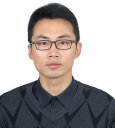
 Xuequan Lu
· 4 previous affiliations
- The University of Western AustraliaSince 2024
- Associate Professor · Since 2024
- Current
- Deakin University2019–2023
- Senior Lecturer & Lecturer · 2019–2023
- Nanyang Technological University2017–2019
- Research Fellow · 2017–2019
- Zhejiang University2011–2016
- PhD student · 2011–2016
Research Overview
Xuequan Lu focuses on visual computing, 3D spatial AI, and geometric processing. His research trajectory spans from foundational feature-preserving mesh denoising to advanced deep learning architectures for point cloud filtering and completion. Currently, his work addresses domain adaptation and efficient sequence modeling for large-scale 3D perception.
Research Trajectory
Lu's early research concentrated on foundational geometry processing, particularly the challenge of removing noise from 3D models while retaining sharp geometric features. He developed A Robust Scheme for Feature-Preserving Mesh Denoising (2016), addressing core issues in mesh refinement. Expanding this focus to point sets, he introduced GPF: GMM-Inspired Feature-Preserving Point Set Filtering (2018), which utilized Gaussian Mixture Models to robustly recover fine-scale features from noisy point clouds. Concurrently, he contributed to methods for dynamic 3D data, participating in the development of Unsupervised Articulated Skeleton Extraction From Point Set Sequences Captured by a Single Depth Camera (2018), a pipeline that combined non-rigid registration and motion clustering to estimate joints and bones without template supervision.
As deep learning became central to 3D vision, Lu transitioned toward neural architectures for point cloud processing. He co-developed Pointfilter: Point Cloud Filtering via Encoder-Decoder Modeling (2021), an automated point-wise learning architecture designed to bypass tedious parameter tuning while preserving sharp features. His research group subsequently advanced the area of Uniform Point Distribution Regularization for 3D Point Clouds with Towards uniform point distribution in feature-preserving point cloud filtering (2023). By integrating an edge-aware data term with a repulsion mechanism, this work prevented point clustering around sharp edges, contributing to the broader direction of Robust Surface Reconstruction Without Oriented Normals. During this period, he also began exploring cross-domain generalization, as seen in Self-Adversarial Disentangling for Specific Domain Adaptation (2023).
In 2024, Lu's work on point cloud denoising and orientation matured significantly. He led the development of StraightPCF: Straight Point Cloud Filtering, a lightweight framework that moves noisy points toward clean surfaces along straight trajectories, drastically reducing parameter count. He also guided research into unsupervised paradigms with Noise4Denoise: Leveraging noise for unsupervised point cloud denoising, a framework that learns to deduce clean surfaces by adding synthetic noise to already-noisy data. Addressing fundamental geometric properties, he worked on Consistent Point Orientation for Manifold Surfaces via Boundary Integration. Beyond filtering, he introduced SemReg: Semantics Constrained Point Cloud Registration, a cross-modal framework that leverages 2D image semantics via a Gaussian Mixture Semantic Prior to guide 3D feature interactions. Additionally, he contributed to security applications, participating in research on Test-Time Domain Generalization for Face Anti-Spoofing, which dynamically projects unseen test image styles back into known training spaces, intersecting with the research direction of The Mechanics of Biometric Presentation Attack Detection.
Lu's most recent trajectory emphasizes computational efficiency and domain adaptation for large-scale 3D perception. He formalized the denoising landscape by leading A Survey of Deep Learning-based Point Cloud Denoising (2025), establishing a functional taxonomy and unified benchmark for the field. Continuing his technical contributions to filtering, he proposed Hybrid Long and Short Range Flows for Point Cloud Filtering, fusing stochastic and deterministic flows to eliminate point clustering. To handle complex, incomplete scenes, he contributed to A Divide-and-Conquer Approach for Global Orientation of Non-Watertight Scene-Level Point Clouds Using 0-1 Integer Optimization. A major focus of his 2025 work involves adapting linear-complexity sequence models to 3D data. He directed research on DAPointMamba: Domain Adaptive Point Mamba for Point Cloud Completion, replacing heavy Transformers with a linear-complexity Mamba backbone to slash computational costs. This aligns with his broader interest in the area of Topology Preserving Serialization for Linear 3D Vision. Similarly, he guided the development of DAPoinTr: Domain Adaptive Point Transformer for Point Cloud Completion and participated in PointDGRWKV: Generalizing RWKV-like Architecture to Unseen Domains for Point Cloud Classification, adapting the Receptance Weighted Key Value architecture for domain-generalized point cloud classification.
Current Directions
Recent work investigates the intersection of computational efficiency and cross-domain generalization in 3D spatial AI. A primary focus is the research direction of Unsupervised Domain Adaptation for Sparse 3D Point Clouds, where efforts are directed toward aligning features across unseen domains without requiring extensive target-domain labels. To address the quadratic computational bottlenecks of traditional attention mechanisms in large-scale 3D perception, current methodologies explore linear state-space models and RWKV architectures. These approaches facilitate efficient sequence modeling and contribute to the area of Global Context for 3D Point Cloud Completion, enabling robust 3D geometry reconstruction and classification with significantly reduced latency and parameter counts.
Profile updated
Loading new papers…
Other researchers whose papers cluster into the same research directions — a proxy for overlapping technical interests and shared intellectual neighborhoods.
See something wrong? Report a mistake