

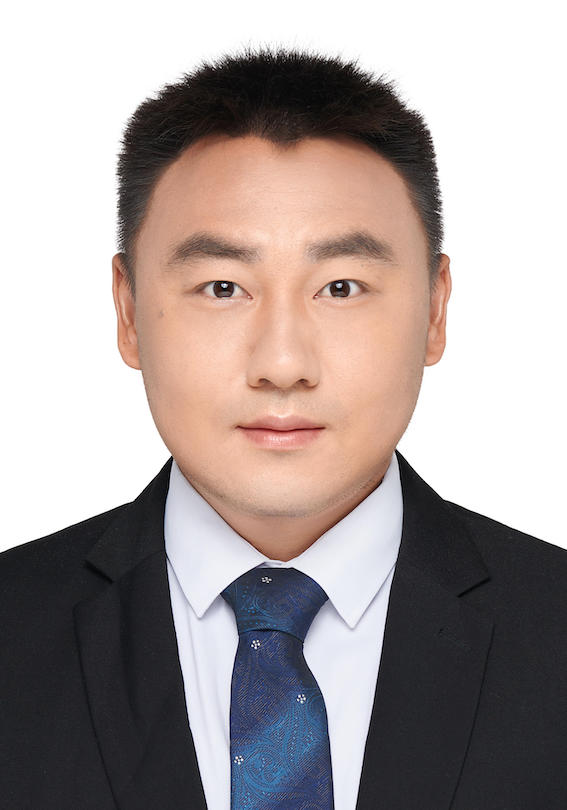
 Mingqiang Wei
· 5 previous affiliations
- Full Professor · Since 2021
- Associate Professor · 2017–2020
- Hefei University of Technology2015–2017
- Assistant Professor · 2015–2017
- Chinese University of Hong Kong2011–2014
- PhD student · 2011–2014
- Nanjing Normal University2008–2011
- MS student · 2008–2011
- Anqing Normal University2004–2008
- Undergrad student · 2004–2008
1 other author named Mingqiang Wei: Mingqiang Wei (1 paper)
Research Overview
Mingqiang Wei focuses on 3D point cloud processing, geometric deep learning, and computer vision for image restoration. His trajectory spans from foundational mesh and point cloud denoising algorithms to advanced neural architectures for complex visual degradations. Most recently, his work investigates 3D visual grounding, promptable segmentation, and the integration of large-scale generative priors into 3D perception.
Research Trajectory
His early research addressed fundamental challenges in geometric processing and image enhancement. In 2015, he explored techniques for cleaning 3D geometry with Bi-Normal Filtering for Mesh Denoising. This interest in structure-preserving filtering extended to 2D vision, where he contributed to Non-Local Sparse and Low-Rank Regularization for Structure-Preserving Image Smoothing, focusing on removing noise while maintaining critical image features.
Building on these filtering concepts, his work transitioned toward deep learning approaches for 3D point clouds, adapting classic filtering to modern geometric deep learning. A key contribution in the area of Robust Processing of Messy 3D Point Clouds was LBF: Learnable Bilateral Filter For Point Cloud Denoising, an end-to-end network that predicts adaptive weights to remove noise while preserving sharp corners and edges. He continued to refine 3D surface reconstruction techniques with Refine-Net: Normal Refinement Neural Network for Noisy Point Clouds, contributing to the broader direction of Iterative Normal Refinement for 3D Surface Reconstruction. His focus on robust point cloud representation also yielded AGConv: Adaptive Graph Convolution on 3D Point Clouds and PathNet: Path-Selective Point Cloud Denoising, which introduced adaptive and path-selective mechanisms to better capture local geometric structures.
Parallel to his 3D geometric work, he advanced the field of 2D image restoration, particularly for scenes degraded by adverse weather. His research in Depth Aware Image Restoration for Adverse Weather includes Joint Depth Estimation and Mixture of Rain Removal From a Single Image. This joint-learning framework untangles complex, overlapping degradations—such as rain streaks and haze—by integrating spatial context through depth estimation, advancing the broader direction of All-in-One Image Restoration for Compound Degradations. He further addressed real-world visibility issues with UCL-Dehaze: Toward Real-World Image Dehazing via Unsupervised Contrastive Learning, leveraging unsupervised methods to improve image clarity without relying on paired clear and hazy datasets.
By 2025, his research expanded into unsupervised learning and domain adaptation for complex 3D tasks. He introduced RegiFormer: Unsupervised Point Cloud Registration via Geometric Local-to-Global Transformer and Self-Augmentation, which uses a transformation-invariant geometry embedding to align partially overlapping point clouds without manual annotations. To address the challenge of deploying models in new environments, his group developed PointSFDA: Source-free Domain Adaptation for Point Cloud Completion. This framework adapts pretrained models to real-world target scans using self-supervised mask consistency, bypassing the need for source data. He also explored zero-shot learning in 3D registration with RARE: Refine Any Registration of Pairwise Point Clouds via Zero-Shot Learning. By projecting 3D scans into 2D depth maps and extracting semantic knowledge from pre-trained diffusion models, this work established new capabilities in the research area of Open-Vocabulary 3D Perception via 2D Foundation Models.
A significant recent theme in his trajectory is bridging the modality gap between 3D environments and natural language. His research addressed the complexities of 3D visual grounding with Unified Representation Space for 3D Visual Grounding, which aligns visual and textual features to accurately localize objects in complex scenes. Recognizing the limitations of text-only inputs in real-world applications, he developed I Speak and You Find: Robust 3D Visual Grounding with Noisy and Ambiguous Speech Inputs. This framework incorporates raw acoustic features to maintain accuracy even when speech-to-text transcriptions contain errors. His work on cross-modal alignment also extends to generative editing, as seen in CoreEditor: Consistent 3D Editing via Correspondence-constrained Diffusion, which enforces structured interactions based on geometry and semantics to ensure text-driven 3D edits remain visually consistent across multiple viewpoints.
Moving into 2026, his research increasingly leverages large-scale foundation models and generative priors for 3D understanding. He introduced PartSAM: A Scalable Promptable Part Segmentation Model Trained on Native 3D Data, which utilizes a dual-branch triplane encoder trained on millions of shape-part pairs to enable interactive and automatic segmentation directly in 3D space. To optimize the interaction with such foundation models, he developed PromptPilot: Game-Theoretic Multi-Agent Prompt Optimization for Segment Anything, addressing the difficulty of finding optimal point prompts for few-shot segmentation. Additionally, he unified rigid and non-rigid point cloud registration with RGGT: A Generative-Prior-Guided Transformer for Unified Rigid and Non-Rigid Point Cloud Registration, utilizing 3D generative priors and a novel attention mechanism to handle diverse geometric deformations.
Current Directions
The most recent papers in the evidence indicate a strong focus on integrating foundation models and generative priors into 3D perception and segmentation. Recent work investigates promptable 3D part segmentation natively trained on large-scale 3D datasets, moving beyond the limitations of lifting 2D masks into 3D space. Additionally, his current research addresses the optimization of multi-agent prompting strategies for few-shot segmentation tasks. Another major ongoing theme is the unification of rigid and non-rigid point cloud registration through generative-prior-guided transformers, enabling robust alignment across diverse and deforming geometric structures. Finally, he continues to explore cross-modal 3D visual grounding, focusing on robust systems that can interpret noisy speech and natural language to accurately localize and edit objects within complex 3D environments.
Profile updated
Loading new papers…
Other researchers whose papers cluster into the same research directions — a proxy for overlapping technical interests and shared intellectual neighborhoods.
See something wrong? Report a mistake