

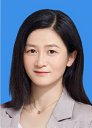
 Meili Wang
· 2 previous affiliations
- Northwest A&F UniversitySince 2012
- Full Professor · Since 2021
- Assistant Professor · 2015–2021
- Lecturer · 2012–2014
- Bournemouth University2008–2011
- PhD student · 2008–2011
Research Overview
Meili Wang focuses on computer graphics, 3D computer vision, and the application of artificial intelligence to smart agriculture. Her trajectory spans early work in geometric modeling and bas-relief generation to advanced representation learning for unstructured point clouds. Currently, she investigates self-supervised 3D perception, domain generalization, and specialized machine learning systems for agricultural monitoring and veterinary informatics.
Research Trajectory
Wang’s early research explored geometric modeling and digital relief generation. She participated in a comprehensive review of the field in Computer Assisted Relief Generation - A Survey. Over the subsequent years, her focus expanded to the challenges of reconstructing 3D surfaces from imperfect data. In 3D Incomplete Point Cloud Surfaces Reconstruction With Segmentation and Feature-Enhancement, she addressed the noise and topological defects inherent in raw point clouds by integrating segmentation, skeletonization, and user guidance to enhance geometric details. This aligns with her broader contributions to the research area of Preserving Sharp Geometric Features in 3D Reconstruction. She also investigated single-image 3D modeling for highly complex organic structures, developing an encoder-decoder network to predict missing perspective information in A 3D Flower Modeling Method Based on a Single Image. Her foundational work on relief generation culminated in deep learning approaches, such as Bas-relief modelling from enriched detail and geometry with deep normal transfer.
Around 2021, Wang’s trajectory shifted increasingly toward the broader direction of Deep Learning on Unstructured 3D Point Clouds. Recognizing the limitations of supervised methods that require extensive labeling, her group proposed a contrastive approach in Unsupervised Representation Learning for 3D Point Cloud Data, maximizing consistency between output representations of transformed point cloud pairs. Concurrently, she applied point cloud learning techniques to human-computer interaction, specifically for virtual reality environments. By treating consecutive tracking frames as point clouds, she developed a framework for recognizing movement patterns in Classifying In-Place Gestures with End-to-End Point Cloud Learning, and subsequently extended this with memory-augmented architectures in In-Place Gestures Classification via Long-term Memory Augmented Network. Returning to core point cloud processing, she also explored non-local position-based methods in Rethinking Point Cloud Filtering: A Non-Local Position Based Approach.
In recent years, Wang has focused heavily on self-supervised learning, domain generalization, and test-time adaptation for 3D perception. In DHGCN: Dynamic Hop Graph Convolution Network for Self-Supervised Point Cloud Learning, she introduced a method that treats voxelized object parts as nodes in a global graph, learning contextual relationships by reconstructing hop distances. To address the challenge of deploying models in continually changing environments, she collaborated on PCoTTA: Continual Test-Time Adaptation for Multi-Task Point Cloud Understanding, a framework utilizing a dynamic prototype bank to adapt to streaming real-world data without catastrophic forgetting. She further advanced the flexibility of 3D models in DG-PIC: Domain Generalized Point-In-Context Learning for Point Cloud Understanding, enabling a single model to perform multiple tasks across diverse datasets without retraining. Her ongoing work in point cloud processing includes Learning Implicit Fields for Point Cloud Filtering and the development of lightweight architectures for robust feature extraction, as detailed in Masked Autoencoders in 3D Point Cloud Representation Learning.
Parallel to her foundational work in computer vision, Wang applies machine learning to smart agriculture and veterinary informatics. This applied research includes Dynamic Quadruple Optimization Based Transfer Learning for Animal Biometric Identification, which leverages transfer learning for livestock monitoring. Additionally, she has explored natural language processing for agricultural knowledge management, developing semantic and syntactic enhanced joint extraction methods for veterinary texts in SemSynJE: Semantic and syntactic enhanced joint extraction of entity and relation for sheep disease prevention and treatment.
Current Directions
The most recent papers in the evidence indicate a dual focus on robust, generalized 3D perception and specialized artificial intelligence for agricultural systems. In the domain of 3D computer vision, recent work investigates self-supervised learning paradigms—particularly masked autoencoders and dynamic graph convolutions—to extract robust contextual features from unstructured point clouds without relying on extensive labeled data. This is coupled with efforts to build generalist 3D models capable of continual test-time adaptation and domain-generalized point-in-context learning, allowing systems to operate across shifting real-world environments. Concurrently, Wang applies advanced machine learning to smart agriculture, developing transfer learning techniques for animal biometric identification and specialized natural language processing models for extracting veterinary knowledge related to livestock disease prevention.
Profile updated
| Paper | Venue | Year |
|---|---|---|
| Classifying In-Place Gestures with End-to-End Point Cloud LearningGitHubZhaoLizz/ | Ismar | 2021 |
Loading new papers…
Other researchers whose papers cluster into the same research directions — a proxy for overlapping technical interests and shared intellectual neighborhoods.
See something wrong? Report a mistake