

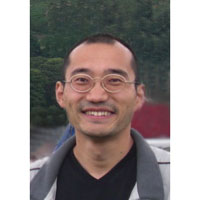
 Jian Chang
· 1 previous affiliation
- Bournemouth UniversitySince 2017
- Full Professor · Since 2017
Research Overview
Jian Chang focuses on physics-based simulation, 3D computer vision, and interactive animation systems. His early work established mesh-free deformation frameworks and interactive digital puppetry before expanding into deep learning for 3D scene understanding. Currently, he investigates multiphase fluid dynamics and unified generalist models for point cloud perception.
Research Trajectory
Chang’s early research established foundational techniques for 3D object deformation. He introduced Mesh-free deformations in 2004, which he subsequently expanded into a comprehensive Physically based mesh-free deformation framework and techniques for computer graphics. This 2006 work departed from traditional interconnected triangle meshes by treating deformation as a mathematical field, enabling real-time performance and reusable animations. Building on these physics-inspired approaches, he developed Hyper-twist (2009), a distortion technique that treats 3D space as a hyper-elastic medium to generate organic deformations for algorithmic art. That same year, he applied these principles to medical training, introducing a dual-layer framework for Modelling Rod-Like Flexible Biological Tissues for Medical Training, which decoupled global shape changes from local surface deformations to achieve high visual fidelity and haptic feedback.
Transitioning into interactive systems and complex material simulations, Chang explored both fluid dynamics and gesture-based interfaces. He contributed to A unified particle system framework for multi-phase, multi-material visual simulations in 2017. Concurrently, he designed a Hand gesture-based interactive puppetry system to assist storytelling for children, a touchless interface aimed at developing narrative and motor skills. He further advanced interactive animation with a Semantic framework for interactive animation generation and its application in virtual shadow play performance (2018), utilizing semantic ontologies to allow novices to perform traditional Chinese shadow play through natural hand gestures.
In 2020, Chang's focus expanded to deep learning frameworks for 3D scene understanding and geometry reconstruction. He participated in the development of Skeleton-bridged Point Completion: From Global Inference to Local Adjustment, which uses a meso-skeleton as an intermediate guide to preserve complex topologies when reconstructing missing 3D geometries. He also contributed to holistic indoor scene reconstruction through Total3DUnderstanding: Joint Layout, Object Pose and Mesh Reconstruction for Indoor Scenes From a Single Image, a framework that jointly trains layout and object estimation to improve accuracy via room context. This was complemented by Shallow2Deep: Indoor scene modeling by single image understanding, which infers support relationships to reconstruct cluttered environments from single RGB images. Extending his work in sequence generation and visual understanding, he collaborated on SIG-Former: monocular surgical instruction generation with transformers (2022), utilizing self-critical reinforcement learning to automatically generate natural language surgical instructions from visual data.
Chang’s recent trajectory demonstrates a dual focus on high-fidelity fluid simulation and adaptable 3D perception models. Returning to complex physics, he addressed the research direction of Consistent Mass and Momentum Transport for Multiphase Flows with An Implicitly Stable Mixture Model for Dynamic Multi-fluid Simulations (2023). This work introduced an implicit phase-momentum mapping to improve mass conservation and numerical stability for virtual reality applications. In the domain of 3D vision, he participated in advancing the area of Unified Generalist Models for 3D Perception and Generation and the specific direction of Unsupervised Domain Adaptation for Sparse 3D Point Clouds. This is evidenced by his contributions to PCoTTA: Continual Test-Time Adaptation for Multi-Task Point Cloud Understanding (2024), which enables models to adapt to streaming real-world data without catastrophic forgetting, and DG-PIC: Domain Generalized Point-In-Context Learning for Point Cloud Understanding (2024), a framework allowing a single model to perform multiple 3D tasks across different datasets without retraining. Most recently, in 2025, his simulation research has culminated in several advanced particle-based methods, including A Versatile Energy-Based SPH Surface Tension With Spatial Gradients, Dynamic Importance Monte Carlo SPH Vortical Flows With Lagrangian Samples, and Multiphase Particle-Based Simulation of Poro-Elasto-Capillary Effects, which further extend the broader area of Unified Multi-Physics Simulation. In 2026, Chang guided the development of Emotion-Aware and Context-Grounded Dialogue Agents for Personalized Video Game Interactions, introducing ChatNPC to personalize non-player character dialogue dynamically in real time based on player emotional shifts, in-game context, and memory retrieval via tool calling.
Current Directions
The most recent papers in the evidence indicate two primary ongoing research directions. First, Chang continues to advance particle-based physics simulations, specifically focusing on Smoothed Particle Hydrodynamics (SPH). His 2025 work investigates complex fluid phenomena, including energy-based surface tension models, vortical flows using Monte Carlo sampling, and the simulation of poro-elasto-capillary effects in multiphase environments. Second, in the realm of 3D computer vision and interactive gaming, recent work addresses the adaptability of deep learning models for point cloud understanding as well as emotion-aware, context-grounded conversational agents for personalized video game interactions.
Profile updated
Loading new papers…
Other researchers whose papers cluster into the same research directions — a proxy for overlapping technical interests and shared intellectual neighborhoods.
See something wrong? Report a mistake