

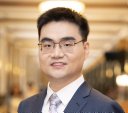
 Xin Jiang
· 4 previous affiliations
- University of HoustonSince 2025
- Assistant Professor · Since 2025
- Cornell Tech2024–2025
- Postdoc · 2024–2025
- Lehigh University2022–2024
- Postdoc · 2022–2024
- Discover2017–2022
- PhD student · 2017–2022
7 other authors named Xin Jiang: Xin Jiang (SACT, AI Lab, Huawei Hong Kong Research Center · 151 papers), Xin Jiang (34 papers), Xin Jiang (State Key Laboratory of Media Convergence and Communication · 22 papers), Xin Jiang (Beijing Academy of Artificial Intelligence · 7 papers), Xin Jiang (3 papers), and 2 more
Research Overview
Xin Jiang focuses on the mathematical foundations of data science, specifically the design and analysis of algorithms for large-scale optimization problems. His work spans convex and nonconvex optimization, distributed and decentralized systems, and machine learning for graphical data. Currently an Assistant Professor in the Department of Industrial and Systems Engineering at the University of Houston, Jiang’s research emphasizes "practical theory"—developing optimization frameworks that are both theoretically principled and computationally efficient for high-dimensional engineering and data science applications.
Research Trajectory
Jiang’s research trajectory reflects a progression from the foundational study of matrix analysis and convex splitting methods toward the complexities of stochastic, constrained, and distributed optimization in modern machine learning.
During his doctoral studies at UCLA, Jiang focused on the intersection of semidefinite programming (SDP) and matrix completion. This period was characterized by an emphasis on exploiting problem structures, such as chordal sparsity, to make large-scale SDPs computationally tractable. His work in this area addressed minimum-rank positive semidefinite matrix completion and the development of proximal first-order methods for large-scale systems. This foundational expertise in matrix analysis and proximal operators provided the basis for his subsequent work on splitting methods.
As a postdoctoral researcher at Lehigh University and Cornell University, Jiang shifted his focus toward stochastic optimization and nonlinear constraints. Working within the context of sequential quadratic optimization (SQO), he addressed the theoretical gap between unconstrained stochastic gradient methods and constrained nonlinear optimization. This phase of his work was marked by a move toward establishing stronger convergence guarantees—such as almost-sure convergence—for algorithms operating under nonconvex constraints. He also began exploring the trade-offs between communication costs and convergence rates in decentralized environments, a theme that has become central to his current research.
Since joining the University of Houston, Jiang has integrated these optimization techniques with graph-based machine learning. His recent work investigates the "curse of big data" in graph neural network (GNN) pre-training and the development of data-active frameworks to improve training efficiency. His current directions also include the automation of convergence analysis through performance estimation problems (PEPs) and the refinement of federated learning algorithms to handle data heterogeneity.
Current Directions
Jiang’s current research is organized around four primary pillars:
Bregman and Proximal Splitting Methods A significant portion of Jiang’s recent work involves extending classical proximal splitting algorithms using Bregman distances. By replacing standard Euclidean distances with generalized Bregman kernels, these methods can better adapt to the geometry of specific optimization problems, such as those involving sparse semidefinite constraints. This work focuses on deriving unified frameworks for convergence and implementing line-search procedures that eliminate the need for prior knowledge of operator norms or strong convexity constants.
Stochastic Constrained Optimization Jiang continues to advance the theory of stochastic sequential quadratic optimization (SQP). His research addresses the challenges of solving large-scale data-fitting problems subject to nonlinear equality and inequality constraints. A key focus is moving beyond asymptotic convergence in expectation to prove the almost-sure convergence of iterates and multipliers, providing more robust guarantees for practitioners in scientific machine learning.
Distributed and Federated Learning In the domain of decentralized optimization, Jiang investigates how computational agents can collaboratively solve problems over a network. This includes designing communication-efficient algorithms that remain robust to heterogeneous data distributions across clients. His work in this area often involves gradient tracking and controlled averaging techniques to mitigate the "client drift" common in federated settings.
Data-Centric Graph Machine Learning Jiang is increasingly focused on the efficiency and security of Graph Neural Networks. This includes identifying informative subgraphs for pre-training to reduce computational overhead and investigating the privacy risks associated with molecular pre-trained models. This direction represents a shift toward "data-active" perspectives, where the quality and selection of data are treated as primary variables in the optimization pipeline.
Representative Work
Jiang’s contributions are documented across several key publications that illustrate his focus on algorithmic refinement and theoretical rigor.
In Bregman Three-Operator Splitting Methods, Jiang (as first author) extends the primal-dual three-operator (PD3O) and Condat-Vũ algorithms by incorporating generalized Bregman distances. This work is significant for providing a unified convergence analysis framework for monotone inclusion problems. By utilizing the Bregman proximal point method, the paper introduces a line search procedure for stepsize selection in equality-constrained problems, enhancing the flexibility of first-order methods in non-Euclidean settings.
Furthering this line of inquiry, Bregman primal–dual first-order method and application to sparse semidefinite programming presents a variant of the Chambolle–Pock algorithm tailored for sparse SDP. Jiang (as first author) utilizes the logarithmic barrier function for the cone of positive semidefinite completable sparse matrices as a distance-generating kernel. The inclusion of a line search procedure is a critical contribution, as it allows the algorithm to operate without estimating the norm of the constraint matrix, which is often computationally prohibitive in large-scale applications.
In the realm of stochastic optimization, Jiang contributed to Almost-Sure Convergence of Iterates and Multipliers in Stochastic Sequential Quadratic Optimization. As the second author, he helped bridge the gap between unconstrained stochastic gradient methodology and constrained SQP. The paper provides rigorous proofs for the almost-sure convergence of stationarity measures to zero, a stronger guarantee than the expected-value convergence typically found in prior literature on stochastic SQP for nonconvex constraints.
Jiang’s work on distributed systems is exemplified by Improved Stochastic Controlled Averaging for Distributed and Federated Learning. Serving as the second author, he participated in the refinement of the SCAFFOLD algorithm. The research addresses the inconsistency of SCAFFOLD’s performance in homogeneous versus heterogeneous data settings. By introducing improved stochastic controlled averaging, the work aims to stabilize convergence rates across diverse client distributions in federated learning environments.
In the area of graph representation learning, Jiang participated in the development of the Better with Less: A Data-Active Perspective on Pre-Training Graph Neural Networks framework. As a middle author, he contributed to the identification of the "curse of big data" in GNNs, where excessive unlabeled data can degrade downstream performance. The paper proposes an Active Pre-Training (APT) framework that selects the most informative graphs for training, demonstrating that strategic data selection can lead to superior performance with significantly reduced computational costs.
Finally, Jiang’s interest in the accessibility of optimization theory is reflected in his participation in the development of PEPFlow: A Python Library for the Workflow of Performance Estimation of Optimization Algorithms. As a middle author, he contributed to a tool that automates the formulation of Performance Estimation Problems as semidefinite programs. This library bridges the gap between numerical verification of convergence rates and the construction of rigorous analytical proofs, streamlining the workflow for researchers designing new first-order algorithms.
Profile updated
Loading new papers…
Other researchers whose papers cluster into the same research directions — a proxy for overlapping technical interests and shared intellectual neighborhoods.
See something wrong? Report a mistake