

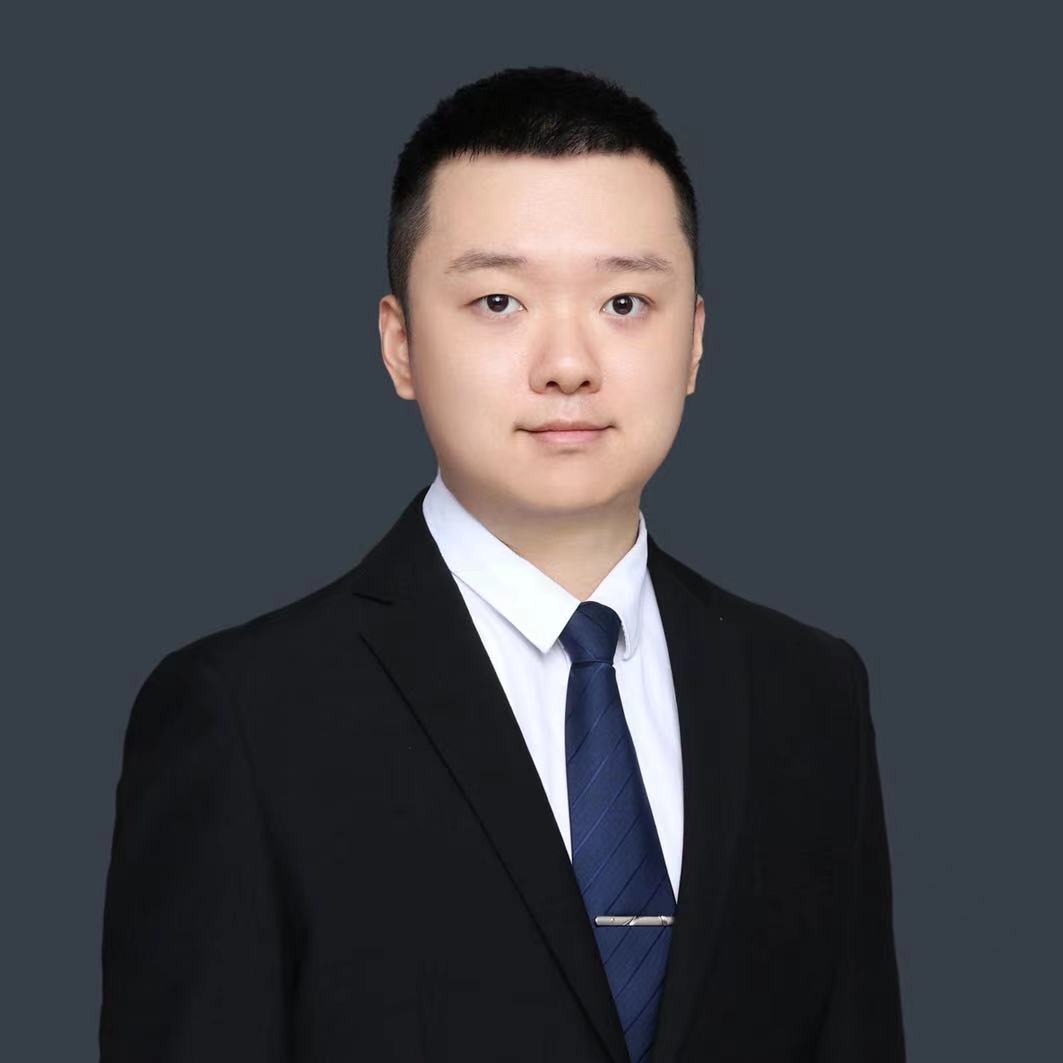
 Xiaohong Liu
· 8 previous affiliations
- Shanghai Jiao Tong UniversitySince 2022
- Associate Professor (Tenure-track) · Since 2025
- Assistant Professor (Tenure-track) · 2022–2024
- Current
- Quartic.ai2021
- Research Scientist · 2021
- McMaster University2018–2021
- Research Assistant · 2018–2021
- Visiting Scholar in Computer Vision · 2020
- IBM2019
- IoT & AI Developer - Coop · 2019
- University of Ottawa2014–2016
- MS student · 2014–2016
- Southwest Jiaotong University2010–2014
- Undergrad student · 2010–2014
2 other authors named Xiaohong Liu: Xiaohong Liu (Shenzhen University · 3 papers), Xiaohong LIU (1 paper)
Research Overview
Xiaohong Liu focuses on computer vision and multimedia, specifically image and video restoration, generative media editing, and visual quality assessment. His earlier work developed robust neural architectures for video frame interpolation and image dehazing. More recently, his research addresses the perceptual quality and forensic detection of AI-generated content, alongside multi-modal frameworks for controllable video generation and spatial grounding.
Research Trajectory
Liu's early research concentrated on foundational image and video restoration techniques. He developed Robust Multi-Frame Super-Resolution Based on Spatially Weighted Half-Quadratic Estimation and Adaptive BTV Regularization, which introduced adaptive regularization methods for enhancing low-resolution sequences. Expanding into atmospheric restoration, he introduced GridDehazeNet: Attention-Based Multi-Scale Network for Image Dehazing, an end-to-end convolutional neural network that mitigates bottleneck issues in traditional multi-scale approaches through an attention-based grid architecture.
Moving into temporal dynamics, Liu contributed to the research direction of Non-Linear Motion Modeling for Video Frame Interpolation. He participated in the development of the Video Frame Interpolation Transformer, which utilizes a space-time separable attention mechanism to overcome the receptive field limitations of standard convolutional networks. In parallel work within the area of Aligning Temporal Features via Deformable Convolutions, he collaborated on Video Frame Interpolation via Generalized Deformable Convolution, introducing a data-driven mechanism that allows sampling points to adaptively select locations across space and time to handle complex motions.
As generative models became more prevalent, Liu's focus expanded to include media forensics and specialized quality assessment. He developed a unified framework for detecting and localizing both traditional image edits and CNN-synthesized manipulations in Hierarchical Fine-Grained Image Forgery Detection and Localization, treating forgery detection as a hierarchical classification problem rather than a simple binary choice. Concurrently, he contributed to StableVQA: A Deep No-Reference Quality Assessment Model for Video Stability, addressing the lack of objective metrics for evaluating camera shake in user-generated content.
In 2024, Liu explored the intersection of aesthetic customization and functional robustness in generative media. He led the design of Text2QR: Harmonizing Aesthetic Customization and Scanning Robustness for Text-Guided QR Code Generation, which uses an iterative latent refinement process within Stable Diffusion to generate scannable, text-guided QR codes. He also oversaw the development of Face2QR: A Unified Framework for Aesthetic, Face-Preserving, and Scannable QR Code Generation, balancing the rigid patterns of QR modules with human facial features. Returning to video quality, he introduced Light-VQA+: A Video Quality Assessment Model for Exposure Correction with Vision-Language Guidance, leveraging CLIP-based guidance and human visual system principles to evaluate exposure-corrected videos.
His work in media forensics advanced with On Learning Multi-Modal Forgery Representation for Diffusion Generated Video Detection, where his team utilized large multi-modal models to detect videos generated by advanced diffusion architectures like Sora and Pika through semantic reasoning. This aligned with his broader involvement in the area of Perceptual Quality Assessment for AI-Generated Content, highlighted by his participation in organizing the NTIRE 2024 Quality Assessment of AI-Generated Content Challenge, which benchmarked objective metrics for generative media.
Liu's most recent trajectory emphasizes fine-grained quality assessment and complex generative editing. He directed the creation of AU-IQA: A Benchmark Dataset for Perceptual Quality Assessment of AI-Enhanced User-Generated Content, demonstrating the perceptual differences between AI-enhanced and purely AI-generated media. He also contributed to Advancing Zero-Shot Digital Human Quality Assessment Through Text-Prompted Evaluation, which introduced a comprehensive database for evaluating full-body digital humans. Advancing the research direction of Explainable Image Quality Assessment through Natural Language, he collaborated on Grounding-IQA: Grounding Multimodal Language Model for Image Quality Assessment, enabling models to provide location-aware quality evaluations. In generative editing, he participated in developing Light Up Your Face: A Physically Consistent Dataset and Diffusion Model for Face Fill-Light Enhancement, a diffusion model for realistic portrait relighting. Finally, his lab introduced MICE-Bench: A Challenging and Comprehensive Benchmark for Multi-Reference Image Creation and Editing to evaluate multi-concept compositional generation, and LayerT2V: A Unified Multi-Layer Video Generation Framework, which serializes background, foreground, and alpha mattes along the temporal dimension of a diffusion transformer for professional-grade video compositing.
Current Directions
The most recent papers in the evidence indicate a strong focus on the evaluation and control of highly complex AI-generated media. One major direction involves advancing multi-modal and explainable quality assessment, moving beyond global scalar scores to location-aware, language-grounded evaluations of digital humans and AI-enhanced user content. A parallel focus lies in compositional generative editing, where recent work investigates multi-reference image creation and unified multi-layer video generation. By leveraging diffusion transformers and physically consistent datasets, these efforts aim to provide fine-grained, professional-level control over lighting, temporal consistency, and spatial compositing in synthetic media.
Profile updated
Loading new papers…
Other researchers whose papers cluster into the same research directions — a proxy for overlapping technical interests and shared intellectual neighborhoods.
See something wrong? Report a mistake