

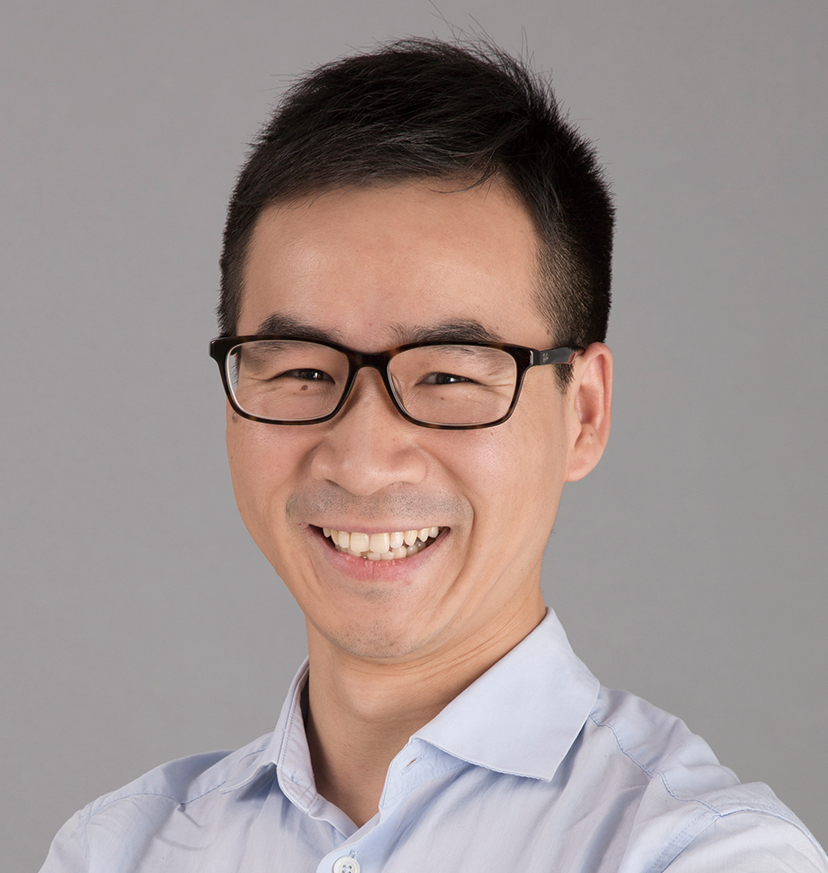
 Wenhan Luo
· 8 previous affiliations
- Associate Professor · Since 2024
- Current
- Sun Yat-sen University2022–2024
- Associate Professor · 2022–2024
- Tencent (China)2016–2022
- Research Scientist · 2020–2022
- Research Scientist · 2016–2019
- Amazon (United States)2019–2020
- Research Scientist · 2019–2020
- Imperial College London2012–2016
- Doctor of Philosophy (Ph.D.), Computer Science · 2012–2016
- Master’s Degree, Computer Science · 2009–2012
- Chinese Academy of Sciences2009–2012
- MS student · 2009–2012
- Undergrad student · 2005–2009
Research Overview
Wenhan Luo focuses on computer vision, generative artificial intelligence, and visual perception. His early research addressed foundational challenges in multiple object tracking, pedestrian detection, and efficient neural network architectures. More recently, his work centers on creative AI, specifically advancing image and video generation, multi-character animation, and robust image restoration techniques.
Research Trajectory
Wenhan Luo’s early research concentrated on visual tracking and detection, establishing robust methods for localizing and following objects across frames. In 2014, he introduced Bi-label Propagation for Generic Multiple Object Tracking, a framework that propagated both binary detection labels and individual object identities while enforcing spatio-temporal consistency. He later expanded on tracking methodologies by integrating reinforcement learning in End-to-end Active Object Tracking via Reinforcement Learning (2018). This approach contributed to the broader field of End-to-End Visuomotor Control by directly mapping visual observations to camera control signals. Consolidating his expertise in this domain, he published Multiple object tracking: A literature review in 2021, providing a comprehensive analysis of the field's advancements and persistent challenges like severe occlusion.
Parallel to his work in tracking, he investigated efficient neural network architectures designed for real-world deployment. He developed Bi-Real Net: Binarizing Deep Network Towards Real-Network Performance (2018), which tackled the representational limitations and training difficulties of 1-bit convolutional neural networks by introducing parameter-free shortcuts and magnitude-aware gradients. This work advanced the broader area of Bridging the Binary Neural Network Accuracy Gap. In the realm of object detection, he addressed the dual challenges of scale variation and partial occlusion in Coupled Network for Robust Pedestrian Detection with Gated Multi-Layer Feature Extraction and Deformable Occlusion Handling (2019). By combining adaptive feature selection with deformable pooling, this architecture aligned with research directions like Deformable Convolutions for Adaptive Spatial Sampling.
His work in dense prediction tasks also includes significant contributions to visual enumeration. He proposed Residual Regression With Semantic Prior for Crowd Counting (2019), which improved generalization to unseen environments by incorporating semantic sanity checks. He later collaborated on Iterative Correlation-based Feature Refinement for Few-shot Counting (2022), advancing areas such as Iterative Feature Refinement for Dense Prediction Tasks and Class-Agnostic Object Counting for Universal Visual Enumeration.
Transitioning into the mid-2020s, his research expanded to image restoration, leveraging the global receptive fields of vision transformers. Leading research in this area, his team developed Frequency-Oriented Efficient Transformer for All-in-One Weather-Degraded Image Restoration (2024), which utilized wavelet-based frequency guidance to holistically recover images degraded by rain, snow, and haze. To address the quadratic computational complexity of self-attention in high-resolution image recovery, his group subsequently introduced MB-TaylorFormer V2: Improved Multi-branch Linear Transformer Expanded by Taylor Formula for Image Restoration (2025).
In 2025 and 2026, his laboratory heavily emphasized generative AI, particularly diffusion models for video synthesis, 3D generation, and precise image editing. For 3D asset creation, his team developed MaterialMVP: Illumination-Invariant Material Generation via Multi-view PBR Diffusion (2025), an end-to-end model that generates physically-based rendering textures from 3D meshes and image prompts while enforcing consistency across viewpoints. In the domain of personalized generation, he oversaw Foundation Cures Personalization: Improving Personalized Models’ Prompt Consistency via Hidden Foundation Knowledge (2025).
A major theme in his recent trajectory is multi-character animation and conversational video, contributing significantly to the research direction of Multi-Person Coordination in Generative Human Motion. This is exemplified by AnyTalker: Scaling Multi-Person Talking Video Generation with Interactivity Refinement (2025), which synthesizes realistic non-verbal behaviors and lip-syncing for an arbitrary number of identities without requiring massive multi-person datasets. Similarly, Let Them Talk: Audio-Driven Multi-Person Conversational Video Generation (2025) solved complex audio-person binding problems using specialized positional embeddings. He further advanced multi-character generation with Towards Multiple Character Image Animation Through Enhancing Implicit Decoupling (2025), a diffusion-based framework that decouples background noise from character motion to resolve complex occlusions.
In 2026, his group introduced unified and efficient approaches to video editing and generative alignment. He participated in developing Pixel-Perfect Puppetry: Precision-Guided Enhancement for Face Image and Video Editing (2026), which exploits the local linearity of diffusion models for precise semantic control and temporal consistency. Finally, his team proposed Beyond VLM-Based Rewards: Diffusion-Native Latent Reward Modeling (2026) to align text-to-image generators directly in the latent space, reducing memory overhead, and Unified In-Context Video Editing (2026), which consolidates diverse editing tasks—such as stylization and camera control—into a single Diffusion Transformer framework.
Continuing these generative and representation learning efforts in 2026, Luo contributed to HOMIE: Human-object Centric Video Personalization via Multimodal Intelligent Enhancement, which integrates multimodal large language models to balance subject fidelity and human-object interactions in personalized video generation. In 3D representation learning, Luo guided the development of Tango3D: Towards Alignment for Global and Local 2D-3D Correspondence (2026), a foundation model bridging 2D patches and 3D point cloud tokens in a shared space to achieve dense pixel-to-point correspondence alongside global semantic retrieval. Broadening into wearable signal processing, Luo also co-authored VCR: Learning Valid Contextual Representation for Incomplete Wearable Signals (2026), proposing an orthogonal tokenizer and missing-aware mixture-of-experts model to handle sensor incompleteness without hallucinating non-inferable details.
Current Directions
The most recent papers in the evidence indicate a strong focus on generative AI, specifically targeting the controllability, efficiency, and scalability of diffusion models for video and image synthesis. A primary current direction is the generation of multi-person conversational videos and character animation, where recent frameworks address the complexities of audio-person binding, background stability, and interactive non-verbal behaviors. Additionally, ongoing work investigates unified architectures for video editing—such as consolidating stylization, character swapping, and camera control into single Diffusion Transformer models—and explores latent-space reward modeling to align generative models with human preferences more efficiently than traditional pixel-space approaches.
Profile updated
Loading new papers…
Other researchers whose papers cluster into the same research directions — a proxy for overlapping technical interests and shared intellectual neighborhoods.
See something wrong? Report a mistake