

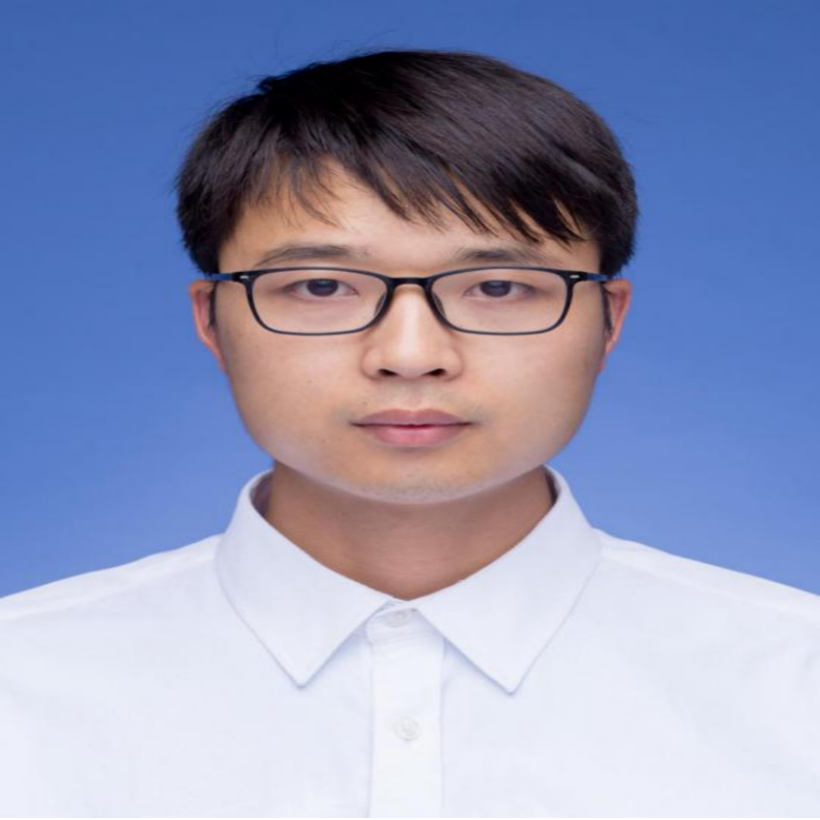
 Tao Wang
· 3 previous affiliations
- VivoSince 2025
- Researcher · Since 2025
- Nanjing University2021–2025
- PhD student · 2021–2025
- Wenzhou University2018–2021
- MS student · 2018–2021
31 other authors named Tao Wang: Tao Wang (94 papers), Tao Wang (Beijing Jiaotong University · 86 papers), Tao Wang (48 papers), Tao Wang (King's College London · 24 papers), Tao Wang (Sichuan University · 16 papers), and 26 more
Research Overview
Tao Wang focuses on low-level computer vision, image restoration, and multimodal generation. His research addresses the challenges of visual degradation in complex environments, spanning adverse weather conditions, ultra-high-definition low-light enhancement, and hardware-constrained imaging systems. Currently, he investigates the application of deep generative priors and efficient transformer architectures to advance computational photography and robust visual perception.
Research Trajectory
Wang's early research concentrated on recovering clear visual signals from environmentally degraded inputs. In 2022, he and his collaborators developed Restoring Vision in Hazy Weather with Hierarchical Contrastive Learning, introducing a framework that leverages multi-scale features and a novel contrastive loss mechanism. By treating hazy inputs as negative examples to avoid and clear images as positive targets to approximate, this approach effectively reverses atmospheric scattering and generalizes well to related tasks like rain removal.
Concurrently, Wang addressed the severe computational bottlenecks associated with scaling image restoration techniques to modern display resolutions. Standard vision transformers often struggle with quadratic complexity when applied to large images. This effort culminated in Ultra-High-Definition Low-Light Image Enhancement: A Benchmark and Transformer-Based Method, which introduced the UHD-LOL dataset—the first large-scale benchmark specifically designed for 4K and 8K low-light enhancement. To process these massive resolutions efficiently, he designed LLFormer, an architecture utilizing axis-based self-attention and cross-layer fusion to achieve linear computational complexity. This contribution significantly advanced the area of Enhancing Low-Light Images for Downstream Machine Vision and demonstrated the utility of Hierarchical Vision Transformers for Multi Scale Feature Extraction as well as Hybrid CNN-Transformer Architectures for Global-Local Vision.
Building on these architectural innovations, Wang expanded his focus to unified frameworks capable of handling diverse and overlapping environmental degradations. In GridFormer: Residual Dense Transformer with Grid Structure for Image Restoration in Adverse Weather Conditions, he proposed a backbone network that integrates a residual dense transformer block within a grid structure. By incorporating enhanced attention mechanisms—including a compact self-attention sampler for efficiency and a local enhancement stage for detail retention—GridFormer improved both performance and computational cost, contributing to the broader research direction of Token Reduction for Efficient Vision Transformers.
As his trajectory progressed into 2024, Wang began tackling hardware-induced visual artifacts alongside environmental ones. He explored the domain of Computational Restoration for Under-Display Camera Systems with the development of Segmentation Guided Sparse Transformer for Under-Display Camera Image Restoration. Under-display cameras suffer from severe image degradation due to light diffraction through the screen panel. To address this, Wang introduced SGSFormer, a framework that utilizes instance segmentation maps to guide sparse self-attention. This targeted approach allows the model to filter out redundant diffraction noise and focus computational resources on the most relevant features for high-quality image reconstruction.
Simultaneously, Wang began integrating generative models into his restoration pipelines to solve highly ill-posed inverse problems. In PromptRR: Diffusion Models as Prompt Generators for Single Image Reflection Removal, he framed frequency information as visual prompts, employing diffusion models to generate these high- and low-frequency prompts and a specialized transformer to apply them. This approach advanced the field of Restoring Images with Unknown Complex Degradations. He further extended this generative approach to low-light scenarios with LLDiffusion: Learning Degradation Representations in Diffusion Models for Low-Light Image Enhancement. This framework explicitly models and integrates degradation representations into the diffusion process, combining a joint learning scheme for degradation and enhancement with a Retinex-inspired color prior to achieve robust results on both synthetic and real-world datasets.
Most recently, in 2025, Wang's research has expanded to include robust geometric vision tasks. He participated in the development of CorrMoE: Mixture of Experts with De-stylization Learning for Cross-Scene and Cross-Domain Correspondence Pruning. This framework improves image matching robustness across different visual domains, such as transitioning from synthetic training data to real-world applications. By combining a de-stylization branch to remove domain-specific biases with a Mixture of Experts (MoE) module to adaptively handle varying scene geometries, the work provides a more resilient approach to camera pose estimation and 3D reconstruction.
Current Directions
The most recent papers in the evidence indicate a strong focus on integrating deep generative models and adaptive architectures into low-level vision and geometric matching tasks. Wang is actively investigating how diffusion models can be leveraged not just for direct image synthesis, but as sophisticated priors and prompt generators for complex restoration problems, such as reflection removal and extreme low-light enhancement. Additionally, his recent work explores the use of Mixture of Experts (MoE) architectures to dynamically adapt to varying scene geometries and cross-domain shifts, aiming to build more robust and generalizable visual perception systems that can operate reliably in unconstrained real-world environments.
Profile updated
Loading new papers…
Other researchers whose papers cluster into the same research directions — a proxy for overlapping technical interests and shared intellectual neighborhoods.
See something wrong? Report a mistake