

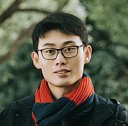
 Wenbo Li
· 4 previous affiliations
- Jingdong (China)Since 2025
- Researcher · Since 2025
- Current
- PhD student · 2019–2023
- Huawei Technologies (China)2023–2025
- Researcher · 2023–2025
- Shanghai Jiao Tong University2012–2019
- MS student · 2016–2019
- Undergrad student · 2012–2016
6 other authors named Wenbo Li: Wenbo Li (Samsung Research America (SRA) · 88 papers), Wenbo Li (6 papers), Wenbo Li (2 papers), Wenbo Li (Zhejiang University · 1 paper), Wenbo Li (1 paper), and 1 more
Research Overview
Wenbo Li focuses on low-level computer vision, efficient image and video synthesis, and multimodal foundation models. His early work concentrated on advancing super-resolution and image restoration techniques through novel network architectures and self-supervised learning. More recently, his research has expanded into generative AI, exploring highly efficient diffusion models and the integration of large language models for cognitive visual evaluation and generation.
Research Trajectory
Wenbo Li’s early research established foundational techniques in visual attention and super-resolution. He initially explored attention mechanisms for retrieval tasks, introducing Multilevel Collaborative Attention Network for Person Search in 2018. Transitioning to video and image enhancement, he developed MuCAN: Multi-correspondence Aggregation Network for Video Super-Resolution, which leverages temporal multi-correspondence to bypass error-prone optical flow estimation. In parallel, he collaborated on LAPAR: Linearly-Assembled Pixel-Adaptive Regression Network for Single Image Super-resolution and Beyond, casting the low-to-high resolution mapping as a linear coefficient regression task over predefined filter bases to balance model complexity and visual quality. Continuing this focus on efficiency, he proposed MASA-SR: Matching Acceleration and Spatial Adaptation for Reference-Based Image Super-Resolution, drastically reducing the computational cost of texture matching and advancing the area of Preserving High-Frequency Textures in Image Restoration.
Between 2022 and 2023, his focus shifted toward the integration of transformer architectures into low-level vision. He contributed to the research area of Hybrid CNN-Transformer Architectures for Global-Local Vision with MAT: Mask-Aware Transformer for Large Hole Image Inpainting. This architecture unifies local convolution with long-range transformer modeling to generate diverse, photo-realistic completions for complex scenes. To systematically understand these architectures, he investigated On Efficient Transformer-Based Image Pre-training for Low-Level Vision, designing evaluation tools—related to the field of Comparing Neural Network Representations with Centered Kernel Alignment—to uncover how pre-training introduces local information into intermediate layers for tasks like super-resolution.
In 2024, his work expanded significantly into generative models, semantic guidance, and real-world generalization. In the domain of Semantic Priors for Large Scale Image Inpainting, he developed Image Inpainting via Iteratively Decoupled Probabilistic Modeling. This work bridges the speed of Generative Adversarial Networks with the stability of diffusion models, contributing to the broader area of Spatial Attention Guided by Predictive Uncertainty by using Gaussian regularization for uncertainty estimation. Addressing the gap between synthetic training data and real-world degradation, he introduced Low-Res Leads the Way: Improving Generalization for Super-Resolution by Self-Supervised Learning, allowing models to adapt at test time without paired ground truth. He also began integrating language models into low-level tasks, proposing CoSeR: Bridging Image and Language for Cognitive Super-Resolution to generate high-quality reference images via cognitive understanding. Concurrently, he presented ResMaster: Mastering High-Resolution Image Generation via Structural and Fine-Grained Guidance, a training-free framework enabling standard diffusion models to generate 4K images by combining frequency-based structural alignment with vision-language model guidance.
By 2025, his trajectory emphasized highly efficient video synthesis and edge-device deployment. He developed LoViC: Efficient Long Video Generation with Context Compression, a diffusion transformer framework that maintains identity consistency across thousands of frames by compressing historical context. Pushing efficiency further, he introduced Turbo2K: Towards Ultra-Efficient and High-Quality 2K Video Synthesis, utilizing cross-model knowledge distillation to achieve significant speedups for high-resolution video generation. For mobile applications, he led the development of PocketSR: The Super-Resolution Expert in Your Pocket Mobiles, an ultra-lightweight model that advances the direction of One-Step Generative Restoration via Diffusion Distillation by enabling 4K processing on edge devices in under a second. Additionally, he proposed Mutual Guidance and Residual Integration for Image Enhancement, utilizing bidirectional attention for low-light image enhancement.
Current Directions
Recent work investigates the integration of multimodal foundation models into visual evaluation and the development of universal, ultra-fast restoration paradigms. In Grounding-IQA: Grounding Multimodal Language Model for Image Quality Assessment, he and his collaborators explore fine-grained image quality assessment by enabling multimodal large language models to provide location-aware evaluations through spatial grounding and referring.
Simultaneously, his research addresses the unification and acceleration of low-level vision tasks. He participated in the design of UniRestorer: Universal Image Restoration via Adaptively Estimating Image Degradation at Proper Granularity, which employs a multi-granularity Mixture-of-Experts architecture to handle diverse image corruptions within a single framework. Furthermore, his work on Pixel to Gaussian: Ultra-Fast Continuous Super-Resolution with 2D Gaussian Modeling shifts away from coordinate-based neural networks, reconstructing 2D continuous Gaussian fields to achieve massive speedups for arbitrary-scale super-resolution.
Profile updated
Loading new papers…
Other researchers whose papers cluster into the same research directions — a proxy for overlapping technical interests and shared intellectual neighborhoods.
See something wrong? Report a mistake