

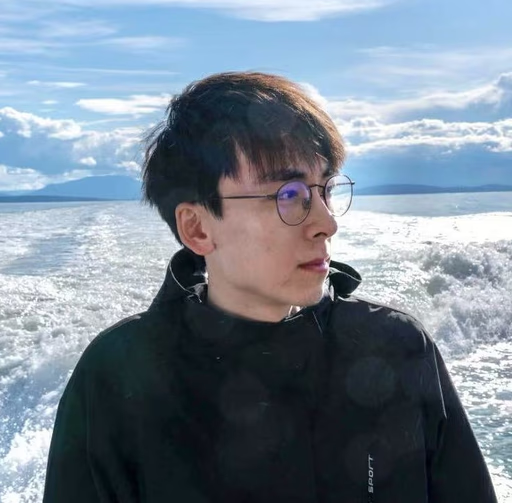
 Haoyu Chen
· 3 previous affiliations
- Current
- PhD student · Since 2022
- SDS2017–2021
- Undergrad student · 2017–2021
6 other authors named Haoyu Chen: Haoyu Chen (University of Oulu · 64 papers), Haoyu Chen (Harvard University · 4 papers), Haoyu Chen (华为莱布尼茨研究所 · Shenzhen University of Advanced Technology · 2 papers), Haoyu Chen (Cursor · 1 paper), Haoyu Chen (1 paper), and 1 more
Research Overview
Haoyu Chen focuses on Input-Dependent Dynamic Kernels for Adaptive Feature Extraction, image restoration, and the integration of multimodal large language models (MLLMs) into generative workflows. His research addresses the technical challenges of super-resolution and image synthesis, evolving from traditional convolutional architectures to cognitive, language-guided restoration frameworks and autonomous agents for professional-grade photo editing. Currently a Ph.D. student at the Hong Kong University of Science and Technology (Guangzhou), Chen’s work increasingly explores how foundation models can be leveraged as reasoning engines to automate complex visual tasks.
Research Trajectory
Chen’s early research, beginning around 2018, focused on the application of deep learning to signal reconstruction and super-resolution (SR) within specialized domains. This period was characterized by efforts to "upgrade" hardware capabilities through software-based perception frameworks, particularly for industrial sensor data. By 2020, his work expanded into extreme video super-resolution, participating in large-scale benchmarks like the AIM 2020 challenge, which explored upscaling factors as high as 16x. These efforts highlighted the limitations of standard convolutional neural networks (CNNs) in maintaining structural integrity under massive information loss.
In 2021, Chen’s focus shifted toward refining the internal mechanisms of Single Image Super-Resolution (SISR) models. He investigated the role of attention mechanisms, seeking to quantify and visualize how these modules contribute to performance. This led to the development of dual-branch architectures that coupled non-attention and attention-based features to improve both efficiency and accuracy. During this time, he also contributed to the field of information security through research into Deep Steganography without Decoder Transmission and Synthesizing Cover Media to Evade Steganalysis. These projects addressed the "smoking gun" problem in digital steganography, developing methods to hide secrets within images without leaving detectable statistical fingerprints or requiring the transmission of a specific decoder network.
By 2023, Chen’s work began to bridge the gap between low-level pixel restoration and high-level semantic understanding. This transition toward "Cognitive Super-Resolution" (CoSeR) utilized image-language models to generate cognitive embeddings. These embeddings allowed SR models to understand the "what" of a scene before restoring the "how," leveraging priors from large text-to-image diffusion models to ensure semantic accuracy. This period also saw his participation in multi-modal face synthesis and high-resolution image generation, where he contributed to methods for managing conditional entropy across different input modalities.
In 2024 and 2025, Chen addressed the generalization gap in real-world super-resolution. He developed frameworks that combined supervised pre-training with self-supervised learning, allowing models to adapt to unseen degradation patterns in the target domain. Most recently, his research has pivoted toward the development of Modular Foundation Model Ensembles for Zero-Shot Reasoning. This current phase involves creating autonomous agents that use Vision-Language Models (VLMs) to perform explicit artistic analysis and execute complex photo-retouching strategies, effectively emulating the creative process of professional artists.
Current Directions
Chen’s current research is centered on the intersection of generative AI and autonomous agents. He is developing systems that move beyond static image processing to interactive, reasoning-based editing. This includes the creation of agents capable of controlling professional software tools through natural language instructions and Chain-of-Thought reasoning. Furthermore, he continues to push the boundaries of high-aesthetic generation, working on unified frameworks for poster generation that integrate text rendering, layout design, and stylistic harmony without relying on rigid, predefined templates.
Representative Work
Super-Resolution Perception for Industrial Sensor Data In this 2018 work, Chen introduced the Super-Resolution Perception (SRP) framework, designed to reconstruct high-frequency industrial sensor data from low-resolution observations. The core architecture, SRPNet, utilizes a combination of residual learning, recognition-based losses, and adversarial training. The research demonstrated that software-based deep learning could effectively "upgrade" existing industrial sensors, improving tasks such as appliance monitoring without requiring expensive hardware replacements. This early work established Chen's interest in the practical application of super-resolution beyond standard photographic datasets.
Attention in Attention Network for Image Super-Resolution Addressing the lack of interpretability in attention-based SR models, this 2021 paper quantifies and visualizes how attention mechanisms function in SISR. Chen proposed the Attention in Attention Network (A$^2$N), which features a dual-branch structure: a non-attention branch and a coupling attention branch. By using a dynamic attention module to weight these branches, the model achieves a more efficient balance between feature extraction and computational overhead. This work provided a more granular understanding of which attention modules are truly beneficial for high-performance restoration.
CoSeR: Bridging Image and Language for Cognitive Super-Resolution This 2023 research introduced the Cognitive Super-Resolution framework, which incorporates semantic understanding into the restoration process. By marrying image appearance with language-guided cognitive embeddings, the model can activate prior information from large text-to-image diffusion models. This approach allows the system to generate semantically accurate and photorealistic details that traditional SR models, which focus solely on local texture, often miss. Chen’s contribution here represents a significant shift toward integrating high-level cognition into low-level vision tasks.
Low-Res Leads the Way: Improving Generalization for Super-Resolution by Self-Supervised Learning In this 2024 paper, Chen proposed the "Low-Res Leads the Way" (LWay) training framework to bridge the performance gap between synthetic training data and real-world degradation. The framework utilizes a low-resolution reconstruction network to extract degradation embeddings from input images. By leveraging unseen low-resolution images for self-supervised learning, the model can adapt its modeling space to the target domain. This method facilitates the fine-tuning of SR models for specific real-world scenarios without requiring paired ground-truth data.
PhotoArtAgent: Intelligent Photo Retouching with Language Model-based Artist Agent Representing his recent focus on agentic workflows, this 2026 work introduces PhotoArtAgent, a system that combines Vision-Language Models with natural language reasoning to emulate professional photo retouching. Unlike automated tools that apply generic fixes, this agent performs explicit artistic analysis and plans multi-step retouching strategies. The system is designed to heighten emotional expression and narrative depth in photography, providing a transparent and interactive process that allows users to understand the reasoning behind specific aesthetic choices.
Assessment of Dynamic Maritime Navigation Risks During Cold Surges in Bohai Bay and Northern Yellow Sea: An Integration of Atmospheric and Wave Numerical Models In a departure from pure computer vision, this 2025 study presents a dynamic risk assessment framework for maritime navigation. Chen coupled high-resolution atmospheric (WRF) and wave (WAVEWATCH III) numerical models with fuzzy logic and the Analytic Hierarchy Process (AHP). The resulting system generates spatiotemporal risk maps for hazards like gale-force winds and dense fog. This work demonstrates Chen's ability to apply complex numerical modeling and data integration techniques to critical real-world safety challenges.
Profile updated
Loading new papers…
Other researchers whose papers cluster into the same research directions — a proxy for overlapping technical interests and shared intellectual neighborhoods.
See something wrong? Report a mistake