

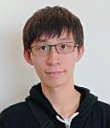
 Wei-Fang Sun
· 2 previous affiliations
- Nvidia (United States)Since 2023
- Researcher · Since 2023
- National Tsing Hua University2017–2023
- MS student · 2021–2023
- Undergrad student · 2017–2021
Research Overview
Wei-Fang Sun focuses on generative modeling, multi-agent reinforcement learning, and scalable machine learning systems. His early work explored systems engineering and introduced distributional value function factorization for cooperative multi-agent environments. More recently, his research addresses architectural bottlenecks in score-based models and normalizing flows, alongside developing efficient training frameworks for discrete diffusion and large-scale 3D scene reconstruction.
Research Trajectory
The earliest work in the evidence spans systems engineering and high-performance computing reproducibility. This includes the development of Quatros: a preemptive multithreaded embedded OS for education, designed to run on highly constrained architectures, and a detailed reproducibility study in the Critique of "Planetary Normal Mode Computation: Parallel Algorithms, Performance, and Reproducibility" by SCC Team From National Tsing Hua University.
Concurrently, his research advanced multi-agent reinforcement learning (MARL) by integrating it with distributional reinforcement learning. In 2021, he introduced the DFAC Framework: Factorizing the Value Function via Quantile Mixture for Multi-Agent Distributional Q-Learning. By decomposing joint return distributions into mean and shape components, this framework allowed agents to better capture environmental uncertainty while maintaining decentralized coordination. He expanded on these principles in A Distributional Perspective on Value Function Factorization Methods for Multi-Agent Reinforcement Learning, and later formalized the approach in A Unified Framework for Factorizing Distributional Value Functions for Multi-Agent Reinforcement Learning, demonstrating its efficacy in highly stochastic, partially observable environments.
Around 2022, the focus of his work shifted toward the theoretical and architectural foundations of generative models. He investigated the score mismatch issue in conditional generation with Denoising Likelihood Score Matching for Conditional Score-based Data Generation, analyzing how classifier training objectives can mislead the diffusion process. A major theme emerged around balancing architectural flexibility with mathematical correctness in score-based models. He developed Quasi-Conservative Score-based Generative Models, which utilized a computationally efficient regularization term to enforce conservativeness on flexible architectures. This work contributed to the research direction of Stochastic Trace Estimation for Scalable Machine Learning. The approach was further analyzed in On Investigating the Conservative Property of Score-Based Generative Models, advancing the area of Unconstrained Architectures for Generative Flow Models by achieving high modeling capacity alongside faster sampling.
In 2023, he addressed computational bottlenecks in normalizing flows. With collaborators, he developed EBFlow in Training Energy-Based Normalizing Flow with Score-Matching Objectives. By training with score-matching objectives instead of maximum likelihood, the model bypassed expensive Jacobian calculations, enabling the use of arbitrary linear layers. This work intersected with the broader areas of Overcoming the Jacobian Bottleneck in High Dimensional Density Estimation and The Blindness of Score Matching to Mixing Proportions. This energy-based flow approach was subsequently applied to reinforcement learning in Maximum Entropy Reinforcement Learning via Energy-Based Normalizing Flow, unifying policy evaluation and improvement into a more stable objective.
Continuing into 2025, his research expanded into optimizing large-scale models and complex data modalities. He contributed to the area of Parallel Token Prediction with Masked Discrete Diffusion and Eliminating the Masking Tax in Masked Modeling through the development of MDM-Prime in Beyond Masked and Unmasked: Discrete Diffusion Models via Partial Masking, which introduced partial masking to eliminate idle steps in the denoising process. He also explored model compression, participating in the design of a framework for shrinking architectures in Retraining-free Merging of Sparse MoE via Hierarchical Clustering. In the domain of spatial and temporal modeling, he co-developed a load-balanced framework for city-scale 3D reconstruction in LOBE-GS: Load-Balanced and Efficient 3D Gaussian Splatting for Large-Scale Scene Reconstruction. Additionally, he contributed to EDELINE: Enhancing Memory in Diffusion-based World Models via Linear-Time Sequence Modeling, which integrates state space models with diffusion to improve long-range memory for reinforcement learning agents.
Current Directions
Recent work investigates the scalability and efficiency of advanced generative architectures and spatial representations. A major focus is on reducing computational overhead in large-scale systems, whether by introducing partial masking techniques to eliminate idle steps in discrete diffusion models or by developing retraining-free compression methods for Sparse Mixture-of-Experts. Additionally, current research addresses the memory limitations of generative world models by integrating linear-time sequence modeling to support reinforcement learning in complex environments. Finally, ongoing efforts in 3D scene reconstruction emphasize physics-aware load balancing to accelerate the training of massive Gaussian splatting representations without sacrificing visual fidelity.
Profile updated
Loading new papers…
Other researchers whose papers cluster into the same research directions — a proxy for overlapping technical interests and shared intellectual neighborhoods.
See something wrong? Report a mistake